

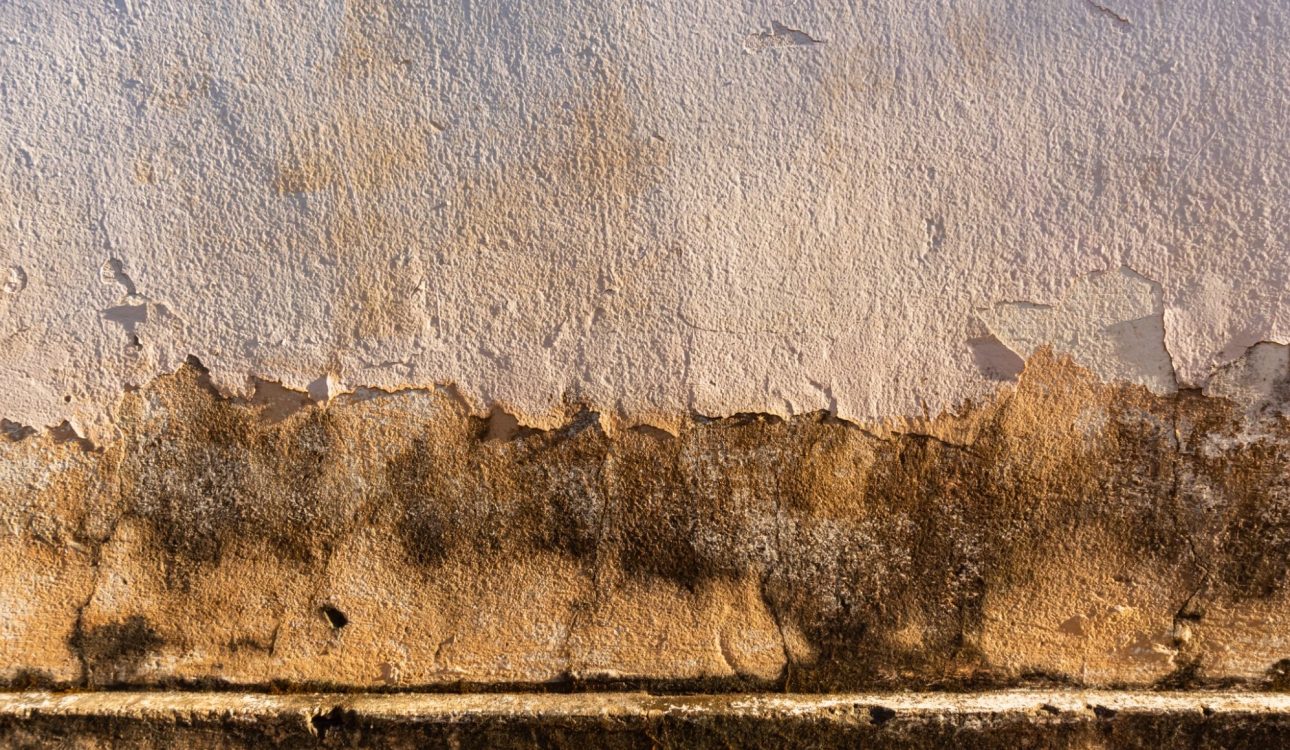

Quick Answer: Internal wall insulation does not cause damp or condensation when designed and installed correctly with proper moisture management and ventilation.
Internal wall insulation does not cause damp or condensation when designed and installed correctly with proper moisture management and ventilation.
Concerns about internal wall insulation causing damp are common, especially when issues appear after retrofit work. Insulation is often blamed, but the real cause is usually existing moisture, poor detailing, or inadequate ventilation. Moisture behaviour inside the home matters, as insulation changes surface temperatures and airflow. When designed and installed correctly, it helps control moisture, not create it.
Key Takeaways
- Internal wall insulation does not inherently cause damp when moisture strategy, ventilation, and wall condition are properly assessed before installation.
- Condensation occurs when warm moist air meets cold surfaces, while damp is moisture entering or living inside the wall fabric itself.
- The main failure points are insulating over already wet walls, creating thermal bridges through poor detailing, and leaving ventilation unchanged after retrofit.
Why People Think Internal Wall Insulation Causes Damp
Many people link internal wall insulation with damp because of visible issues such as colder wall surfaces, hidden moisture, and widely shared negative case studies. These situations can make insulation appear to be the direct cause. In reality, the problem is often misunderstood.
The common belief is that insulation traps moisture. However, damp usually develops due to pre-existing moisture issues that were not resolved before installation, or from poor detailing during the work. Insulation can highlight these faults rather than create them.
Damp and condensation are already widespread in UK homes. The 2024–25 English Housing Survey found that 5% of dwellings had damp problems, while 30% of households reported condensation, damp, or mould. In many cases, poor ventilation after retrofit is the real issue, not the insulation itself.
Damp vs Condensation
Condensation occurs when warm, moisture-laden air meets a cold surface, causing water vapour to turn into liquid. It commonly appears on windows, external walls, and cold corners, especially in winter. Damp, however, is moisture within the building fabric itself. It can result from leaks, penetrating rain, rising groundwater, or moisture already present in walls before any insulation work.
The two are often confused because they produce similar signs, such as stains, mould growth, and damp patches. The key difference lies in the source of moisture. Condensation is driven by indoor humidity and surface temperature, while damp originates from water entering or remaining within the structure. The dew point explains this process, as condensation forms when surfaces become cold enough for moisture to settle.
| Type | Cause | Where It Appears | Common Signs | Typical Fix |
|---|---|---|---|---|
| Condensation | Warm moist air meets cold surface | Windows, cold corners, behind furniture | Water droplets, surface mould, damp patches that dry when heated | Improve ventilation, reduce moisture sources, raise surface temperature |
| Damp | Water entering or trapped in wall | Anywhere moisture can penetrate or rise | Tide marks, salt deposits, peeling paint, wet to touch even when heated | Fix leak, improve drainage, install damp proof course, dry wall before insulating |
The distinction matters because the solutions are completely different. Condensation requires better ventilation and warmer surfaces, while damp needs the moisture source identified and stopped before any insulation work begins.
When Internal Wall Insulation Can Actually Cause Problems
Internal wall insulation usually works well when designed and installed correctly. Problems tend to arise when key steps are skipped or details are poorly handled.
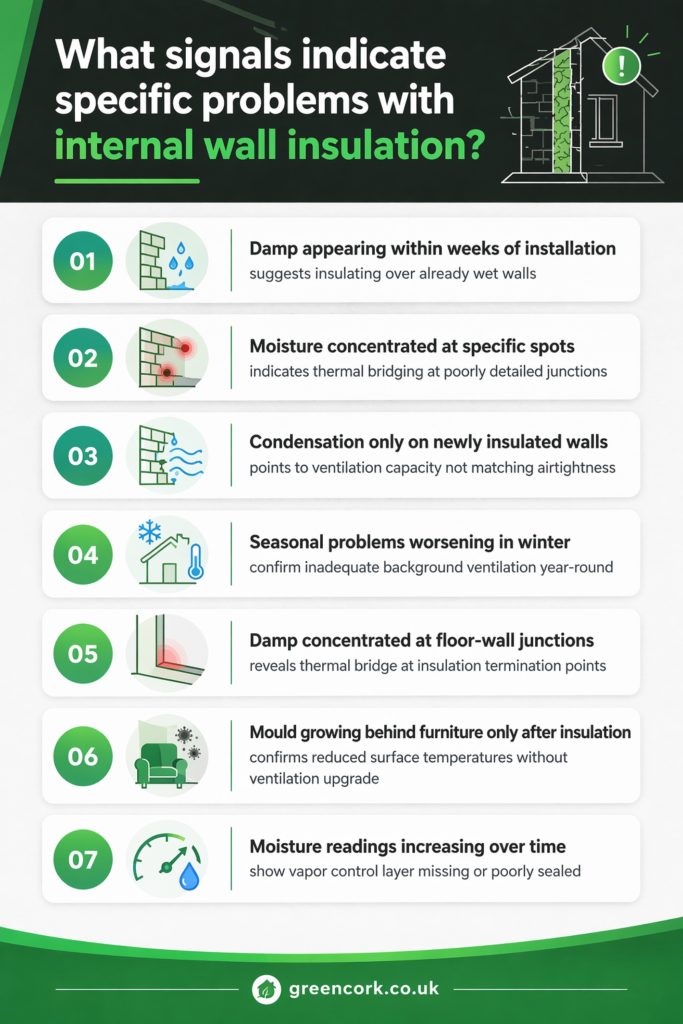
Common causes of problems include the following (these are typically linked to moisture, installation quality, and ventilation):
Poor Moisture Assessment and Installation Approach
Insulation should not be installed without first checking the wall’s moisture condition. If moisture is already present or vapour movement is not considered, it can become trapped or shift to colder areas. Walls need to be inspected, repaired, and fully dried before installation. A clear moisture strategy, aligned with standards helps prevent this.
Insulating Over an Already Damp Wall
Adding insulation to a damp wall traps moisture behind it and prevents drying. This can worsen the issue over time. The source of moisture must be fixed first, and the wall allowed to dry completely before insulation is installed.
Gaps in Insulation
Small gaps around edges, window reveals, or junctions reduce performance. These gaps create colder spots where condensation can form more easily.
Thermal Bridging
Thermal bridging occurs where insulation is missing or poorly fitted. These areas become colder than the surrounding surfaces, increasing the risk of condensation and mould.
Ventilation Left Unchanged After Retrofit
Insulation makes homes more airtight by reducing unwanted air leakage. Without upgrading ventilation at the same time, moisture from everyday activities such as cooking, bathing, and drying clothes can build up indoors. This increases humidity levels and raises the risk of condensation forming on colder surfaces.
Effective ventilation, including extractor fans, trickle vents, and background airflow, is essential to remove excess moisture and maintain a balanced indoor environment.
How to Prevent Damp and Condensation
Preventing damp and condensation comes down to good preparation, correct design, and balanced ventilation. Addressing these factors early helps ensure insulation performs properly without creating moisture risks.
The key steps to follow include the following:
Check Wall Condition First
Survey the wall for existing moisture, identify and fix any leaks or damp sources, and allow wet masonry to dry before insulation is installed. Moisture meters and visual inspection help establish whether the wall is suitable for insulation or needs remedial work first.
Design for Vapour Control
Match the insulation system to the wall type and exposure conditions, ensure vapour control layers are continuous and properly sealed at junctions, and avoid mixing incompatible materials that could trap moisture at interfaces between old and new construction.
Eliminate Thermal Bridges
Detail junctions carefully around windows, floors, and internal walls to prevent cold spots, maintain insulation continuity across the full wall area, and use thermal imaging or hygrothermal modelling on complex projects to identify potential condensation risks before work begins.
Upgrade Ventilation Alongside Insulation
Install or upgrade extractor fans in kitchens and bathrooms to remove moisture at the source. Add trickle vents to windows where background ventilation is needed. For deeper retrofits with high airtightness, consider mechanical ventilation with heat recovery where natural ventilation alone cannot manage moisture levels.
Best Insulation Approaches for Different Wall Types
The right insulation approach depends on the wall type and its condition. Each type responds differently to moisture, heat flow, and ventilation.
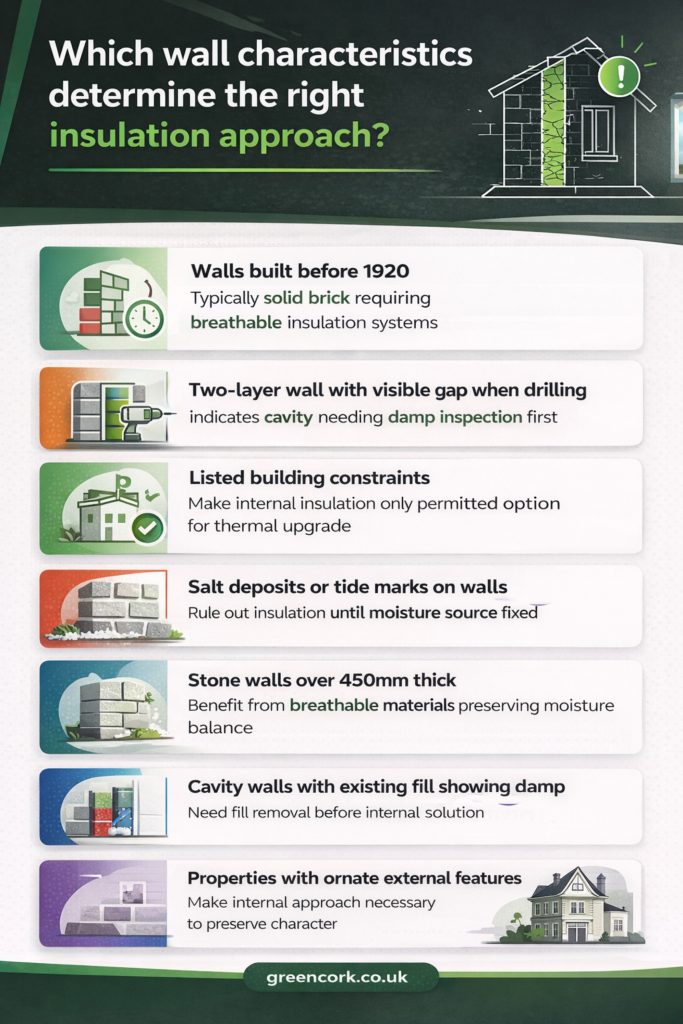
Our sprayed cork internal wall coating provides a breathable, space-conscious solution for walls that need careful moisture management. It avoids the use of thick rigid boards, helping preserve valuable floor space.
Conclusion
Internal wall insulation does not cause damp on its own, but poor installation and weak moisture control can create problems. Proper assessment, careful detailing, and upgraded ventilation help reduce risks and ensure safe performance.
Get in touch for a free quote or expert assessment, and we will help you choose the safest internal wall insulation solution for your home.
FAQs
Will internal wall insulation cause condensation?
Not when designed properly with vapour control and adequate ventilation. Condensation happens when moisture management and airflow are ignored.
Can internal wall insulation make damp worse?
Yes, if installed over a wall that is already damp or if the moisture source is not fixed first. The wall must be dry before insulation is fitted.
Do you need ventilation after internal wall insulation?
Yes. Improved airtightness means indoor moisture needs proper extraction through fans, trickle vents, or mechanical ventilation systems.
Can you insulate a wall that already has damp?
No. The damp source must be identified, fixed, and the wall allowed to dry properly before any insulation work begins.
What is the safest internal wall insulation for older homes?
Breathable systems that allow vapour movement work well for solid walls, combined with proper ventilation and moisture assessment before installation.