



Quick Answer: Microcement is a great choice if you want to update existing surfaces with minimal disruption. Traditional finishes are better if you want the look of real stone, timber or tiles. The right option depends on your home, your budget and the finish you want to achieve.
A home renovation often begins with a difficult choice. Do you rip out the existing finish or work with what is already there? That is where microcement stands out. It can be applied over many existing surfaces, reducing mess, saving time and creating a clean, modern finish without the disruption of a complete replacement.
Key Takeaways
- Microcement is a 2–3mm seamless coating that can go directly over existing tiles, concrete or plaster, cutting down on strip-out costs and waste.
- Traditional finishes like tile, polished concrete and resin each have distinct strengths depending on the room, budget and design goal.
- Neither option is universally better. The right choice depends on your property type, the condition of existing surfaces and the look you want.
What Is Microcement
Microcement is a thin decorative coating that gives walls, floors and other surfaces a fresh new look. It is usually around 2–3 mm thick, can be applied directly over stable existing surfaces and is installed without the need for full removal. This makes it a popular choice for renovation projects.
Its thin profile means the existing surface can usually stay in place. That means no ripping out old tiles, less mess and far less disruption during the renovation.
It can be applied to:
- Floors
- Walls
- Worktops
- Stairs
- Ceilings.
Once sealed, it creates a smooth surface without grout lines and is fully waterproof, making it a popular choice for bathrooms, kitchens and other wet areas.
It is also available in a wide range of colours and textures, so you can achieve anything from a soft, natural finish to a bold, contemporary look.
How Microcement Is Applied
The process is more involved than simply applying a coat of paint, but it is still far less disruptive than a full retile.
First, the surface is primed. Base coats are then applied to build up the required thickness before the finishing coats are added.
This creates a strong foundation for the completed microcement finish. From there, a topcoat sealer is applied to protect and waterproof the surface.
The whole system can usually go straight over stable existing tiles, concrete or plaster, which is one of the biggest practical advantages of microcement as a renovation choice.
That said, the existing surface must be solid and well bonded. Loose or damaged tiles need addressing before any coating goes on.
What Are Traditional Finishes
Traditional finishes include familiar materials such as ceramic tiles, porcelain, natural stone, polished concrete and plaster. They have been used in homes for many years and remain popular for different styles and budgets.
Each finish is installed as individual tiles or slabs using its own installation method. Preparation requirements also vary, and the fitting process usually takes longer. This is one of the main differences compared with microcement.
The result is often visible joints, grout lines and a longer renovation process. These differences have a big impact on cost, maintenance and the finished look.
How Does Microcement Compare with Traditional Finishes
Microcement and traditional finishes can both transform a space, but they achieve it in different ways. Some are quicker to install, while others offer a particular look or feel that microcement cannot replicate.
Cost, durability, maintenance and installation all play a part in choosing the right finish.
The table below summarises the key differences between microcement and traditional finishes at a glance:
| Feature | Microcement | Traditional Finishes |
|---|---|---|
| Joints or grout lines | Seamless | Usually visible |
| Thickness | 2–3 mm | Varies by material |
| Can be applied over existing surfaces | Often yes | Depends on the finish |
| Suitable for walls and floors | Yes | Depends on the material |
| Appearance | Contemporary and seamless | Varies by material and style |
The practical impact of that seamless finish is bigger than it might seem at first. No grout lines means fewer places for moisture, dirt and mould to stay. That matters when you consider that the housing quality and damp survey for England recorded damp problems in 5% of all dwellings in 2023, the highest figure in five years.
If you are considering this finish for your project, we provide professional microcement services tailored to your space and design goals.
How Does Microcement Compare with Specific Surface Finishes
Each traditional finish has its own quirks. The comparisons below focus on the practical differences that actually affect your renovation decision, rather than abstract material theory.
Microcement vs Tiles
Tiles are the most common wet-room finish in the UK. They are durable and available in every style imaginable. The downside is grout. It stains, it moulds and it eventually needs replacing.
The updates to the British Standard for tiling (BS 5385) have tightened substrate requirements significantly, meaning a proper tile job now demands backer boards, tanking membranes and movement joints. That is not a quick weekend job.
Microcement avoids much of the preparation when:
- Tiles are stable
- The surface is well bonded
- The substrate is sound
- No major defects are present
This can reduce both installation time and disruption. If you are unsure whether your existing tiles are suitable, we can assess their condition and advise whether microcement can be applied directly over the tiles or if further preparation is needed.
Microcement vs Polished Concrete
Polished concrete looks stunning. The issue is that it usually requires a substantial concrete slab as a base, which means it is more of a structural decision than a decorative one.
Microcement gives a very similar visual result at just 2–3mm thick, applied over whatever is already there. It is the practical shortcut to the polished concrete look without the groundworks.
Microcement vs Resin Flooring
Resin floors are tough, seamless and fairly easy to clean. They are common in commercial settings but do appear in domestic spaces too.
Compared with resin, microcement offers a warmer appearance with a more natural texture and greater visual depth. The finish also looks less plastic like, giving the surface a softer, more tactile feel.
Both materials can be applied over existing floors, but microcement often feels more at home in residential interiors.
Microcement vs Venetian Plaster
Venetian plaster is a decorative wall finish with a polished, marble like appearance. Applying it evenly takes considerable skill, as does creating a consistent finish, achieving the right texture and avoiding visible imperfections.
For that reason, it is more commonly used on feature walls than on floors or in wet areas.
Microcement is less decorative but far more versatile. It works across walls, floors and worktops, including in bathrooms and kitchens where Venetian plaster would not be appropriate without careful sealing.
Microcement vs Tadelakt
Tadelakt is a traditional Moroccan lime plaster that is naturally water resistant and genuinely beautiful. It is also labour intensive, more specialist and harder to source in the UK. By comparison, microcement offers a seamless finish with matte or satin options and is widely available through UK installers.
Both materials work well in wet rooms and bathrooms, but microcement is generally the more practical choice for most renovation projects.
Microcement vs Epoxy Flooring
Epoxy is extremely hardwearing and is commonly used in garages, warehouses and industrial kitchens. In domestic settings, the high-gloss, flat finish can feel clinical.
Microcement offers greater texture variation and a softer aesthetic, making it a better fit for living spaces, bathrooms and kitchens. Epoxy, on the other hand, performs best in heavy use environments, industrial settings, high traffic areas and other demanding workplaces.
Its durability makes it particularly well suited to commercial and industrial use.
Microcement vs Quartz Worktops
Engineered quartz is a popular choice for kitchen worktops. It is heat resistant, very hard and available in consistent finishes. One drawback is the visible joints where multiple sections meet.
These areas need careful sealing, as poorly sealed joins can trap moisture and bacteria over time.
Microcement worktop coatings offer a completely seamless surface across the whole countertop. They are harder to repair if damaged and less heat-resistant than quartz, so a chopping board and a trivet are still your friends.
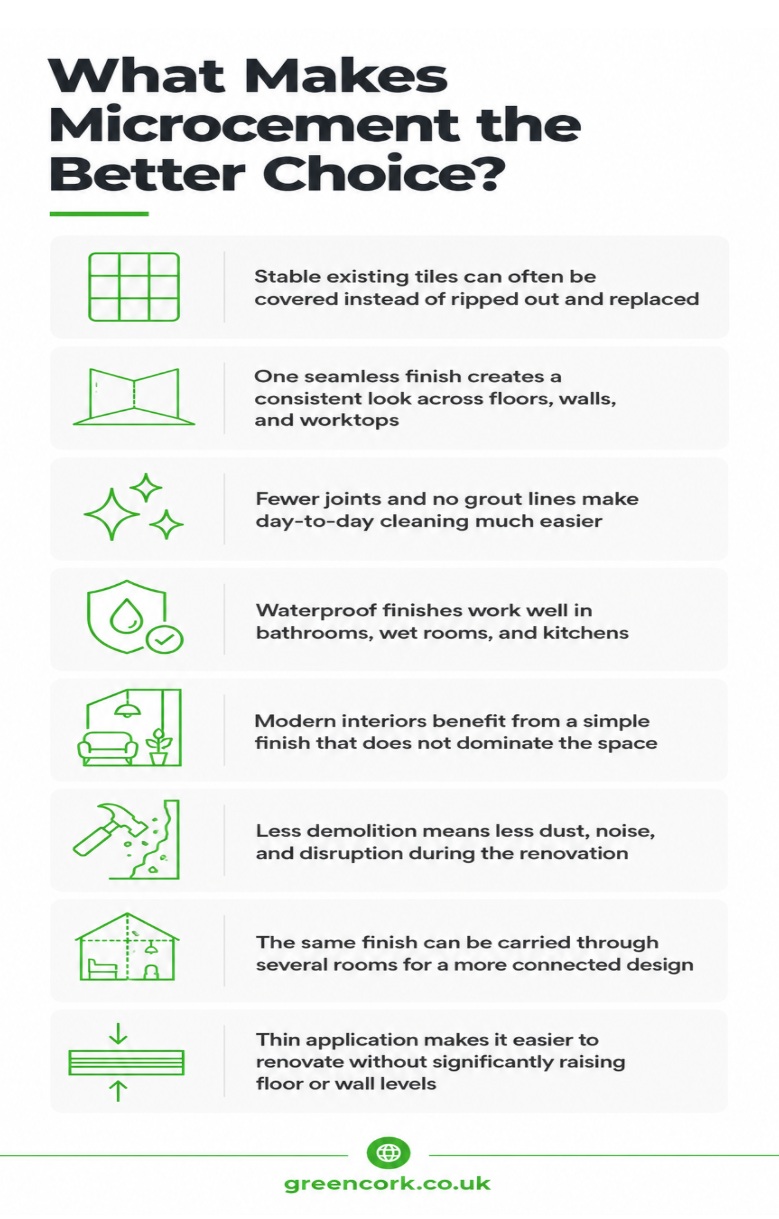
When Is Microcement the Better Choice
If you are renovating an existing space and want a clean, modern result without months of building work, microcement is usually worth serious consideration.
When Might a Traditional Finish Be More Suitable
Microcement is a versatile option, but it is not the best choice for every home or every project. In some situations, a traditional finish offers clear advantages and is the better long term solution. The right choice depends on the property, the design and the purpose of the space.
Here are the situations where a traditional finish may be the better option:
Renovating a Period or Heritage Property
Original features are often what give an older home its character. Replacing them with a modern coating can remove period details, lose original craftsmanship, affect the property’s value and be difficult to reverse.
Where these features are still in good condition, restoring them is often the better long term option.
Creating a Traditional or Decorative Interior
Some interiors rely on materials with their own distinctive character. Patterned encaustic tiles, hand painted ceramics, natural stone and decorative plaster finishes all become part of the design itself.
They create a look that microcement is not intended to replicate.
Using a Surface with a Specific Purpose
Some projects need a material because of the job it does, not simply how it looks. That might mean using structural screeds, natural stone, fire rated boards or other specialist building materials.
These materials perform specific functions that a thin decorative coating cannot replace.
Which Finish Is More Durable
Durability is not a simple score out of ten. It depends on how well the surface was installed, what it is being asked to do and how it is maintained. Both microcement and traditional finishes can last decades when done properly and fail quickly when they are not.
The following comparisons show how each finish stands up over time:
Resistance to Everyday Wear
Properly sealed microcement handles daily foot traffic, cleaning products and general household use without issue. Tiles are inherently hard wearing but grout lines are the weak point, cracking and absorbing stains over time.
Natural stone and polished concrete are harder but can chip or stain. Microcement can be touched up more easily than most tile-based finishes.
Moisture Resistance
Both microcement and tiled surfaces need to meet the moisture resistance requirements set out in Approved Document C of the Building Regulations. Neither gets a free pass just because of the material.
In wet rooms and bathrooms, both options must also meet the same slip resistance guidance from the HSE, which recommends a minimum Pendulum Test Value of 36 for wet flooring. Microcement can be specified with anti-slip additives to meet this standard.
Repair and Refurbishment
A cracked tile can usually be replaced individually, though matching an old tile is often harder than it sounds. Microcement repairs require a skilled installer to blend a patch coat into the existing surface.
Neither is effortless, but microcement repair is less disruptive in most cases.
Which Surface Finish Is Right for Your Home
The right surface finish depends on your home and what you want to achieve.
Every project is different. The condition of the existing surface matters. So does your budget, the style you prefer and the amount of disruption you are willing to accept during the renovation.
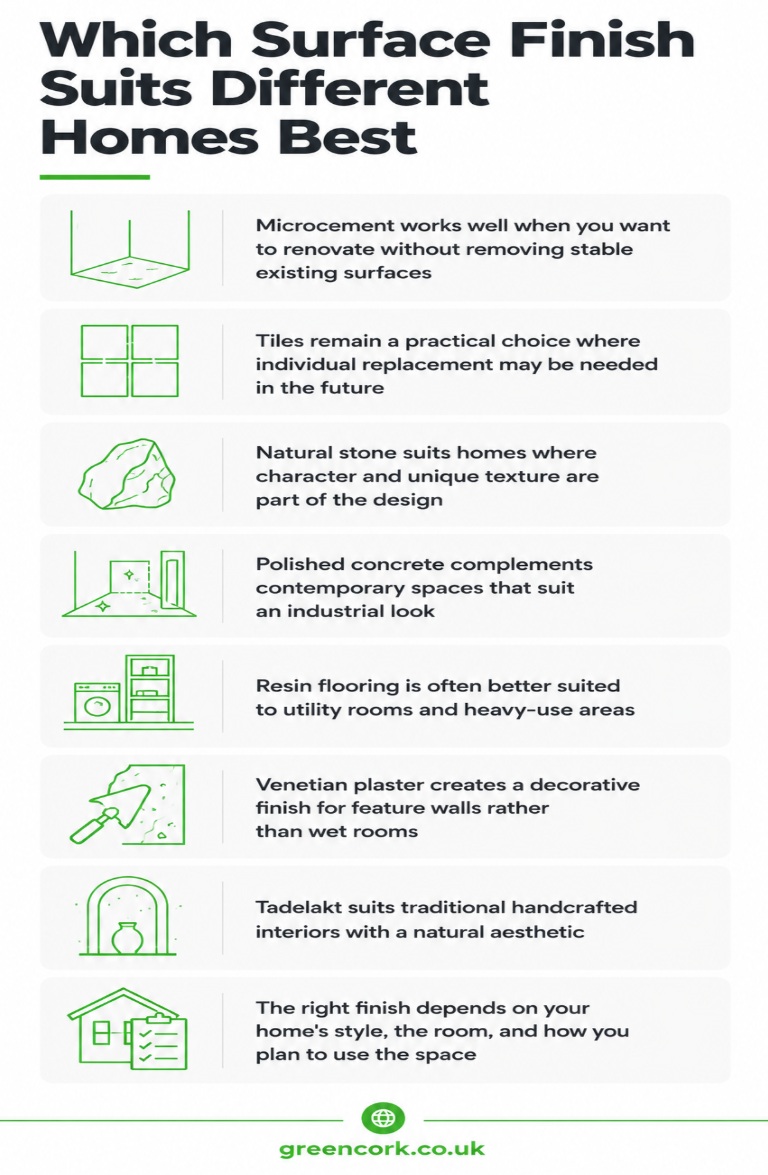
Traditional finishes are often better suited to period homes or projects where natural materials are part of the design.
Think beyond the day the work is finished. And choose the finish that suits your home, fits your lifestyle and will still meet your needs for years to come.
FAQs
Is microcement better than tiles?
Not in every situation. Microcement is better for seamless, low-disruption renovations. Tiles are better where a specific decorative finish or a traditional aesthetic is the goal.
Is microcement more durable than traditional finishes?
When properly installed and sealed, microcement is as durable as most traditional finishes for domestic use. Its longevity depends heavily on correct application.
Can microcement be applied over existing tiles?
Yes, in most cases. The existing tiles need to be stable, well bonded and in good condition. Loose or damaged tiles must be fixed first.
Does microcement crack easily?
Not if it is applied correctly over a solid substrate. Cracks typically appear when the underlying surface moves or was not properly prepared before application.
Which surface finish requires the least maintenance?
Microcement, once sealed, requires minimal maintenance. Regular cleaning with a pH-neutral cleaner is usually all that is needed. Grouted surfaces need more attention over time.
Is microcement suitable for bathrooms?
Yes. When properly sealed, microcement is fully waterproof and handles wet-room conditions well. It also eliminates grout lines, which reduces the risk of mould in damp areas.
Is microcement suitable for kitchens?
Yes. It works well on floors, walls and worktops in kitchens. For worktops, use a chopping board and avoid placing very hot pans directly on the surface.
Conclusion
The best surface finish depends on your home, your existing surfaces and the result you want to achieve. Microcement is ideal for modern renovations with minimal disruption. Traditional finishes are often better suited to period properties or projects that call for a specific material.
If you are considering microcement, contact us for a free quote.