

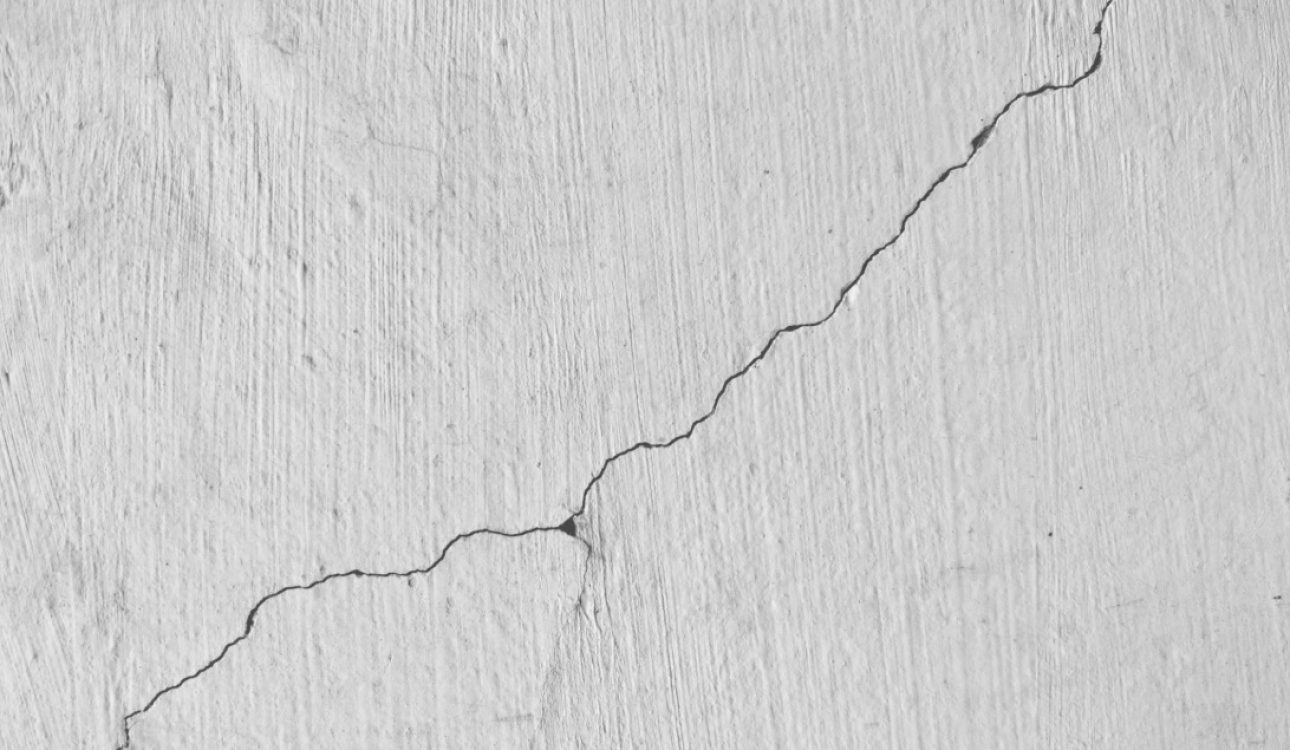

Quick Answer: Cracked render does not automatically mean structural damage. Hairline cracks confined to render are often cosmetic. Concern rises when cracks widen, recur, become diagonal or stepped, or reach masonry beneath.
Cracked render can look alarming, but it does not automatically point to a structural problem. Many cracks develop because render shrinks, moves as temperatures change or has been poorly applied. The pattern matters too. Some cracks stay within the render surface, while others may reflect movement beneath it. Knowing the difference can help you decide when repair is enough and when professional advice is sensible.
Key Takeaways
- Hairline cracks confined to the render are often cosmetic rather than structural.
- Crack pattern and movement matter more than width alone when assessing possible damage.
- Widening, recurring or masonry cracks deserve closer attention, especially alongside other signs of movement.
- Damaged render can also allow more moisture into the wall, so some cracking needs repair even when the structure is sound.
Why Does Render Crack?
Render can crack for several reasons that have nothing to do with structural movement. Shrinkage during curing is common, particularly where render dries too quickly because of heat, wind or direct sunlight.
Problems can also develop when the mix ratio or coat thickness is wrong. Missing movement joints can leave the render struggling to accommodate thermal expansion and contraction. Weak points around the building can crack when reinforcement is missing or poorly positioned:
- Around windows
- Or around doors
- Where different materials meet
The background matters too. Older UK homes can have brick, pebbledash or other substrates that react differently to modern render systems. An incompatible finish can crack or separate even when the underlying structure remains stable.
When Could Cracked Render Be a Sign of Structural Movement?
Cracked render becomes more concerning when the pattern suggests movement rather than a surface defect. Diagonal, stepped or tapering cracks deserve closer attention, particularly when they widen or return after repair.
Cracks that continue through the render into the brickwork are another warning sign. The same applies around:
- Extensions
- Bay windows
- Door and window openings
- Junctions between different building sections
Other signs can include sticking doors or windows, sloping floors, gaps around skirting or distorted frames.
Subsidence is one possible cause. According to RICS guidance on subsidence warning signs, sudden cracks around 3mm or wider can justify investigation, particularly when other movement signs appear. That does not mean every 3mm crack indicates structural damage.
What Do Different Types of Render Cracks Mean?
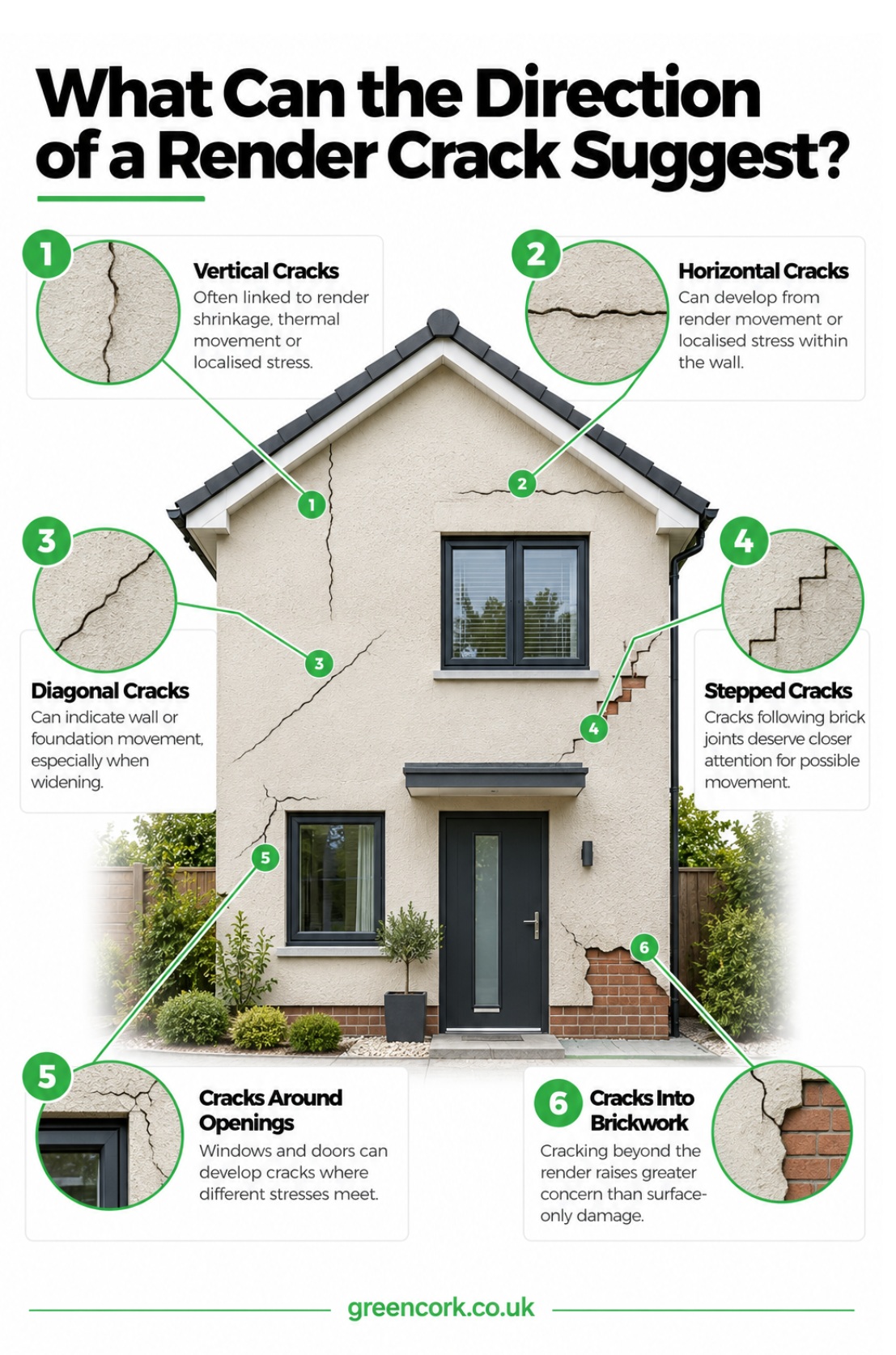
Crack direction can provide useful clues, but it cannot diagnose the cause on its own. The surrounding area, crack development and condition of the masonry all matter.
Vertical Cracks
Vertical cracks can develop through shrinkage, thermal movement or localised stress. Their position matters, particularly if they appear near openings or building junctions.
Horizontal Cracks
Horizontal cracking can have several causes, including render movement and localised stress. Length, width and location should be considered alongside any other signs affecting the building.
Diagonal Cracks
Diagonal cracks tend to attract more attention because they can reflect movement within the wall or foundations. A stepped crack following masonry joints deserves closer assessment, particularly when it widens or appears alongside sticking doors or windows.
Cracks Around Openings
Corners around windows and doors are common stress points. Different materials and movement patterns meet in these areas, so local render cracking can occur without structural damage.
Greater concern arises when the crack extends into the surrounding brickwork or the opening itself looks distorted.
Can Cracked Render Cause Damp?
Yes, damaged render can make it easier for water to reach the wall behind, particularly where cracks are open or the external finish no longer provides effective weather protection.
Not every crack will cause dampness. The risk also depends on the wall construction, how exposed the property is to rain and wind, and the condition of the surrounding render.
You may notice signs such as:
- Damp patches or staining
- Mould growth
- Peeling internal finishes
- Moisture appearing near the cracked area
This is why keeping the external wall weather resistant matters. The GOV.UK Approved Documents set out Building Regulations guidance covering resistance to moisture penetration through external walls. Cracked or damaged render can therefore become more than a cosmetic issue when it allows water to reach the wall behind.
Repairing the visible crack may not solve the damp if another defect, such as damaged pointing or a leaking detail, is allowing water into the building.
Can Cracked Render Be Repaired?
Yes, cracked render can often be repaired. Localised, stable cracking may only need preparation, filling and a suitable repair system.
Re-rendering becomes more appropriate when the damage extends across larger areas, the existing render has started to debond or the same cracking keeps returning after repair. Those signs can indicate that the existing finish is no longer providing a reliable surface.
The condition of the substrate also matters. If the wall beneath is unstable, affected by moisture or incompatible with the existing render, replacing the surface without addressing that issue can lead to further cracking.
SprayCork may suit some projects where the existing surface is sound and compatible, but it should not be treated as a universal solution for cracked render.
Should I Repair or Replace My Render?
Repair is generally more suitable for isolated, stable cracking where the surrounding render remains sound. Replacement becomes more relevant when cracking is widespread, the render has started to debond or the existing system is unsuitable for the building.
The condition beneath the render matters too. If the substrate is moving or moisture is entering the wall, replacing the surface alone may not resolve the underlying problem.
For localised damage where the structure and substrate are sound, our render repair service can provide a practical next step.
How Can You Prevent Render From Cracking?
Preventing cracking starts by choosing a render system that suits the building and applying it correctly. The substrate should be properly prepared before work begins.
Important measures include:
- Using compatible materials
- Applying the correct coat thickness
- Providing movement joints where needed
- Reinforcing vulnerable areas around openings
- Avoiding unsuitable application conditions
- Protecting the finished render from moisture
The NHBC Standards 2026 include guidance on render detailing, movement joints and reinforcement, with updated requirements in Chapter 6.11. These measures help reduce avoidable cracking, although no render system can be guaranteed to remain completely crack free.
When Should You Get Cracked Render Professionally Assessed?
Professional advice becomes more appropriate when cracking is changing, recurring or linked to other signs of building movement. Do not rely on crack width alone to decide whether a property has structural damage.
You might need to seek professional advice if you notice:
- Cracks are widening or recurring
- Cracks are diagonal or stepped
- Brickwork is cracked beneath render
- Doors or windows are sticking
- Floors or skirting show movement
- Damp or staining is appearing
- Cracking appeared suddenly
BRE’s crack classification system ranges from Category 0 for negligible damage to Category 5 for very severe damage. According to BRE’s guidance on assessing cracks in houses, the category is based on more than width alone. Pattern, location and evidence of movement also matter.
Cracking around BRE Category 3 or above should receive professional inspection.
The wider ground conditions can matter too. The British Geological Survey’s research on clay shrink-swell behaviour indicates that properties at high or extreme risk from shrink-swell subsidence could rise from around 3% in 1990 to around 10% by 2070.
FAQs
Is cracked render always a structural problem?
No. Hairline cracks confined to the render are often caused by shrinkage, thermal movement or application problems.
Are hairline cracks in render normal?
They can occur as render cures or responds to temperature changes. Stable surface cracks are often cosmetic.
Can cracked render cause damp?
Yes. Open cracks can allow more rainwater to reach the wall, depending on exposure and the condition of the wider finish.
Can cracked render be repaired?
Yes. Localised cracking can often be repaired where the surrounding render and substrate remain sound.
When does cracked render need replacing?
Replacement may be appropriate where cracking is widespread, the render has debonded or the existing system is unsuitable.
Can you render over cracked render?
Sometimes, but the existing surface must be suitable. Covering cracks without addressing their cause can lead to further failure.
Conclusion
Cracked render is often cosmetic, but widening, recurring or movement-related cracking should not be dismissed. Cracks that extend into masonry or appear alongside internal movement deserve closer attention. Width alone cannot confirm structural damage. Where warning signs are present, professional assessment is the safest way to establish the cause. Get a free survey and speak to our team about the right next step.