
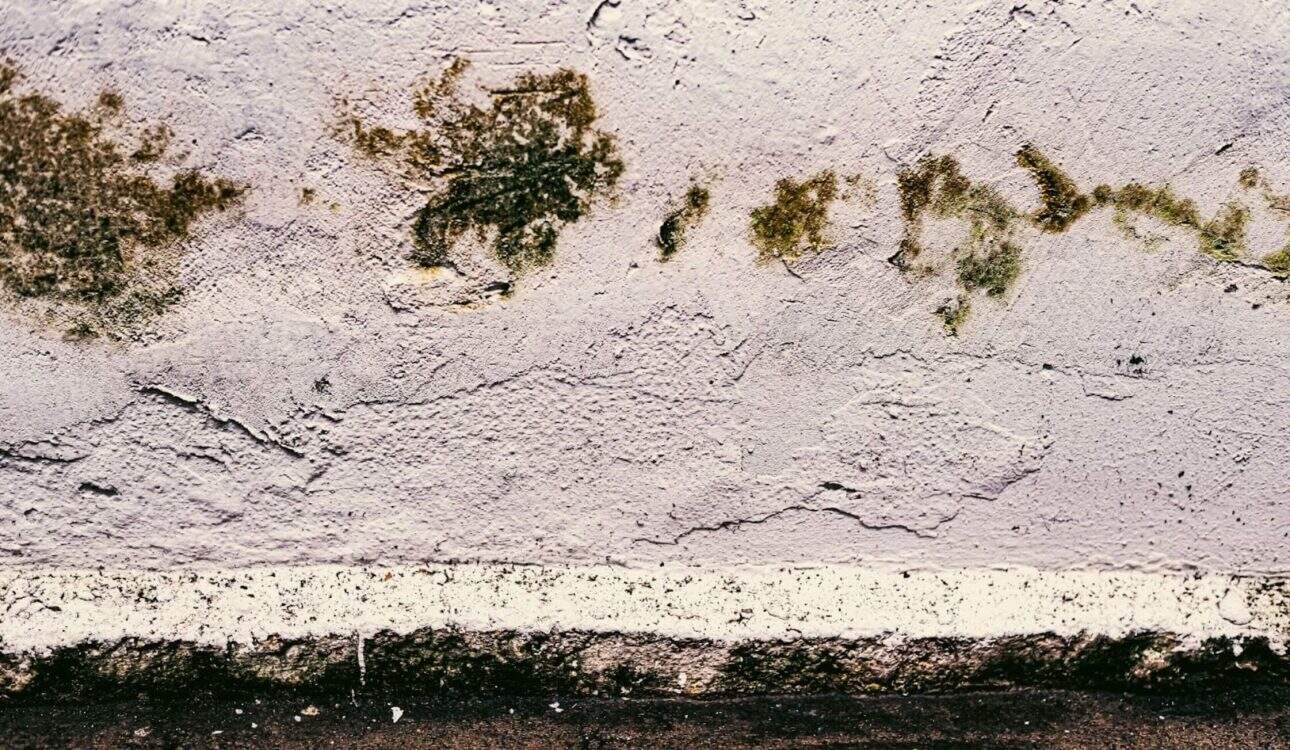

Quick Answer: SprayCork helps reduce mould and mildew risk through breathable, moisture-regulating properties and thermal improvement, but it won't fix structural damp or eliminate existing mould without proper treatment.
Mould grows where moisture meets cold surfaces, and UK homes see plenty of both. SprayCork can genuinely help by letting walls breathe, stabilising surface temperatures, and reducing condensation risk. It’s not a magic fix though, especially if gutters leak or ventilation is poor. The material works best as part of a wider moisture management approach, not as a standalone cure for damp that’s already taken hold.
Key Takeaways
- SprayCork’s natural cork composition is hydrophobic and vapour permeable, allowing moisture to escape rather than accumulate inside wall structures.
- Thermal improvement from spray-applied cork raises surface temperatures by 1 to 3°C, reducing condensation hours during winter months when mould risk peaks.
- It does not kill mould or fix structural issues like rising damp, leaks, or inadequate ventilation, all of which need addressing separately before or alongside application.
What Causes Mould and Mildew in UK Homes
Mould develops when three specific conditions combine. A moisture source such as condensation, leaks or high indoor humidity must be present. A food source is required, including painted plaster, wallpaper paste, timber or household dust. A cold surface allows water vapour in the air to condense and remain long enough for spores to grow.
When indoor relative humidity climbs above 70 percent, condensation risk jumps sharply. CIBSE guidance on environmental design confirms that surface condensation becomes far more likely once humidity crosses the 70 to 75 percent threshold, particularly on cold spots where thermal bridging drops internal surface temperatures by several degrees.
The UK climate doesn’t help.
According to Met Office climate data, annual rainfall averages around 1,170 mm, and relative humidity frequently sits above 80 percent through winter months. That persistent dampness, combined with older solid wall construction (England alone has roughly 4.8 million solid wall homes), creates perfect conditions for mould to establish itself on north facing walls, bedroom corners, bathroom ceilings, and window reveals.
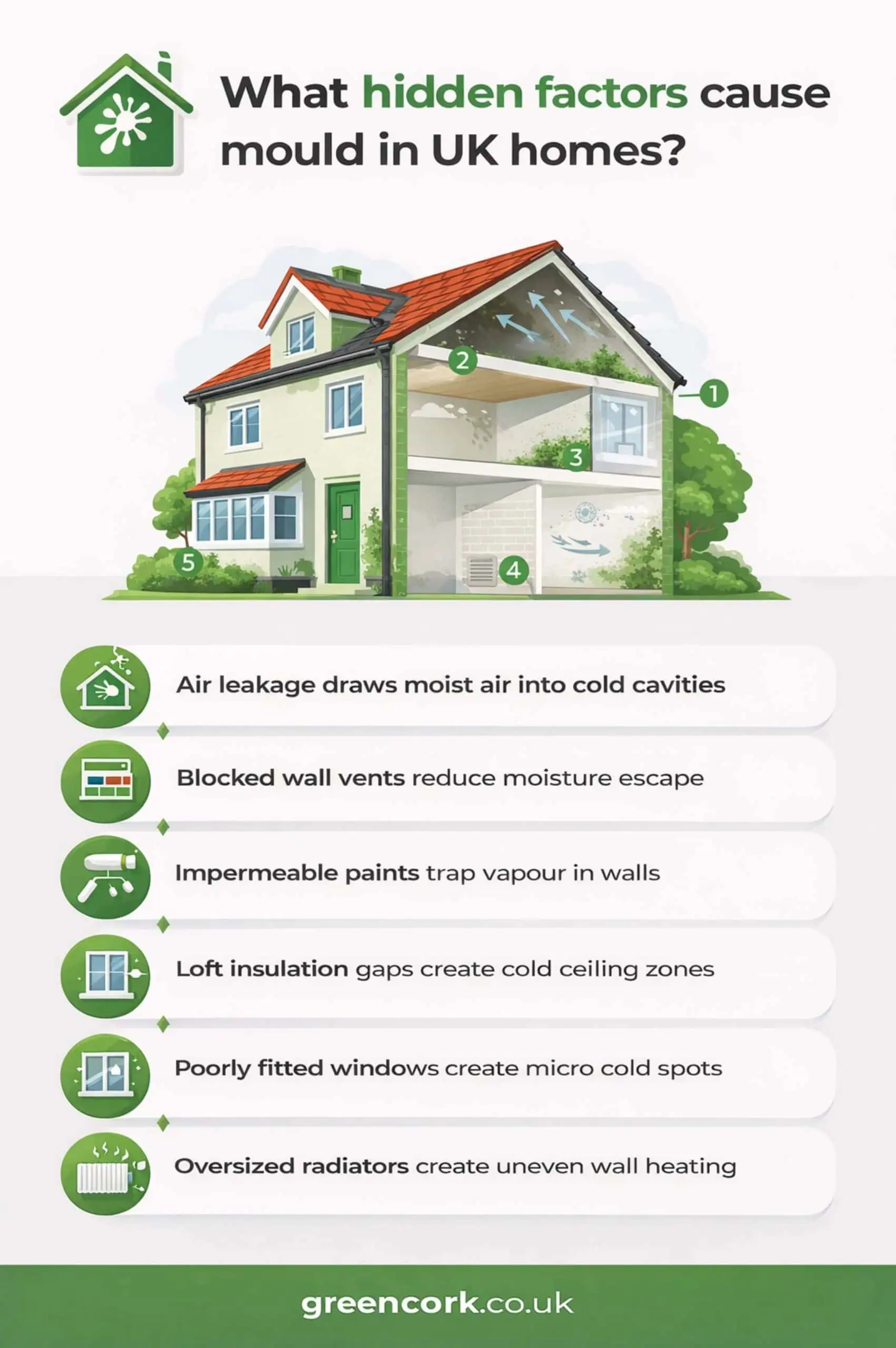
Government guidance on damp and mould now classifies persistent mould as a serious health hazard under the Housing Health and Safety Rating System, with landlords legally required to act.
Cold bridging, poor insulation, and lack of breathability in wall finishes all contribute to the problem, which is why breathable materials matter so much in retrofit and renovation work.
How SprayCork Helps Reduce Mould and Mildew Risk
Cork’s cellular structure is naturally open, which gives it strong vapour permeability. That means moisture trapped inside walls can escape outward rather than sitting behind impermeable coatings where it condenses and feeds mould growth.
For homeowners specifically looking at long-term solutions to damp, condensation and mould issues, it’s worth understanding how cork spray insulation works in more detail, particularly in properties with solid walls or recurring cold spots.
Breathability
SprayCork’s vapour diffusion resistance typically ranges between 5 and 10 on the µ-value scale, meaning it allows moisture to pass through while still providing weather protection. BRE research on solid wall insulation highlights how non-breathable retrofits can trap moisture and create unintended condensation problems, especially in pre-1919 housing stock.
Water Resistance
Suberin, the waxy substance naturally present in cork, repels water and keeps the material from absorbing moisture the way porous surfaces do. Testing shows cork typically absorbs less than 6 percent of its volume even after immersion, which means it stays relatively dry even in damp conditions.
This hydrophobic quality also means cork doesn’t provide the damp, nutritious surface that mould prefers.
Thermal Improvement
Surface temperature improvement makes a real difference too. Raising internal wall surface temperatures by just 1 to 3°C can significantly reduce the number of hours condensation forms during winter.
Cold bridging creates localized cold spots that attract moisture, and our spray-applied cork insulation coating acts as a thermal barrier that reduces these temperature drops. Warmer surfaces mean less condensation, which in turn means fewer opportunities for mould spores to settle and grow.
Surface Cleaning and Care
If surface mould appears despite the coating, it usually points to ongoing ventilation or humidity problems that need addressing.
The mould can be wiped down with appropriate cleaning solutions, but the underlying cause matters more than the surface treatment. Maintaining adequate ventilation remains crucial throughout the building’s life, as even breathable coatings can’t compensate for rooms that never get fresh air.
Cork coatings are relatively low maintenance compared to traditional paints, which crack, peel, and require repainting every few years.
Internal vs External SprayCork Applications
Internal applications improve comfort and help manage condensation-prone walls, particularly in bedrooms and north-facing rooms where surface temperatures tend to drop.
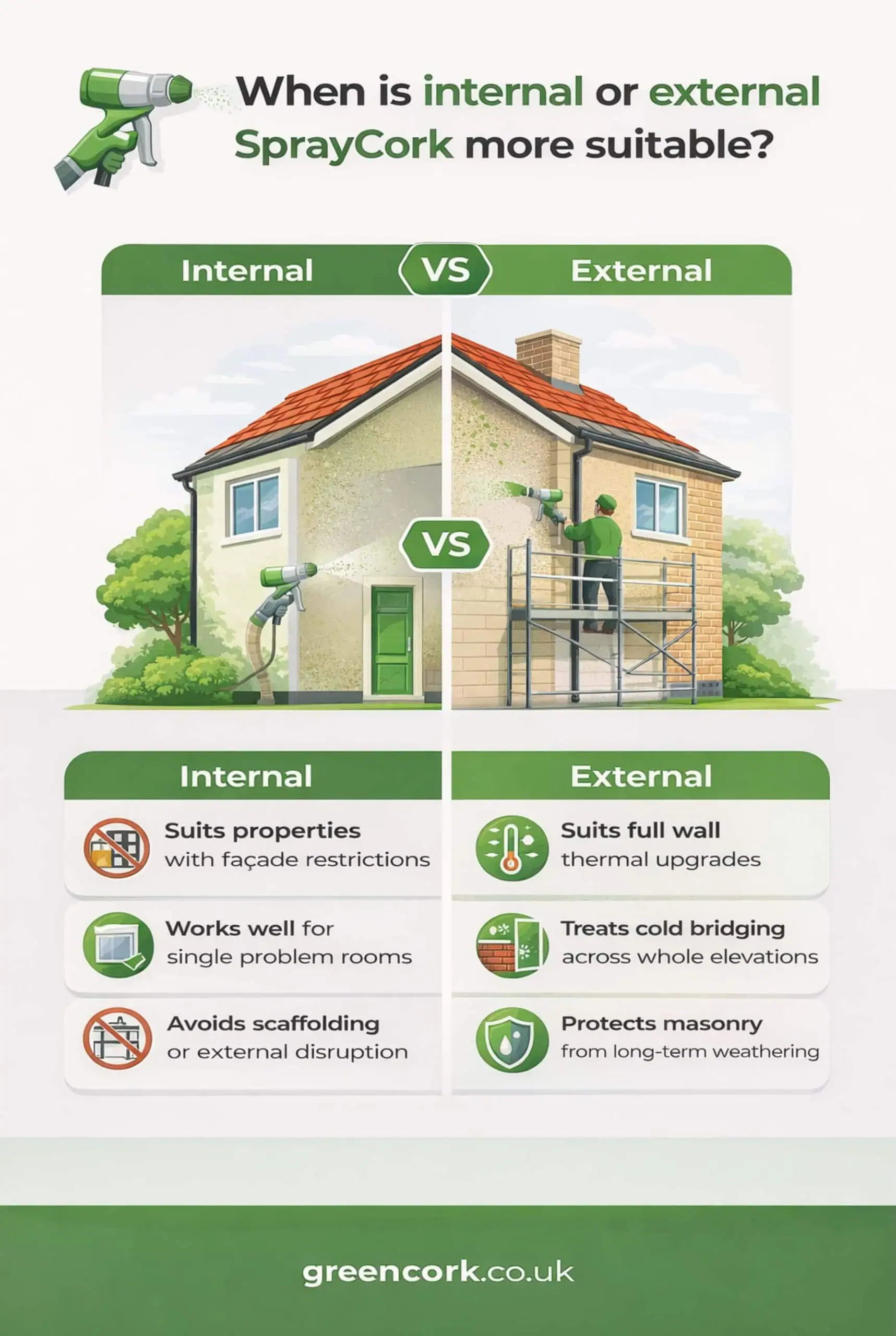
The coating creates a thermal buffer that keeps wall surfaces warmer and reduces the hours when condensation can form. It’s particularly useful in older properties where adding external insulation isn’t possible or where internal improvements need making without altering the building’s external appearance.
External applications provide a weather resistant breathable layer that reduces cold bridging and stabilises internal surface temperatures.
By insulating from the outside, the entire wall mass stays warmer, which pushes the dew point outward and keeps condensation from forming on internal surfaces.
SprayCork for Different Property Types
Solid wall properties benefit most because they lack the cavity insulation buffer that keeps internal surfaces warm in modern homes.
Traditional and Solid Wall Homes
Older and heritage buildings requiring breathable materials also suit SprayCork well, as it doesn’t trap moisture the way non-breathable renders and paints do.
Modern Properties
Modern cavity wall homes with condensation issues can still benefit, particularly on elevations exposed to driving rain or where thermal bridging creates cold spots.
Coastal Homes and Rental Properties
Coastal and high rainfall regions see strong results because the coating provides weather resistance without sacrificing breathability.
Rental properties where condensation complaints are common find SprayCork useful for addressing the root cause rather than just repainting over damp patches every year.
England has approximately 4.8 million solid wall homes according to recent housing statistics, and many of these properties struggle with condensation and mould because retrofit options are limited without compromising breathability.
Fire Safety, Health and Indoor Air Quality
Fire classification for SprayCork systems should comply with relevant UK standards depending on the specific system and application.
Water-based formulations mean lower environmental impact during application and minimal odour once cured. VOC levels drop to very low readings after curing, making the coating suitable for occupied residential properties without requiring occupants to move out during or after installation.
These health and safety characteristics matter particularly in rental properties and homes with vulnerable occupants.
Where SprayCork Performs Best
SprayCork works particularly well in situations where breathability, thermal improvement, and moisture regulation all matter. Here are some of the scenarios where it makes the most sense:
- Solid wall properties without cavity insulation, especially Victorian and Edwardian terraces where traditional retrofit options are limited or unsuitable.
- Heritage and listed buildings requiring sympathetic, breathable upgrades that don’t compromise the original fabric or cause trapped moisture.
- Bedrooms prone to condensation, particularly those on north facing elevations or above unheated spaces like garages.
- Coastal and high rainfall regions where driving rain and persistent damp create ongoing challenges for external finishes.
- External applications that improve weather resistance while allowing the wall to breathe, often combined with our breathable external wall insulation solutions.
Internal applications also help improve comfort and reduce condensation in rooms where surface temperatures tend to drop, creating cold spots that attract moisture.
When SprayCork Is Not the Right Solution
SprayCork improves surface temperature and moisture balance, but it is not a cure for active water ingress or structural damp defects.
Ongoing roof leaks, failed gutters, or penetrating rain must be repaired first. Rising damp caused by failed damp proof courses requires specialist treatment before any external coating is considered. Severe structural moisture within walls also needs investigation and drying prior to application.
Unresolved ventilation problems inside the home can continue to drive high humidity levels and condensation, regardless of surface treatment. UK Health Security Agency research highlights the health risks linked to persistent damp exposure, reinforcing the need to address root causes properly.
SprayCork performs best as part of a wider, structured moisture management strategy rather than as a standalone fix for underlying damp defects.
Conclusion
SprayCork helps reduce mould and mildew risk by improving surface temperatures, allowing walls to breathe, and resisting moisture absorption. Get your free quote today to see if SprayCork is right for your property.
FAQs
Does SprayCork stop mould completely?
No. It reduces the conditions that allow mould to grow, but it won’t eliminate mould if structural damp, leaks, or poor ventilation persist.
Can SprayCork be used in bathrooms?
Yes, though ventilation remains essential. SprayCork helps regulate moisture, but bathrooms still need extraction to manage steam and humidity spikes.
Is SprayCork suitable for damp walls?
Only if the damp is condensation related, not structural. Rising damp or penetrating moisture from leaks must be resolved first.
Will mould grow on SprayCork itself?
Cork’s hydrophobic, non-nutritive surface makes it highly resistant, but no coating is completely immune if conditions are extreme and ventilation is absent.
Can SprayCork be used alongside ventilation upgrades?
Absolutely. Combining breathable coatings with proper ventilation creates the most effective moisture management approach.
