



Quick Answer: Your house feels cold because external walls continuously draw heat out through poor insulation and thermal bridging, not because your heating system is broken or your thermostat is wrong.
Heating’s on, radiators are hot, yet the house still feels freezing. The problem isn’t your boiler or thermostat, it’s your walls. Cold external walls drag heat out of rooms faster than it’s replaced, leaving that stubborn chill behind and making “my house is so cold” a most common complaint from homeowners.
Key Takeaways
- Even when air temperature reaches 20°C, wall surfaces 5-8°C cooler absorb warmth from both the air and your body, creating persistent discomfort.
- Building Research Establishment research shows walls are the biggest heat loss pathway, making them the priority for anyone struggling with cold rooms despite active heating.
- A new boiler or upgraded radiators simply lose heat more efficiently if your building fabric can’t retain warmth, addressing insulation delivers far greater comfort improvements.
Why Your House Feels Cold Even When the Heating Works
Your heating system might be working perfectly, whilst your house remains uncomfortably cold. The problem lies in how your building itself handles heat, not how much heat you’re pumping into it.
What’s happening usually comes down to a few hidden ways your home is losing heat, even when the heating’s doing its job.
| Issue | What’s happening | How it feels |
|---|---|---|
| Cold external and solid walls | Poorly insulated walls stay colder than the air and allow heat to pass straight outside | Rooms struggle to warm up and never feel truly comfortable |
| Corners and window edges | Heat escapes faster through these weak points in the wall structure | Cold patches that feel icy or noticeably cooler to the touch |
| Radiant heat loss | Your body loses heat to colder surfaces rather than moving air | A constant draughty or chilly feeling even when the room is still |
These issues pull heat out faster than it’s replaced, so turning the heating up won’t help, the warmth never gets a chance to stay.
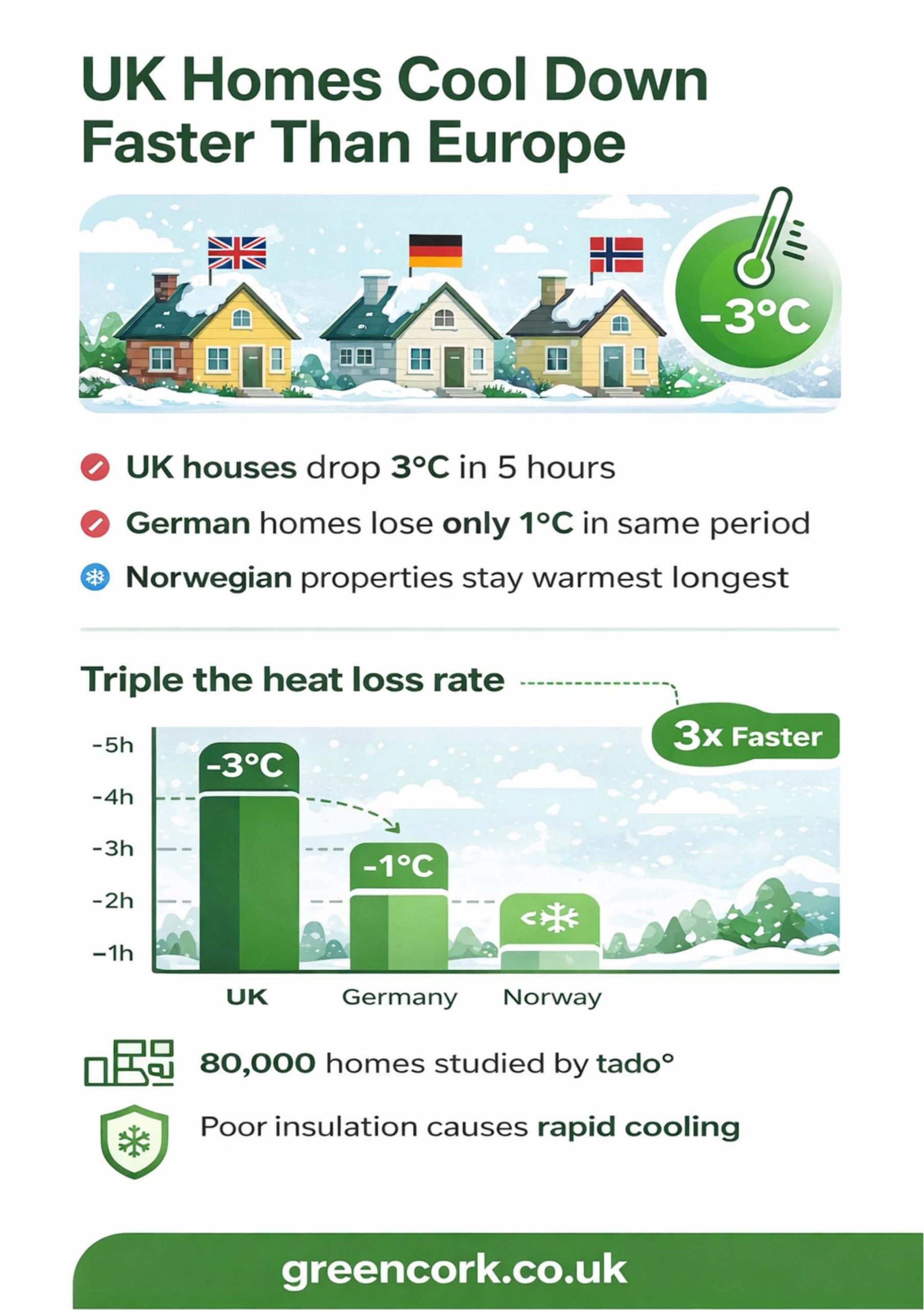
This helps explain why UK homes cool down so quickly.
A tado study of 80,000 homes found UK houses lose heat up to three times faster than homes in countries like Germany and Norway, dropping around 3 °C in five hours, compared to just 0–1 °C elsewhere.
The Thermostat Paradox (When 20°C Doesn’t Feel Warm)
Your thermostat measures air temperature. It knows nothing about wall surface temperature, which matters far more for actual comfort.
You can heat the air to 20°C, but if your walls remain at 12-14°C, the room will never feel comfortable. Those cold surfaces are constantly stealing warmth from the air and from you, so real comfort depends on surrounding surfaces, not just air temperature.
In poorly insulated homes, walls sit several degrees colder than the air and constantly soak up heat.
That is why people turn the heating higher, which barely helps and wastes energy. You see it everywhere: bedrooms feel cold at night, kitchens never warm up, and living rooms feel chilly near walls but stuffy by radiators. That’s because walls in poorly insulated homes constantly drain warmth away from the air and your body.
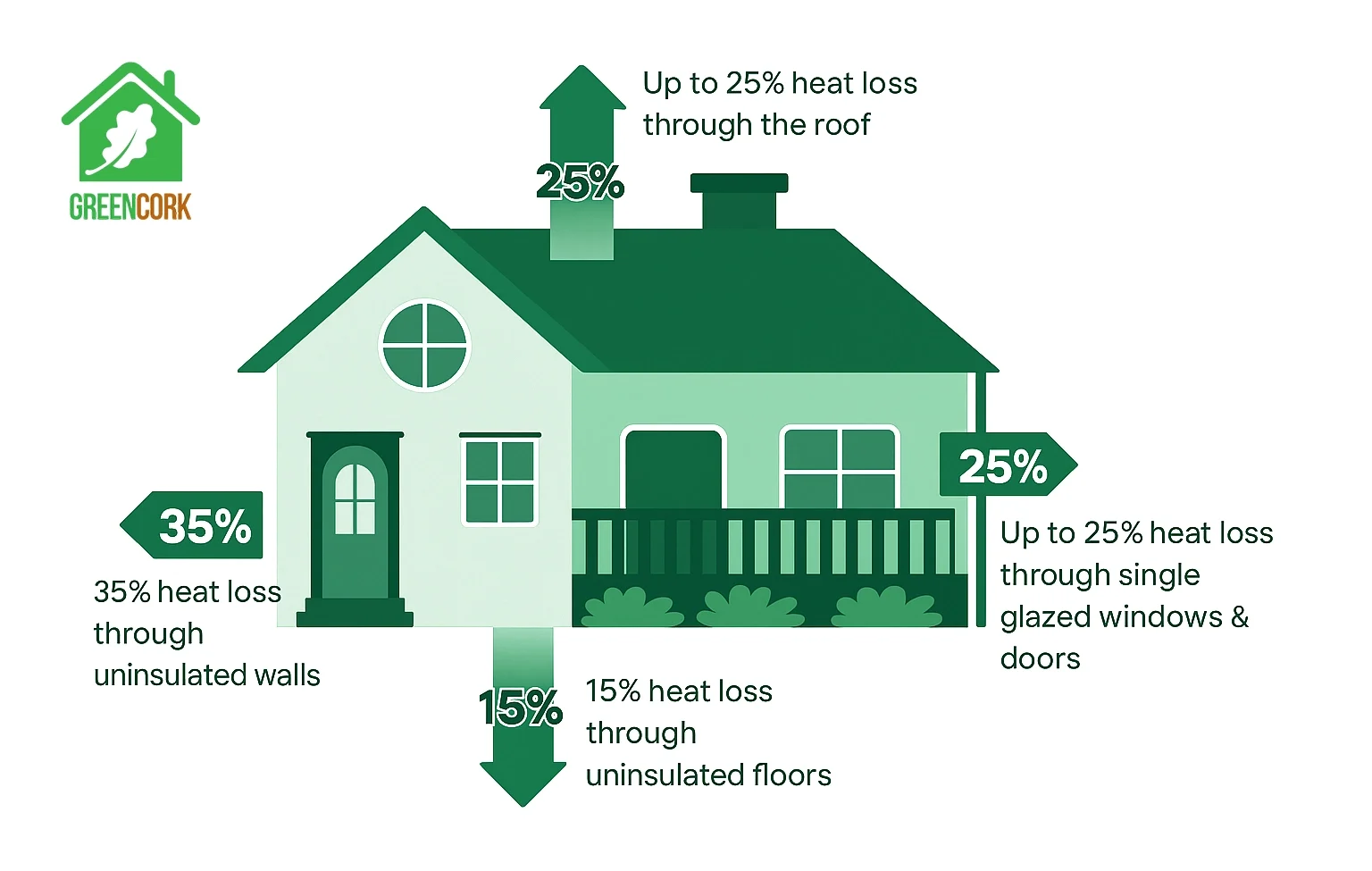
According to Energy Saving Trust, around a third of heat from uninsulated houses escapes through external walls, making rooms feel cold despite the heating working.
Heat Loss Pathways (Where Your Warmth Actually Goes)
The breakdown matters because not all heat loss pathways affect comfort equally.
| Heat Loss Pathway | Percentage of Total Heat Loss | Impact on Perceived Comfort | Priority for Action |
|---|---|---|---|
| Walls | 35% | Very high impact due to radiant heat loss creating a constant chill | Highest |
| Roof / Loft | 25% | Moderate impact, mainly affecting upstairs rooms | High |
| Draughts and Air Leakage | 15% | High impact, creating localised cold spots and unwanted air movement | High |
| Windows and Doors | 15% | Moderate to high impact, particularly cold spots near glazing | Medium |
| Floors | 10% | Low to moderate impact, mainly affecting ground floor rooms | Medium |
Walls dominate both heat loss volume and comfort impact.
They surround you constantly, creating persistent radiant heat loss that no other pathway matches. This is why addressing wall insulation delivers the biggest improvement in how rooms actually feel.
Cold Walls and Missing Insulation
Solid walls versus cavity walls makes an enormous difference. Cavity walls can be retrofitted with insulation. Solid walls (single thick layer) have no cavity to fill, making them far harder to insulate and much more thermally conductive.
Older properties leak heat continuously through these solid walls. The compounding effect shows up most noticeably in bedrooms (particularly cold at night), living rooms, and cold-facing rooms.
Thermal Bridging and Cold Spots
Thermal bridging means heat finds continuous paths through materials that conduct warmth readily. Common problem areas include around windows, door frames, corners, and ceiling-to-wall junctions.
These spots feel noticeably colder when you touch them. On cold mornings, you might see condensation forming specifically at these thermal bridges, revealing where heat is escaping most rapidly.
BRE research shows typical UK dwellings leak at around 11.5 m³ per square metre per hour under test conditions, indicating significant uncontrolled air movement in existing homes. That simply means warm air is constantly escaping through gaps around these cold spots, making thermal bridges feel even colder and harder to heat, even when the heating is on.
Heat loss through roofs, floors, and windows all contributes to the problem. But for immediate comfort improvements, walls deliver the biggest return because they affect radiant temperature in every room constantly.
Why Standard Solutions Don’t Always Fix Cold Homes
New boiler installations improve efficiency but don’t address fabric issues. A modern condensing boiler operates at 90%+ efficiency compared to 60-70% for older models. That’s genuinely better, but it just means you’re losing heat more efficiently if your walls can’t retain warmth.
- Radiator upgrades and balancing help heat reach rooms evenly, but they do nothing to stop warmth escaping straight out through cold insulated walls.
- Plumbing and ventilation fixes reduce waste from leaks and air loss, but they remain secondary and cannot solve the problem of heat retention.
- Heating upgrades work far better once heat loss is fixed, since efficient boilers paired with insulated walls use less energy while finally delivering real, lasting comfort.
The cycle becomes heating works harder, bills rise, comfort stays poor, and homeowners keep upgrading parts without fixing why the house stays cold.

How Spray Cork Addresses Cold Wall Problems
Spray cork targets the specific issue, making your house feel cold. It raises wall surface temperature, so your walls stop stealing warmth constantly.
| Problem | How Spray Cork Solves It | Result |
|---|---|---|
| Cold wall surfaces (13–14°C) | Raises internal surface temperature by approximately 4–5°C | Rooms feel warmer almost immediately |
| Thermal bridging at corners and reveals | Continuous spray-applied coating eliminates gaps and weak points | No cold spots or condensation-prone areas |
| Moisture trapped behind impermeable coatings | Breathable structure allows moisture vapour to escape | Walls stay dry and maintain long-term thermal performance |
| Loss of interior space with thick insulation | Applied at just 6–15mm thickness | Minimal loss of usable space in bedrooms and living areas |
Think of it this way.
Heating warms the air, but spray cork stops cold walls from sucking that warmth away.
When we apply sprayed cork, we check for cold surfaces, thermal bridges, and moisture risks, then apply a breathable coating that raises wall temperatures and removes cold spots.
The result is warmer rooms with less heating and fewer long-term moisture problems.
Conclusion
Spray cork works particularly well on the older UK housing stock, where solid walls make traditional insulation impossible. It’s applied as a thin, continuous coating that raises surface temperature whilst maintaining breathability, delivering comfort improvements you’ll notice immediately.
Ready to stop wasting energy heating cold walls? Get a free quote, and we’ll assess your property’s specific heat loss issues with practical, space-efficient solutions that actually work.
FAQs
Why does my house feel cold when the heating is on?
Cold external walls pull heat from the room and from you. Even warm air feels chilly when the surrounding surfaces stay cold.
Why is my bedroom always cold, even with a radiator?
Bedrooms often lose heat faster through external walls. The radiator warms the air, but cold walls absorb it, especially overnight.
Can a new boiler fix a cold house?
A new boiler is more efficient, but it cannot stop heat escaping. Without insulation, warmth is lost as fast as it is made.
Why is my kitchen colder than other rooms?
More external walls, windows, extractors and hard floors mean faster heat loss, making kitchens harder to keep warm.
Does spray cork work on solid walls?
Yes. It adds insulation to solid walls, raises surface temperatures, and reduces heat loss without major building work.