
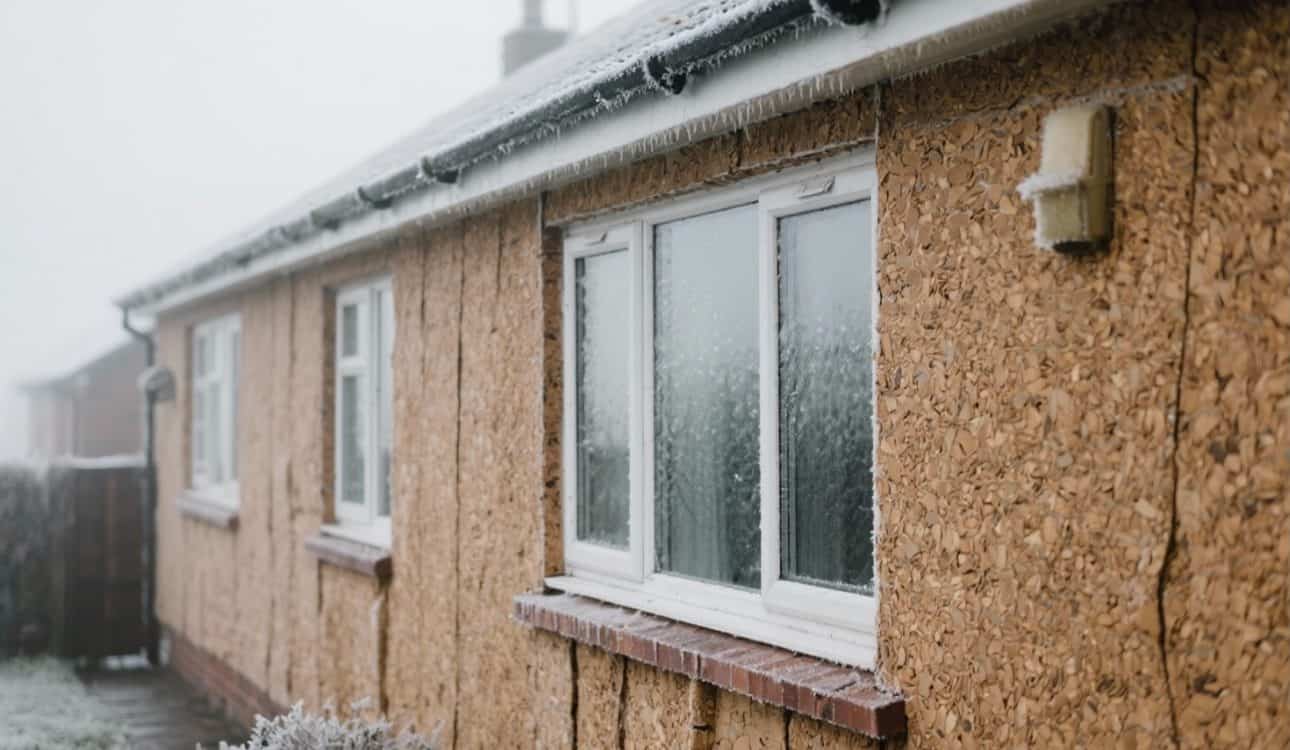

Quick Answer: Freeze-thaw cycles damage UK walls through 9% water expansion when frozen. Cork's cellular structure (40 million cells/cm³) resists this through 95% flexibility recovery, hydrophobic properties, and breathable moisture blocking.
Hidden threats damage millions of UK homes every winter. Freeze-thaw cycles silently crack walls, compromise insulation, and cost homeowners thousands in repairs. Government data shows 8.5 million solid wall homes remain uninsulated, with 90% vulnerable to winter damage. Despite Met Office UKCP18 projections showing 50% fewer frost days by 2050, temperature fluctuations persist, making freeze-thaw protection essential for UK building stock.
Key Takeaways
- Freeze-thaw cycles cause water to expand 9% when frozen, creating pressure that cracks rigid insulation and compromises thermal performance across the UK’s 8.5 million solid wall homes.
- Cork’s cellular structure (40 million cells/cm³, 53% suberin content) resists freeze-thaw damage through 95% compression recovery and hydrophobic properties whilst maintaining vapour permeability.
- Traditional rigid insulation fails at joints during freeze-thaw cycles, whilst spray cork’s seamless application blocks 87.9% of liquid water and accommodates thermal movement without cracking.
What Are Freeze-Thaw Cycles and Why Do They Matter for UK Homes?
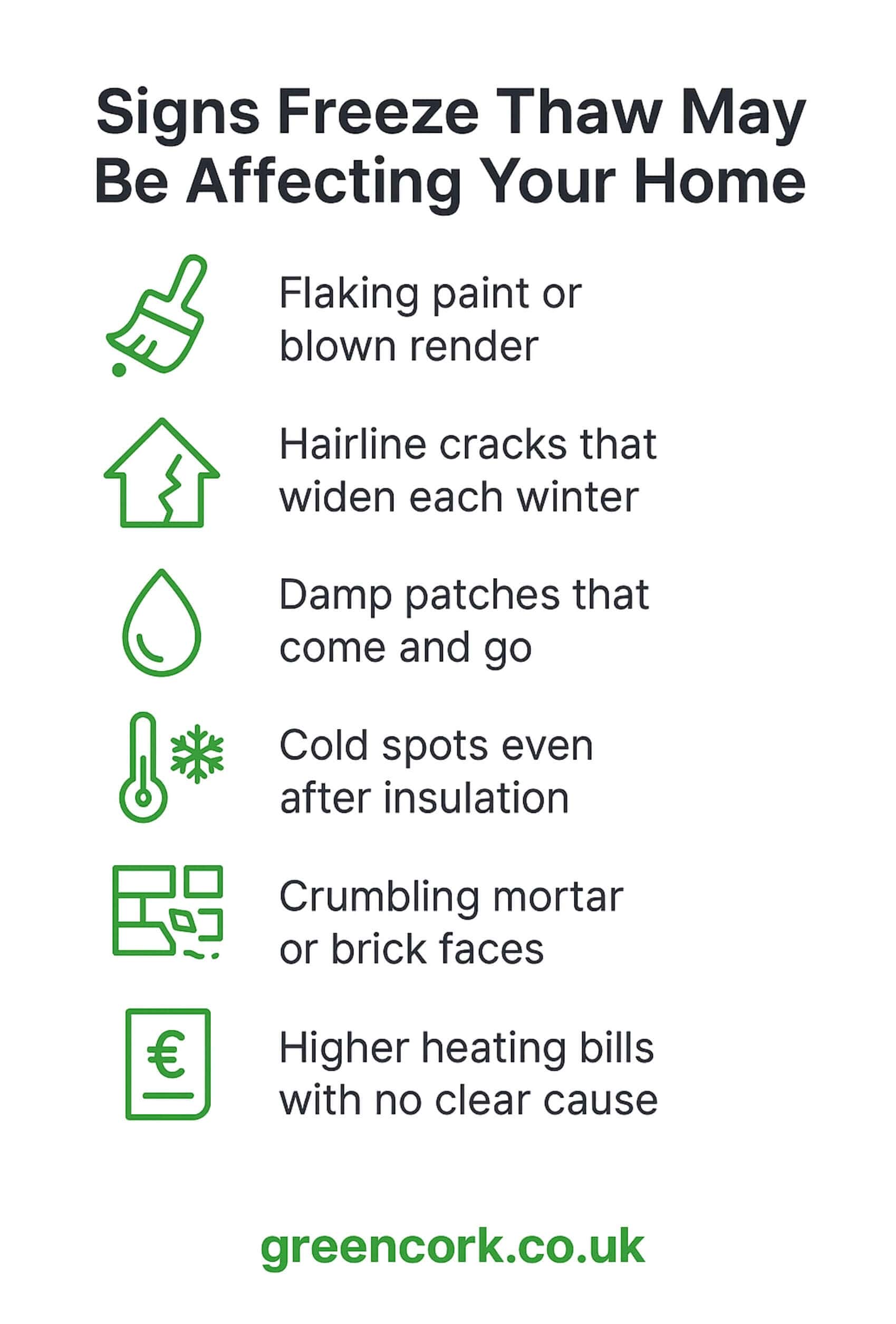
Freeze-thaw damage follows a brutal pattern. Water gets into building materials through cracks or porous surfaces. When temperatures drop below freezing, water expands 9%, creating massive internal pressure. As it warms up, ice melts and contracts. This cycle repeats all winter, gradually enlarging cracks and breaking materials apart.
The UK climate creates perfect freeze-thaw conditions. According to Met Office UKCP18 climate projections, while frost days will halve by the 2050s, temperature swings around freezing persist. Britain’s driving rain (over 1,000mm annually in some regions) plus day-night temperature shifts create ideal conditions for water infiltration then freezing.
Traditional insulation with joints or rigid boards cracks under this stress, letting cold air in and creating thermal bridges.
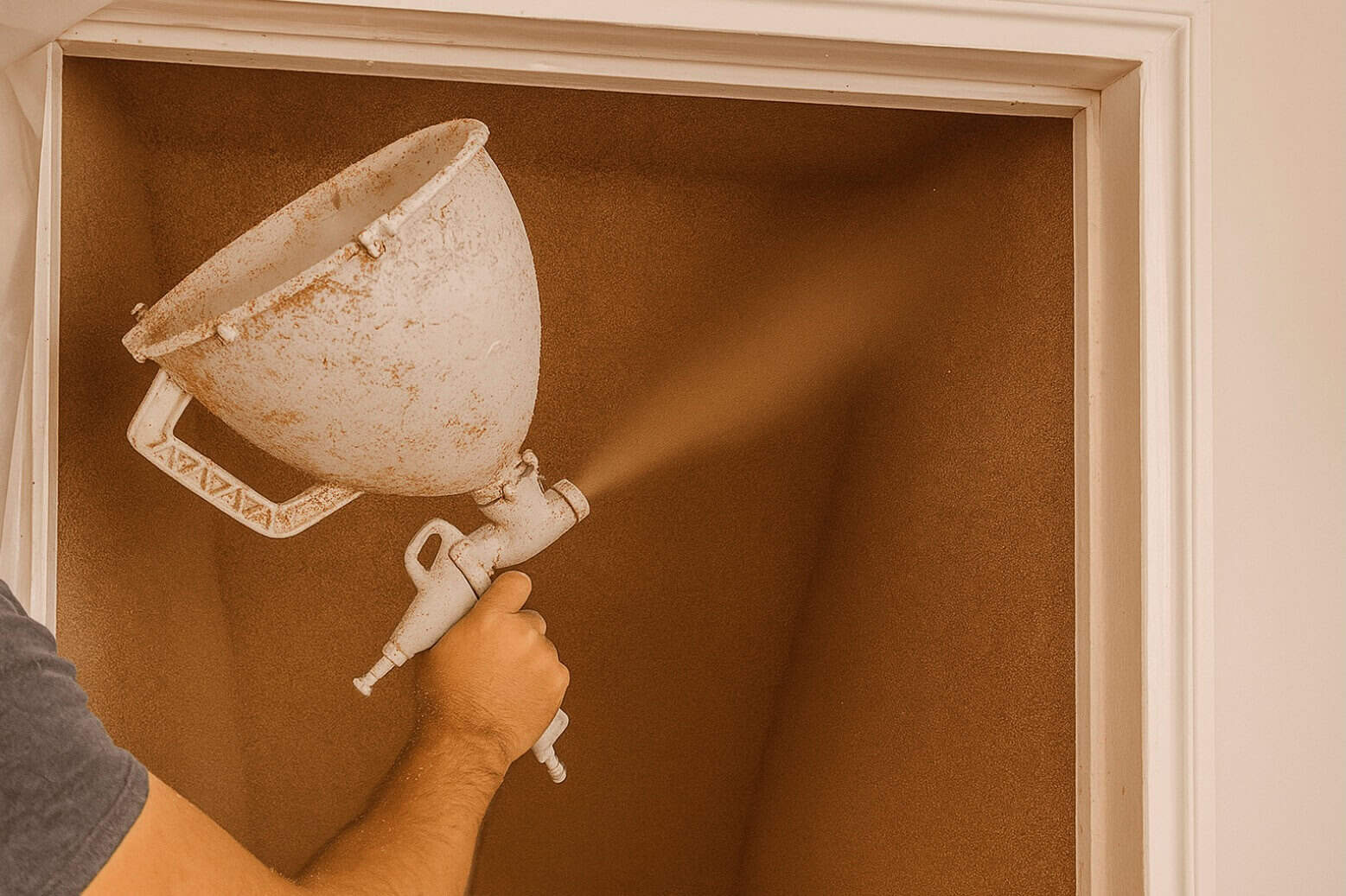
How Spray Cork Handles Frost and Freeze-Thaw Cycles in the UK
Traditional insulation fights temperature extremes and loses. Cork just rolls with them. Its natural structure evolved to handle brutal conditions, making it spot-on for UK winters. Here’s how cork’s biology protects your building:
Cellular Architecture That Prevents Ice Damage
At a microscopic level, cork’s clever cellular structure does the hard work. It’s packed with millions of sealed, air-filled cells that insulate naturally while staying strong. The waxy cell walls repel liquid water but still let vapour pass, so moisture can’t sit, freeze, or damage the building as temperatures change over time in UK homes.
On the other side, traditional insulation absorbs water into open pores or traps it at joints. Cork’s cells remain sealed, blocking water entry whilst the flexible cell walls accommodate any minor temperature-related movement.
Flexibility and Compression Recovery
Cork recovers 95% of its original dimension after compression. This remarkable flexibility allows cork to accommodate thermal expansion and contraction without developing the cracks that plague rigid materials.
When walls expand and contract with temperature changes, cork moves with them. Traditional rigid board insulation fights this movement, creating stress concentrations at fixing points and joints. Eventually, these stress points crack, allowing water infiltration and starting the freeze-thaw damage cycle.
Cork’s flexibility prevents crack development entirely. The material absorbs movement through compression and recovery rather than fracturing. After thousands of freeze-thaw cycles, cork maintains its integrity whilst rigid materials show progressive damage.
Thermal Performance Across Temperature Extremes
Cork’s thermal conductivity of 0.035 to 0.045 W/m·K remains consistent across temperatures. The material performs reliably from negative 180°C to positive 110°C, far exceeding anything the UK climate throws at it.
Real-world performance shows 30% thermal improvement at just 5 to 6mm thickness. This efficiency comes from the stable cellular structure maintaining its insulating air pockets regardless of temperature. Traditional insulation loses effectiveness as repeated freeze-thaw cycles create gaps and reduce contact with wall surfaces.
Temperature stability ensures cork performs effectively through countless freeze-thaw cycles without degradation. The cellular structure doesn’t change with temperature, maintaining thermal resistance year after year.
What Is Spray Foam Insulation and Why Is It Controversial?
Spray polyurethane foam (SPF) is a two-component chemical system that expands on application, filling irregular spaces. Main UK use includes pitched roofs, lofts, and sometimes floors. Two types exist: open-cell (more breathable, lower density) and closed-cell (vapour barrier, higher R-value).
Key performance includes very low thermal conductivity (0.020-0.029 W/m·K) and excellent airtightness when properly installed.
The controversy centres on growing mortgage and resale problems. Lenders increasingly refuse loans or demand removal before approval. Moisture risk arises when foam is applied to roofs with wrong underlays or poor ventilation, potentially trapping moisture and causing timber decay.
A 2024 parliamentary briefing highlights these mortgage and valuation risks, noting some lenders now class homes with spray foam as “unmortgageable” without detailed reports or removal.
Why Traditional Wall Insulation Fails in Freeze-Thaw Conditions
Rigid board insulation has built-in weak spots. All those joints let moisture creep in, and once water freezes it forces boards apart, leaving gaps and cold bridges that only get worse over time. Non-breathable systems make things riskier by trapping moisture, so when freezing hits, damage is almost guaranteed. Cavity wall insulation can also struggle once it gets wet, especially in colder months when drying is slow.
According to 2024 government household energy efficiency data, External wall insulation (EWI) systems cost between £13,200 and £22,800. When poorly detailed with non-breathable renders, these systems trap moisture behind the insulation layer. Freezing causes render to crack and insulation boards to separate.
Spray cork provides critical advantages through seamless application, eliminating moisture entry points, breathability that allows 87.9% liquid water reduction whilst maintaining vapour permeability, and flexibility that prevents cracking under thermal stress.
Spray Cork vs Traditional Insulation for Freeze-Thaw Protection
When winter hits, insulation either copes with moisture and movement or it doesn’t. The differences are down to how each system handles water, gaps, and temperature change:
| Performance Factor | Spray Cork | Traditional Insulation |
|---|---|---|
| Moisture Management | Blocks most liquid water while letting vapour pass | Traps moisture or lets water in at joints |
| Flexibility | Compresses and recovers without cracking | Rigid and prone to cracking |
| Thermal Performance | Stable insulation across temperature changes | Performance drops where gaps form |
| Application Method | Seamless spray with no joints or gaps | Joints and seams allow water entry |
| Freeze-Thaw Durability | Resists freeze cycles without damage | Weak at joints during freeze cycles |
| Breathability | Naturally vapour-permeable while water-resistant | Often needs added vapour control layers |
Choosing the right insulation comes down to how well it handles moisture, movement, and temperature change. For the 7.6 million UK solid wall homes, spray cork has some clear advantages:
- Works effectively at just 4 to 8mm, compared to 100mm or more for internal wall insulation
- Combines insulation and weather protection in one application
- Faster install with less disruption and lower overall cost
- Breathable and reversible, making it suitable for heritage properties
All of this makes spray cork a practical, low impact solution for many UK solid wall homes.
UK Building Regulations and Spray Cork Compliance
UK Building Regulations Part L requirements set thermal performance standards for wall insulation. New builds must achieve 0.18 W/m²K, whilst existing property upgrades target 0.30 W/m²K. The 25% renovation threshold triggers requirements to meet current standards during major works.
Spray cork contributes through its thermal conductivity of 0.035 to 0.045 W/m·K. Seamless application eliminates thermal bridges that compromise overall wall performance. Professional installation ensures compliance and warranty coverage.
Our internal wall coating services work with certified installers who understand Building Regulations requirements. We provide documentation showing thermal performance calculations and compliance with moisture management standards, particularly important for solid wall properties where breathability prevents interstitial condensation.
Breathability compliance matters especially for solid walls. Cork’s natural vapour permeability satisfies moisture management requirements without requiring complex vapour control layers that rigid insulation systems need.
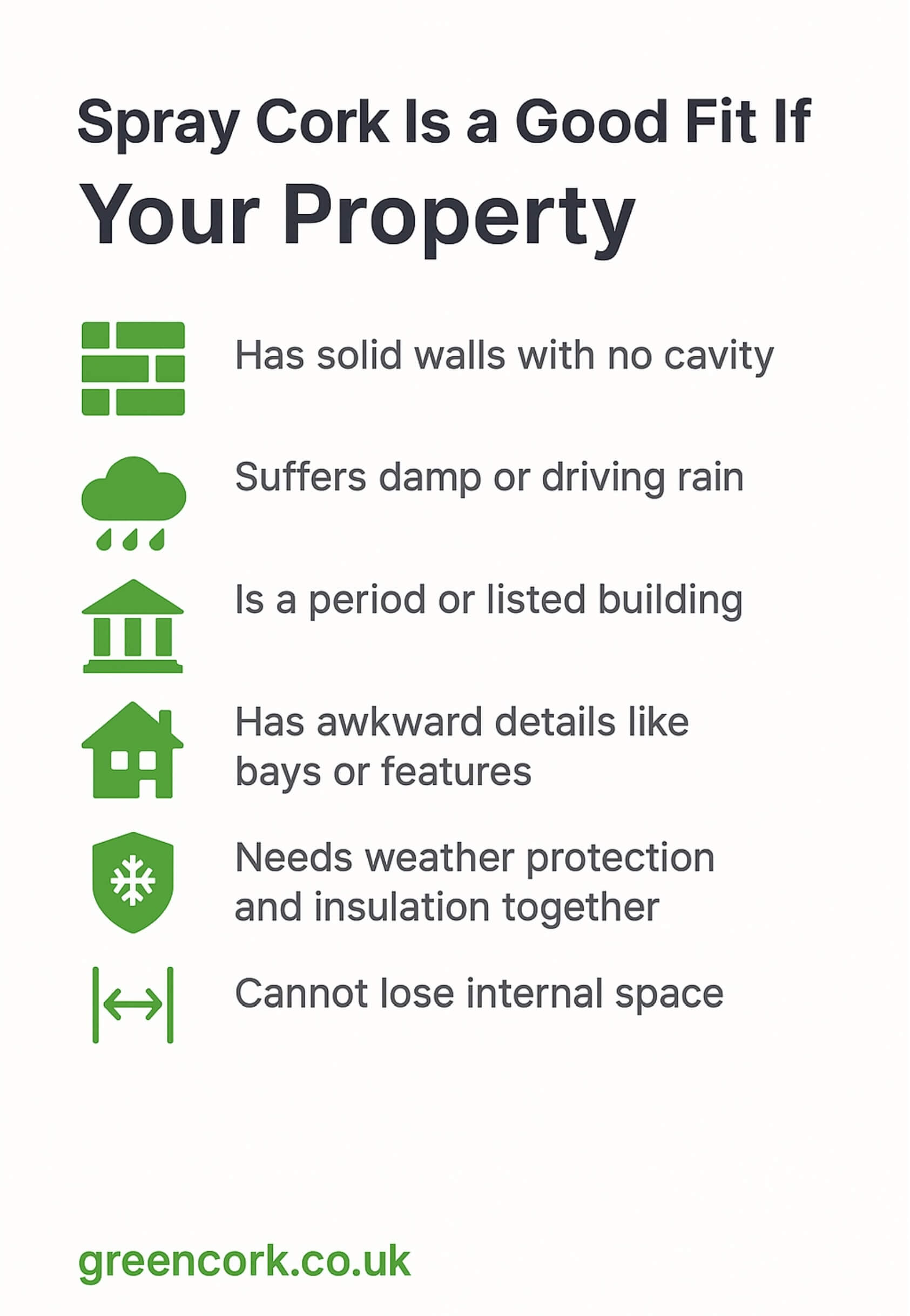
When Spray Cork Is the Right Choice for Your Property
Solid wall properties represent the primary application. With 8.5 million solid wall homes (90% uninsulated) vulnerable to freeze-thaw damage, cork offers combined thermal and weather protection. Heritage and period buildings benefit from cork’s minimal visual impact and breathability that protects historic fabric.
Moisture-sensitive properties where damp already exists gain from cork’s ability to block liquid water whilst allowing walls to dry. Interior and exterior applications are both possible, with 4 to 8mm thickness preserving room dimensions internally or adding weather protection externally.
Spray cork excels when you need combined thermal and weather protection in one application, flexibility to accommodate building movement without cracking, and seamless coverage for complex geometries, including bay windows, decorative features, or irregular surfaces.
Professional assessment determines optimal solutions for your specific property. Some scenarios benefit from hybrid approaches, using cork for weather protection on exposed elevations combined with thicker insulation on sheltered walls. We evaluate each property individually to recommend the most effective strategy.
Conclusion
Cork’s clever cell structure lets walls handle moisture, movement, and freezing without cracking like rigid insulation does. With millions of UK solid walls still uninsulated, it offers real winter protection at just a few millimetres thick. Our certified installers assess your home properly and recommend solutions that meet Building Regulations and actually last.
Contact us today for a free quote and discover how spray cork can protect your property from freeze-thaw damage whilst improving comfort and energy efficiency.
FAQs
How does spray cork prevent freeze-thaw damage better than traditional insulation?
Its flexible cell structure moves with temperature changes instead of cracking, while resisting liquid water and allowing vapour to escape. Rigid insulation often fails at joints.
Will spray cork meet UK Building Regulations for wall insulation?
Yes. It supports Part L compliance and meets moisture control needs, especially for solid walls, when professionally installed.
How long does spray cork last in UK freeze-thaw conditions?
It comes with 25-year warranties and stays stable through repeated freeze-thaw cycles without cracking or degrading.
Can spray cork be applied to any type of wall?
It suits most wall types, inside or out. Surfaces must be sound, and any active damp should be fixed first.
Is spray cork more expensive than traditional wall insulation?
Up front, yes. But it combines insulation and weather protection, avoids thickness issues, and often costs less long-term for solid walls.
