
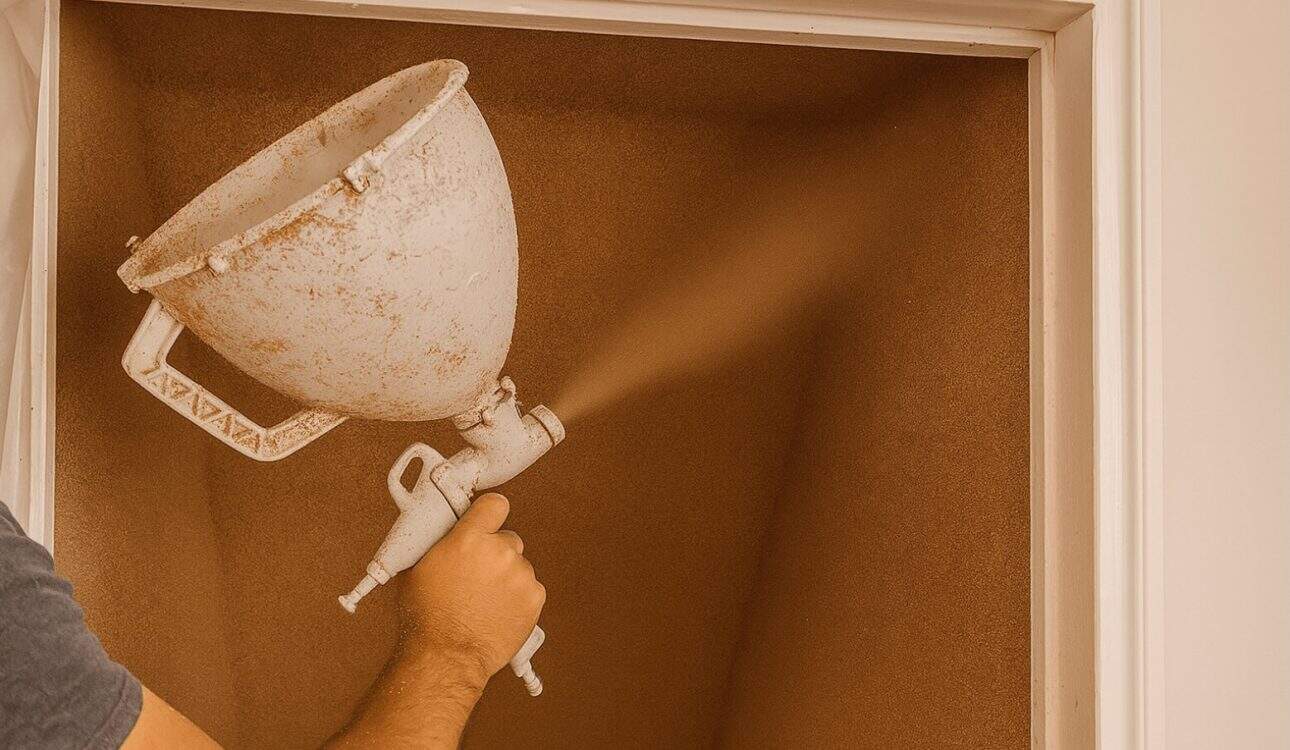

Spray foam creates mortgage problems and moisture trapping in UK homes. Cork spray offers breathable, moisture-safe thermal improvement without resale risks, ideal for older solid-wall properties.
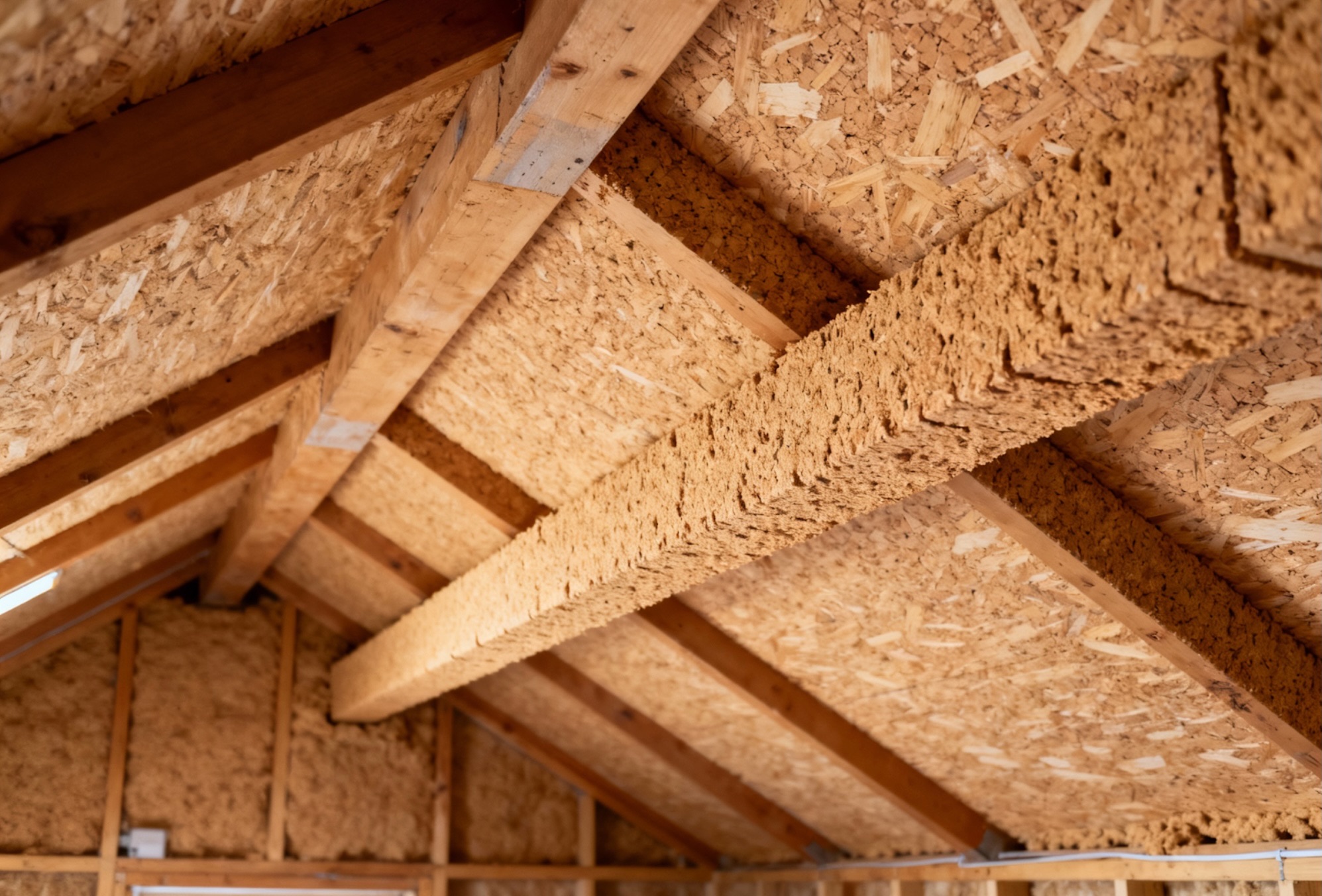
Millions of UK homes need better insulation, but the wrong choice costs thousands or stops sales. Spray foam causes mortgage rejections, moisture damage, and £3,200 removal costs. Official government data shows only 876,000 homes have solid wall insulation, leaving millions vulnerable.
This guide covers what both insulation types are, their pros and cons for UK conditions, common spray foam problems documented in parliamentary briefings, and when cork is the better choice.
Key Takeaways
- Spray foam creates documented mortgage problems, with lenders refusing loans or demanding expensive removal (£3,200+) before approving applications.
- Cork spray is breathable, moisture-safe, and aligns with UK building science (BS 5250), ideal for solid-wall Victorian and Edwardian homes.
- Whilst spray foam offers higher R-values, cork provides safer thermal improvement without hidden risks to timbers, resale, or mortgage approval.
What Is Cork Spray Insulation and How Does It Work?
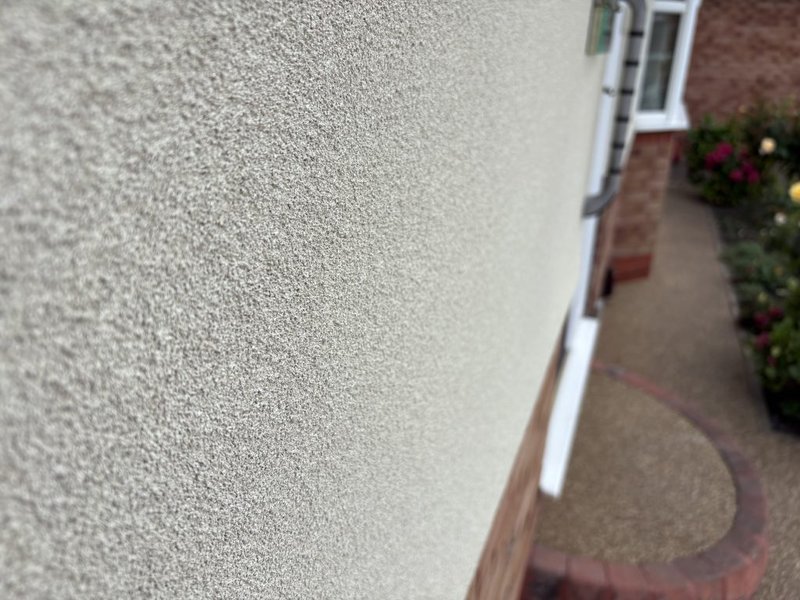
Cork spray insulation is a thin coating (3-6mm) made from granulated cork plus binders, applied to exterior (sometimes interior) walls. It’s a high-performance thermal coating combined with weatherproof render, not thick insulation like boards.
Cork is naturally breathable and hydrophobic.
This helps UK homes reduce cold spots, prevent surface condensation (a common mould trigger), and protect masonry from weather. The environmental benefit is significant. Cork’s life cycle shows it can be carbon negative when forest sequestration is included, achieving approximately -435 kg CO₂e/m³.

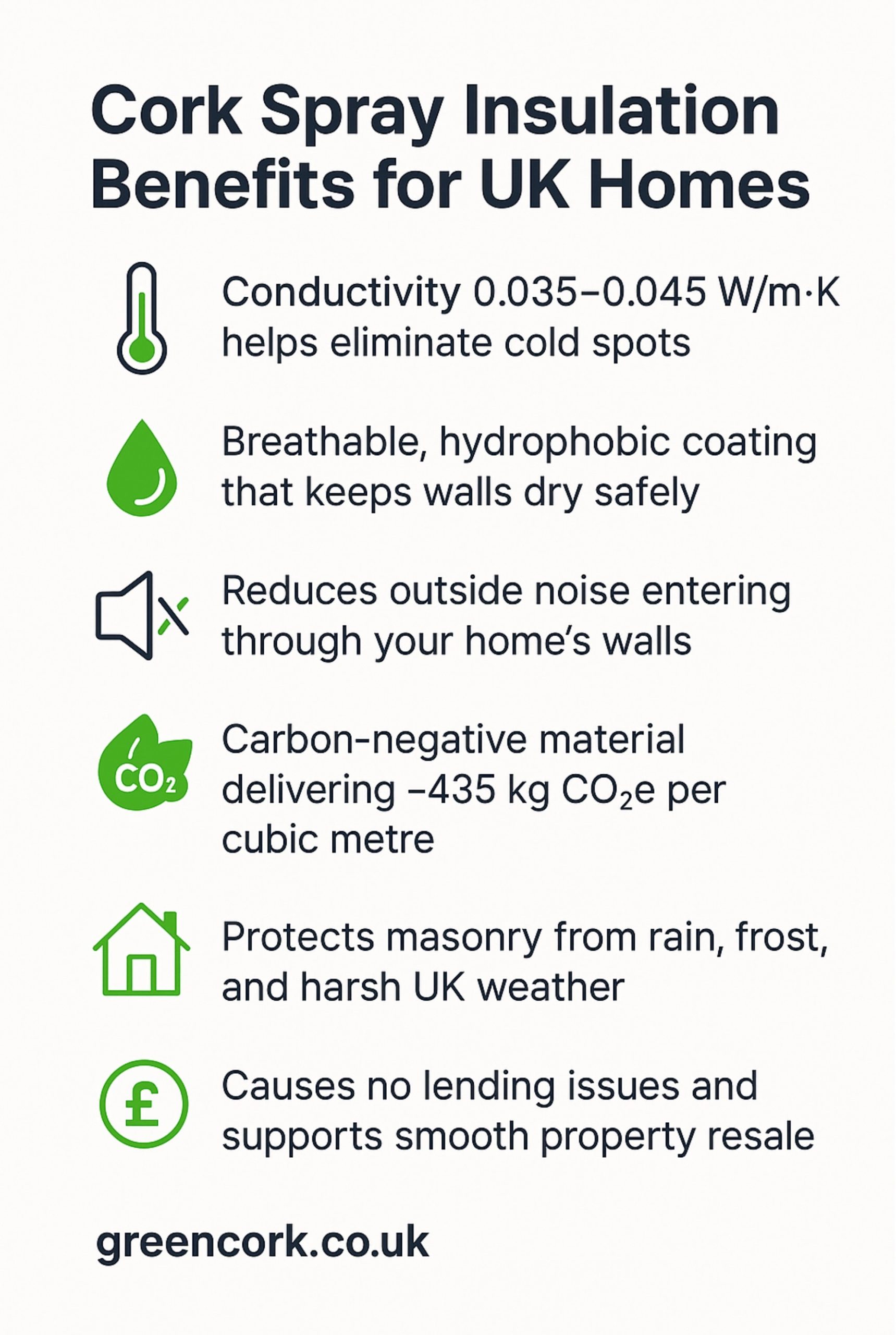
Best use cases include solid-wall Victorian and Edwardian homes, damp façades needing weather protection, and heritage properties requiring breathable finishes. We apply spray cork insulation as a breathable, weatherproof coating addressing these UK housing challenges.
What Is Spray Foam Insulation and Why Is It Controversial?
Spray polyurethane foam (SPF) is a two-component chemical system that expands on application, filling irregular spaces. Main UK use includes pitched roofs, lofts, and sometimes floors. Two types exist: open-cell (more breathable, lower density) and closed-cell (vapour barrier, higher R-value).
Key performance includes very low thermal conductivity (0.020-0.029 W/m·K) and excellent airtightness when properly installed.
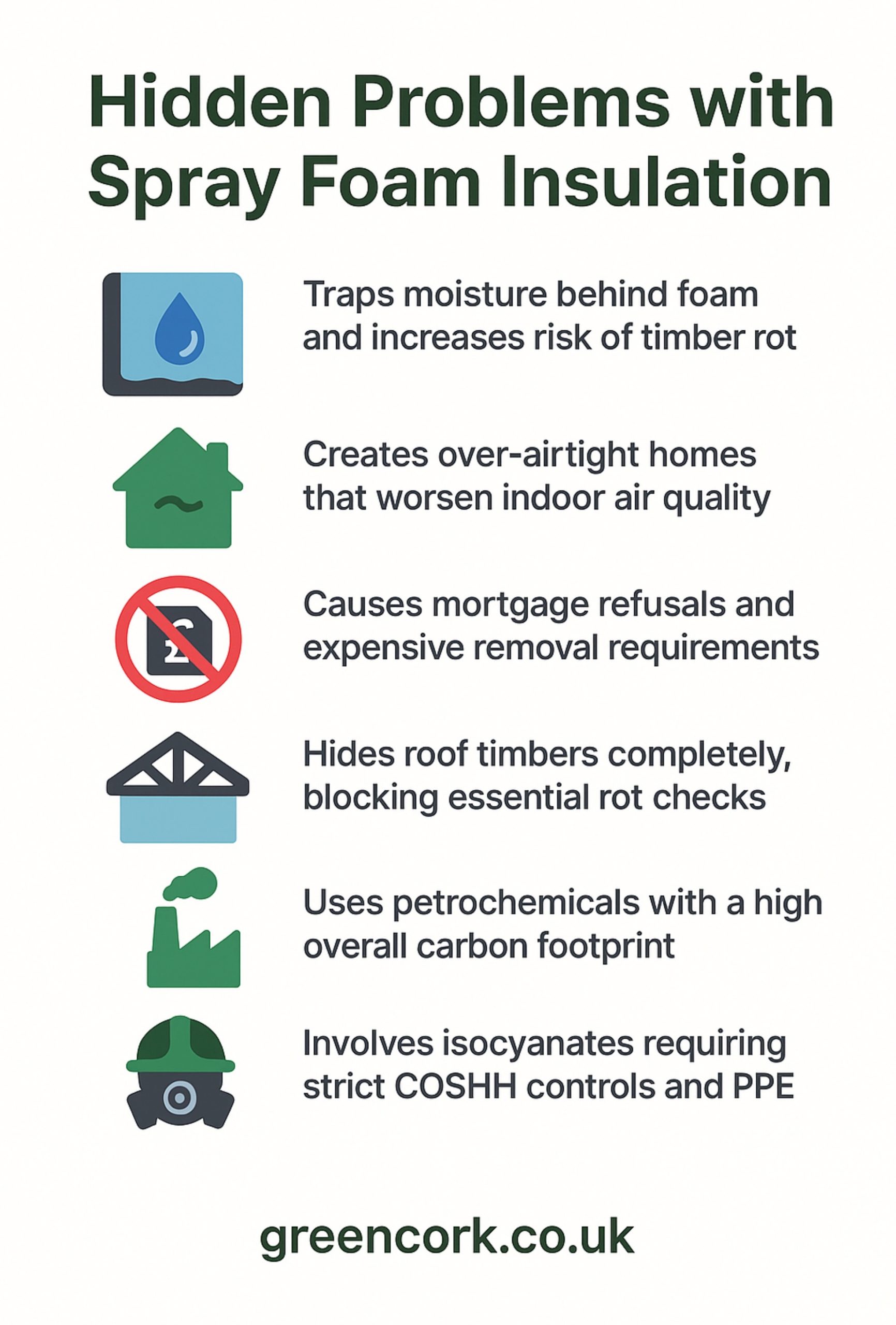
The controversy centres on growing mortgage and resale problems. Lenders increasingly refuse loans or demand removal before approval. Moisture risk arises when foam is applied to roofs with wrong underlays or poor ventilation, potentially trapping moisture and causing timber decay.
A 2024 parliamentary briefing highlights these mortgage and valuation risks, noting some lenders now class homes with spray foam as “unmortgageable” without detailed reports or removal.
Common Problems with Spray Foam Insulation in UK Homes
Spray foam insulation might sound like a tidy solution, but in many UK homes it can turn into a real pain. Homeowners often only realise there’s an issue when damp shows up or a mortgage falls through.
Here are some of the common problems people end up dealing with.
Moisture Trapping and Condensation Risk
BS 5250 requires buildings to manage vapour and allow drying. Closed-cell foam acts as a vapour barrier. If wrongly applied to non-breathable underlays traps moisture, causing condensation, timber rot, and structural damage. Moisture increases thermal conductivity by 50%, reducing performance. The UK’s pre-1930 housing stock with unknown underlays creates high risk.
Mortgage and Resale Difficulties
Surveyors can’t inspect hidden timbers, increasing perceived risk. This leads to mortgage refusal or demands for removal. RICS guidance notes that foam can adversely affect valuations. Home Owners Alliance advises caution until industry issues are resolved.
This isn’t a statutory ban but a real market constraint. Homeowners can be stuck, unable to remortgage or sell without expensive remediation, despite the government stating no plans to intervene.
Expensive and Disruptive Removal
Removal costs approximately £40/m², totalling around £3,200 for 3-bed detached roofs. The process must be done by professionals due to damage risk and exposure concerns. It often requires full roof access, disrupting households for days.
After removal, roofs may need repairs and re-insulation with alternatives. Combined costs can exceed original installation, creating financially painful situations for homeowners.
How Cork Spray Insulation Solves These Problems
Cork spray’s moisture-safe design is breathable, never trapping moisture. It supports outward drying and aligns with BS 5250 standards. Applied to exteriors, it doesn’t hide structural issues, but walls remain inspectable.
Mortgage-friendly treatment by surveyors is key. Cork spray is treated like specialist render with no documented lender issues. Low-risk installation uses water-based systems without isocyanates, making it safer for installers and occupants.
Environmental benefits are substantial. Cork is renewable and low-carbon, achieving net negative emissions when sequestration is counted, aligning with UK net-zero goals. Cork spray can be coloured and textured, improving appearance whilst upgrading thermal comfort.
The limitation is honest: cork spray won’t achieve ultra-low U-values alone (it’s a coating, not thick insulation), but it’s ideal for modest thermal uplift plus damp protection and weather resistance. Our exterior wall coating solutions combine thermal performance with long-lasting weather protection as part of whole-house retrofit strategies.
Cork Spray vs Spray Foam: Which Should You Choose?
Both have their perks, but the right choice depends on your home, your budget, and how much hassle you’re willing to take on later.
Choose spray cork if you have:
- Solid-wall or masonry homes with damp or weathering issues
- Concerns about future mortgage or resale
- Priority for low-carbon natural materials
- Need for modest thermal improvement plus weather protection
- Heritage properties where breathability matters
Consider spray foam only if you have carefully designed new-build or modern roofs with full hygrothermal assessment, complete documentation (BBA/KIWA certification, moisture survey), confidence about lender acceptance, and need maximum R-value with professional oversight.
Avoid spray foam if you have older roofs with unknown underlay, plan to remortgage or sell within 10 years, lack detailed documentation, or remain unsure about moisture risk.
| Factor | Cork Spray | Spray Foam |
|---|---|---|
| Breathability | Fully breathable | Vapour barrier (closed-cell) |
| Moisture risk | Very low | High if poorly installed |
| Mortgage impact | No documented issues | Growing lender concerns |
| Removal cost | Not applicable | £3,200+ average |
| Installation safety | Water-based, low VOC | Isocyanates require COSHH |
| Best for | Solid walls, damp-prone homes | New builds with assessment |
| Environmental | Carbon negative | Petrochemical-based |
For most UK retrofit scenarios (especially older homes), cork spray is lower-risk and more aligned with UK building science. UK Building Regulations Part L sets thermal performance targets, and cork spray supports these goals without hidden risks.
Conclusion
Spray foam delivers high R-values but carries real risks, including moisture damage, mortgage issues, and costly removal (£3,200+). Cork spray is a safer, breathable option that suits UK building science, protects against damp, and supports net-zero aims.
If you want natural, breathable insulation without mortgage or home risk. Get in touch with us today for a free assessment of your property. We’ll show how spray cork boosts comfort, weather protection, and efficiency.
FAQs
Is spray foam insulation illegal in the UK?
No. It’s legal if it meets Building Regulations, BS 5250, and COSHH rules. The issues come from poor installation causing moisture damage and mortgage problems, not from legality. There are no plans to ban it.
Can I get a mortgage with spray foam insulation in my roof?
Sometimes. Lenders often require specialist surveys and full certification (BBA/KIWA). Without clear documentation, many see it as high-risk. Always check with a mortgage broker first.
Does spray cork insulation meet UK Building Regulations?
Yes, when used as part of a compliant system. On its own it’s too thin for major U-value gains, but it supports Part L and BS 5250 moisture control. Installers should provide U-value or SAP calculations where required.
How much does cork spray insulation cost compared to spray foam?
Cork spray is competitively priced per m². Spray foam costs can rise significantly if removal is needed (£3,200+). Cork carries lower long-term risk and avoids mortgage issues.
Can spray cork insulation be used inside as well as outside?
Yes. It can be applied internally to reduce cold spots and condensation risks when detailed correctly. External use is more common, as it protects masonry and allows walls to breathe.
