

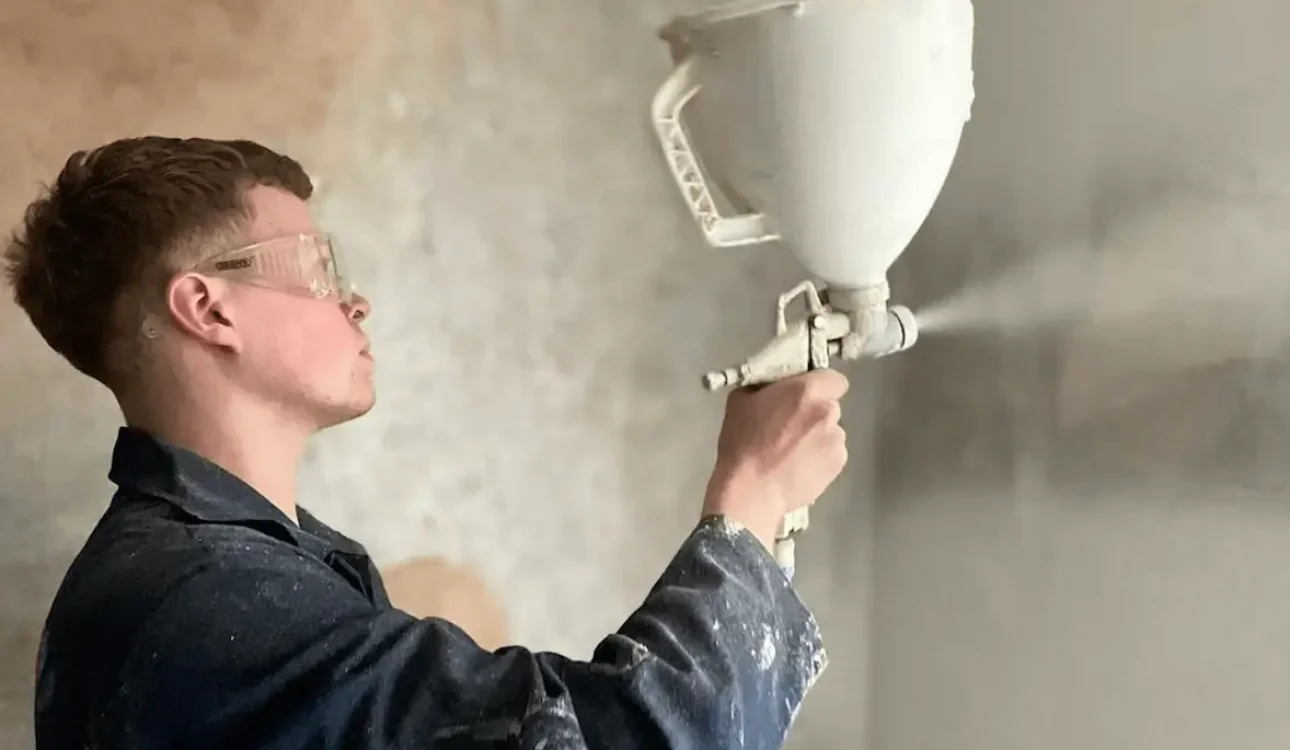

Sprayed cork is typically applied 2-5mm thick (averaging 3-4mm) in two coats. The finish has a subtle orange-peel texture with visible cork particles, creating a modern, uniform appearance similar to premium render.
Sprayed cork offers a modern solution for property owners seeking durable, attractive wall coatings. This natural material combines granulated cork with water-based resin to create a protective layer that works on both exterior and interior surfaces. Perfect for refreshing tired walls or adding light insulation, sprayed cork delivers aesthetic and practical benefits in one application.
Key Takeaways
- Sprayed cork is applied in a thin 2-5mm layer that remains flexible, preventing cracking while providing insulation benefits.
- The finish offers a contemporary appearance with subtle texture and comes in numerous colour options with 15-25 year durability.
- Unlike traditional renders (15-25mm thick), sprayed cork is lightweight (3-5kg/m²), breathable, and can be applied to most surfaces without structural concerns.
How Thick Is Sprayed Cork Applied?
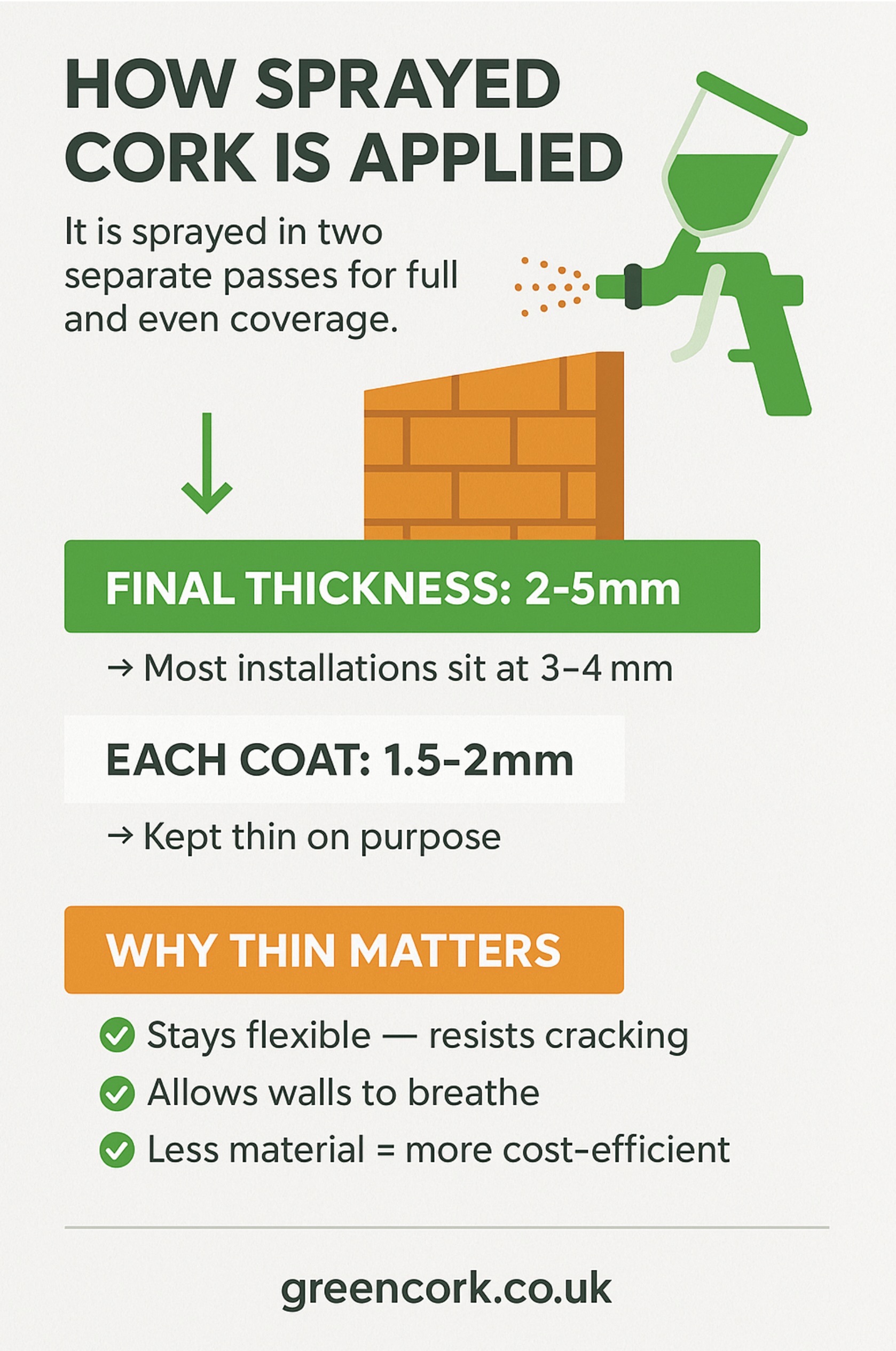
Sprayed cork is typically applied at a thickness of 3-4mm across most UK installations. This measurement isn’t random; it represents the sweet spot for performance and durability.
Most professional installers apply sprayed cork in two separate passes to achieve this optimal thickness. The first pass creates the foundation layer of approximately 1-2mm, while the second pass completes the coating to reach the full 3-4mm.
Going too thin (under 2mm) risks patchy coverage and reduced longevity. The coating simply won’t have enough substance to provide proper protection or thermal benefits.
Conversely, exceeding 5mm in a single application isn’t recommended either. The material may crack as it dries unless you’re switching to a different formulation like cork-lime plaster, which can be built up to much greater thicknesses (10-40mm) for more significant insulation.
For specialist applications like conservatory roofs or campervan insulation, installers still aim for this 3-4mm standard thickness, showing its versatility across different surfaces.
Sprayed Cork vs Traditional Render: What’s the Difference?
Traditional renders typically require significantly thicker applications than sprayed cork, often 15-25mm or more. This fundamental difference affects several aspects of performance:
Weight and Structural Impact
Traditional cement renders add considerable weight to walls. A standard cement render at 20mm thickness can add approximately 36kg per square metre to your wall.
Sprayed cork weighs substantially less at just 3-4mm thick. This makes it ideal for older properties where structural loading is a concern.
No additional structural support is needed when applying sprayed cork, unlike heavier renders that might require reinforcement.
Flexibility and Crack Resistance
Cork’s natural elasticity allows it to move with the building as temperatures change and minor settling occurs. Traditional renders are more rigid and prone to cracking over time.
The thin, flexible cork layer can bridge existing minor cracks in substrates, creating a uniform appearance without the extensive preparation needed for conventional renders.
Breathability and Moisture Management
Cork’s high porosity (approximately 46%) allows vapour to escape while still repelling liquid water. This means your walls can breathe naturally.
Traditional renders often trap moisture within walls, potentially leading to damp issues and decreased thermal efficiency.
Overall Comparison: Sprayed Cork vs Traditional Render
The following table compares key properties of sprayed cork versus traditional render:
| Property | Sprayed Cork (3–4mm) | Traditional Render (15–25mm) |
|---|---|---|
| Weight | 3–5 kg/m² | 25–45 kg/m² |
| Application Time | 1–2 days | 3–7 days (including drying time) |
| Breathability | High | Low to Medium |
| Crack Resistance | Excellent | Fair to Poor |
| Thermal Benefits | Moderate | Low |
| Typical Lifespan | 15–25 years | 10–15 years |
The thin nature of sprayed cork allows it to deliver these benefits without the bulk and weight associated with traditional renders, making it particularly suitable for retrofitting projects and buildings where additional wall thickness is undesirable.
What Does a Finished SprayCork Surface Look Like?
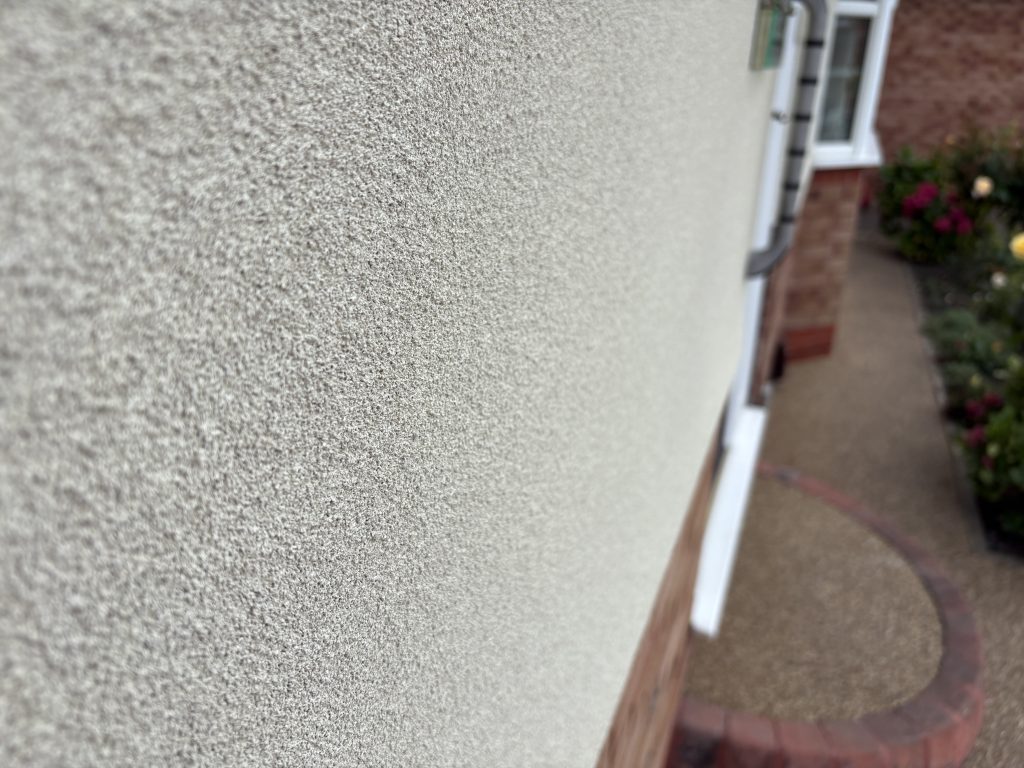
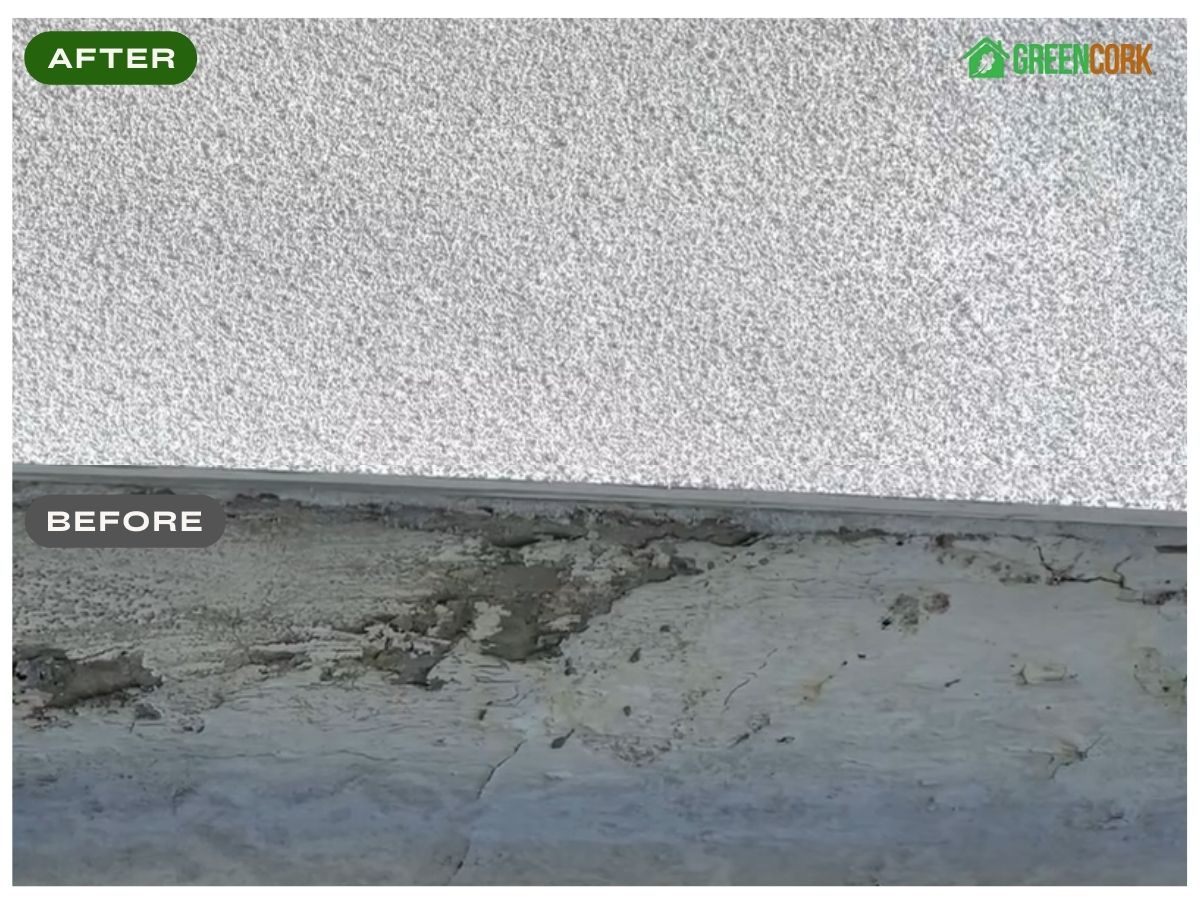
A finished sprayed cork surface creates a contemporary look that balances texture with smoothness. Up close, you’ll notice a fine granular finish with tiny cork particles visible in the surface.
From a distance, the finish appears remarkably uniform, similar to modern thin-coat silicone renders. The surface has a subtle orange-peel texture that adds character without being overly rough.
Most homeowners describe the finished look as:
"It looks like a premium modern render but feels warmer to the touch."
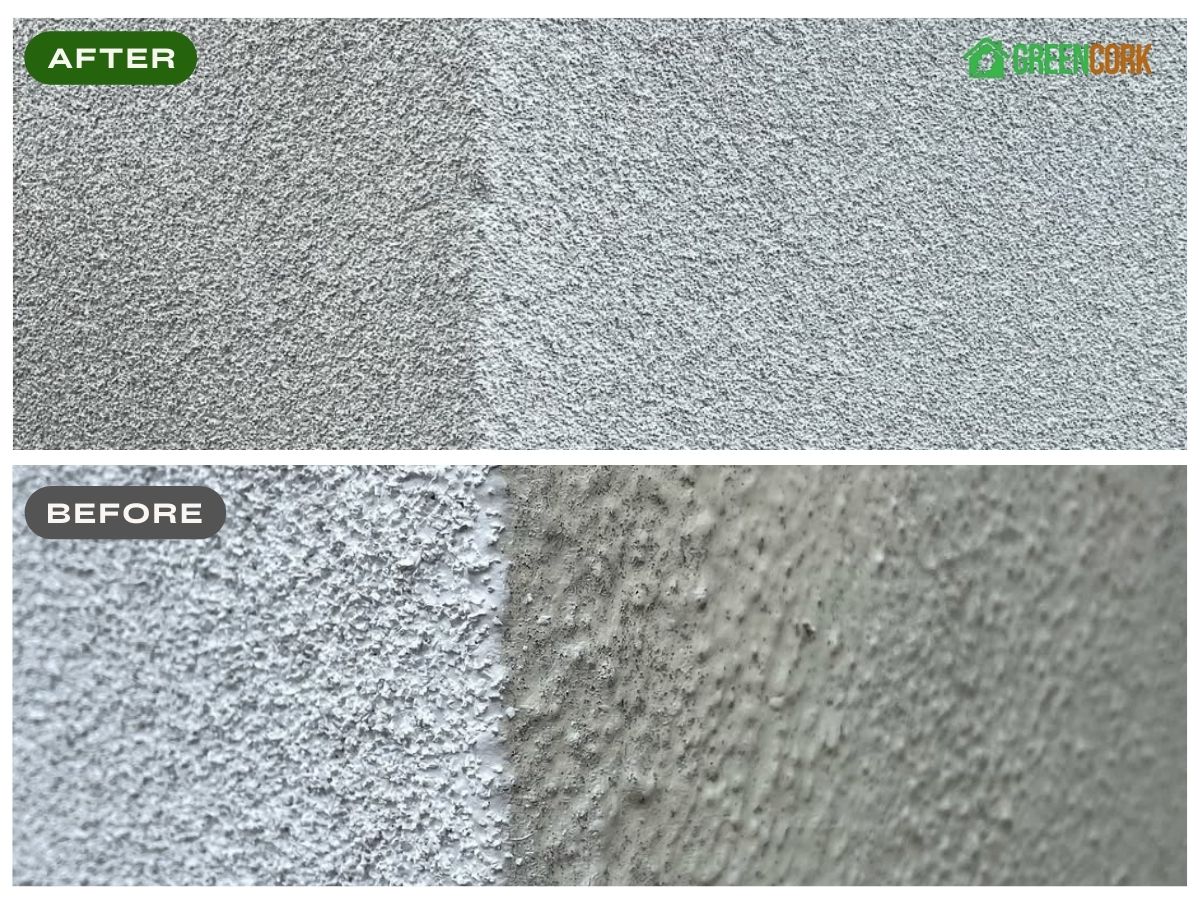
The texture helps to hide minor imperfections in the underlying surface, which makes it particularly valuable when covering older pebbledash or textured renders. Unlike some coatings that can appear plasticky, sprayed cork maintains a natural matte to low-sheen finish that looks authentic.
On interiors, the finish can be left with its natural slight texture or skimmed with a compatible plaster for an ultra-smooth result. This versatility allows for different aesthetic approaches depending on your design preferences.
The material’s elasticity means it’s less likely to develop hairline cracks that often plague conventional renders. This creates a cleaner, more consistent appearance that maintains its look over time.
Colour Options and Kerb Appeal Improvements
Sprayed cork comes in an impressive range of colours to suit any architectural style. Most suppliers offer 20-30 standard shades, with custom tinting available for perfect matching to your design vision.
Popular colour choices include:
- Warm whites and creams for traditional properties
- Contemporary greys for modern homes
- Terracotta tones for Mediterranean-inspired designs
- Subtle blues and greens for standout properties
The finish offers excellent UV stability, with manufacturers often guaranteeing colour retention for up to 20 years. This longevity makes sprayed cork a sound investment compared to conventional painted renders that might need repainting every 5-7 years.
Many homeowners choose sprayed cork specifically to transform dated exteriors. The application instantly refreshes tired pebbledash, textured renders, or painted brick surfaces without the disruption of removal.
The visual transformation is perhaps most dramatic on properties with mixed external finishes. Sprayed cork creates a cohesive appearance across different substrates, unifying extensions with original buildings for a more architecturally harmonious result.
Why Skilled Application Matters
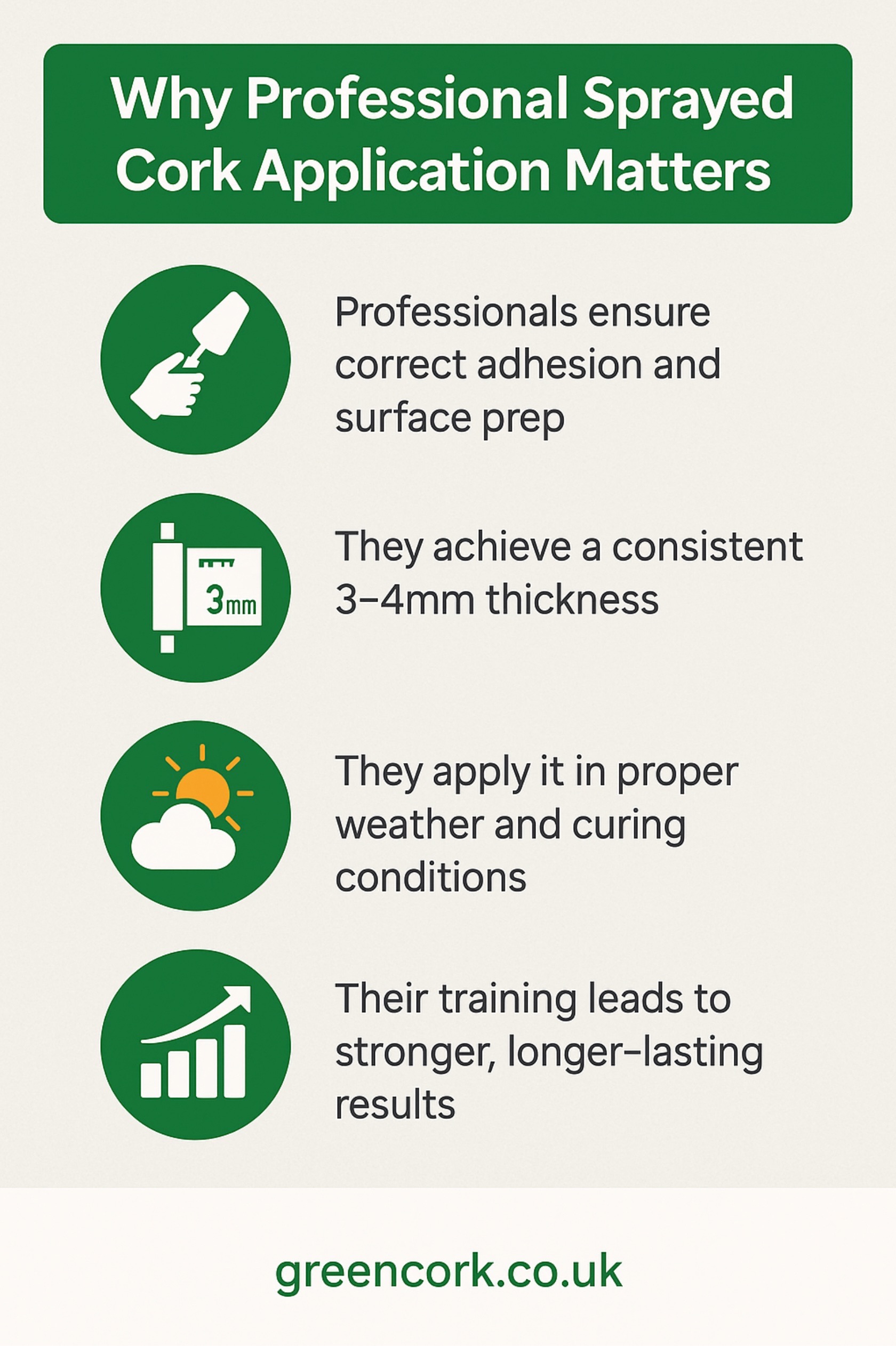
The performance and appearance of sprayed cork heavily depend on expert application. While the product itself is exceptional, a professional sprayed cork application ensures you get all the benefits this material offers.
Expert applicators understand the importance of:
- Surface preparation that determines adhesion quality. Poorly prepared surfaces may lead to premature failure or an uneven finish.
- Consistent spraying technique controls the thickness and texture. An experienced applicator maintains a uniform 3-4mm application across all surfaces.
- Weather conditions during application significantly impact the final result. Professional installers monitor temperature and humidity to ensure optimal curing.
Certified applicators receive specialised training in the correct mixing ratios and spray equipment operation. This expertise translates directly to the quality and longevity of your finished surface.
Cutting corners with inexperienced applicators often results in aesthetic inconsistencies and reduced performance benefits. The modest cost difference for professional application typically delivers substantial returns in durability and appearance.
Conclusion
Sprayed cork delivers a 3-4mm protective shell that combines aesthetic appeal with practical benefits for UK properties. Its flexibility prevents cracking while its breathable nature helps walls manage moisture effectively. Ready to transform your property with this innovative coating? Contact our sprayed cork specialists for a free consultation and see how this remarkable material can enhance your home’s appearance and performance.
FAQ
Is 3mm of sprayed cork enough for insulation?
A 3mm sprayed cork layer provides modest thermal benefits but isn’t substantial insulation alone. It helps reduce cold spots and condensation while slightly improving comfort, but for significant energy improvements, consider thicker cork-lime plasters (20-40mm).
Can you add more coats of sprayed cork later?
Yes, additional coats can be applied later, though proper surface cleaning is essential. Many installers recommend refreshing the surface first to ensure proper adhesion of the new material to the existing coating.
Does cork crack like render over time?
Sprayed cork is significantly less prone to cracking than traditional renders thanks to its natural elasticity. The cork particles allow the material to flex with minor building movement rather than developing the rigid fractures common in cement-based products.
Will sprayed cork hide existing cracks or textures?
Sprayed cork effectively conceals hairline cracks and minor surface irregularities. For larger cracks, proper repair before application is necessary. It can soften the appearance of textured surfaces like pebbledash without completely eliminating the underlying profile.
Can you pressure wash sprayed cork surfaces?
Light pressure washing is possible on fully cured sprayed cork, but high-pressure cleaning should be avoided. Most manufacturers recommend gentle cleaning with soft brushes and mild detergents rather than aggressive pressure washing to preserve the surface integrity.