

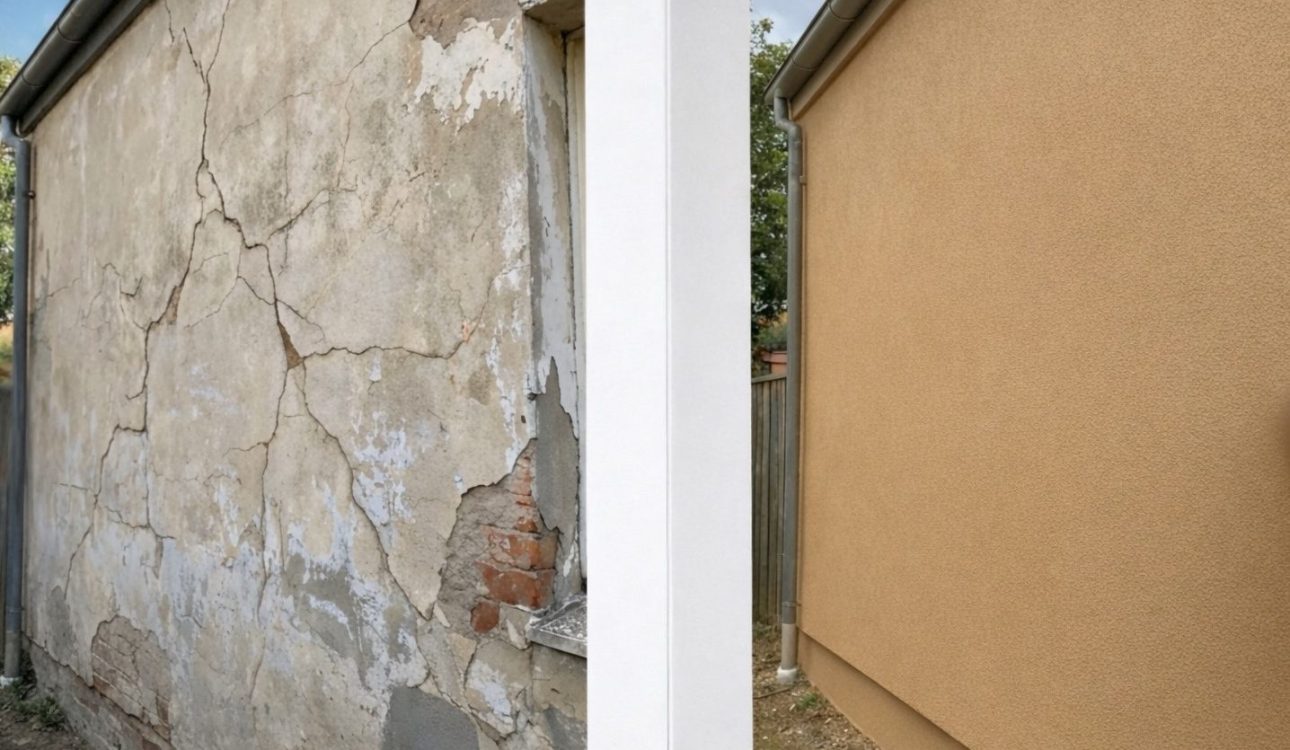

Quick Answer: SprayCork is designed to remain flexible and resist cracking or peeling when properly installed. Failures typically stem from poor substrate preparation or incorrect application rather than the material itself.
Coating failures are a common worry when homeowners think about external wall finishes. SprayCork is built for flexibility and weather resistance, but like any coating, its performance depends heavily on preparation, application quality, and building conditions. Keep reading to learn whether SprayCork actually cracks or peels and what determines its durability.
Key Takeaways
- SprayCork’s elastic composition and breathable structure prevent cracking under normal building movement, thermal cycling, and seasonal weather exposure.
- Durability problems stem from poor substrate preparation, damp conditions, or incorrect application rather than material weaknesses.
- Properly installed SprayCork typically lasts 15 to 25 years on external walls with routine inspection and early repairs.
SprayCork Durability and Resistance
Cork composition combines natural granules with elastic binder systems, which gives SprayCork its flexibility. That flexibility matters enormously for external wall coatings because buildings move slightly with temperature changes, ground settlement, and seasonal expansion.
Rigid coatings crack under these stresses, while elastic materials like SprayCork adapt without splitting. Breathability also helps reduce trapped moisture risk, which is crucial in UK retrofit applications where older masonry needs vapour-permeable finishes.
Independent durability testing for construction materials confirms how different formulations respond to thermal cycling, moisture ingress, and UV degradation. Seamless spray application eliminates the weak points and joints that plague traditional render systems, where cracks typically start at panel edges or tooled joints.
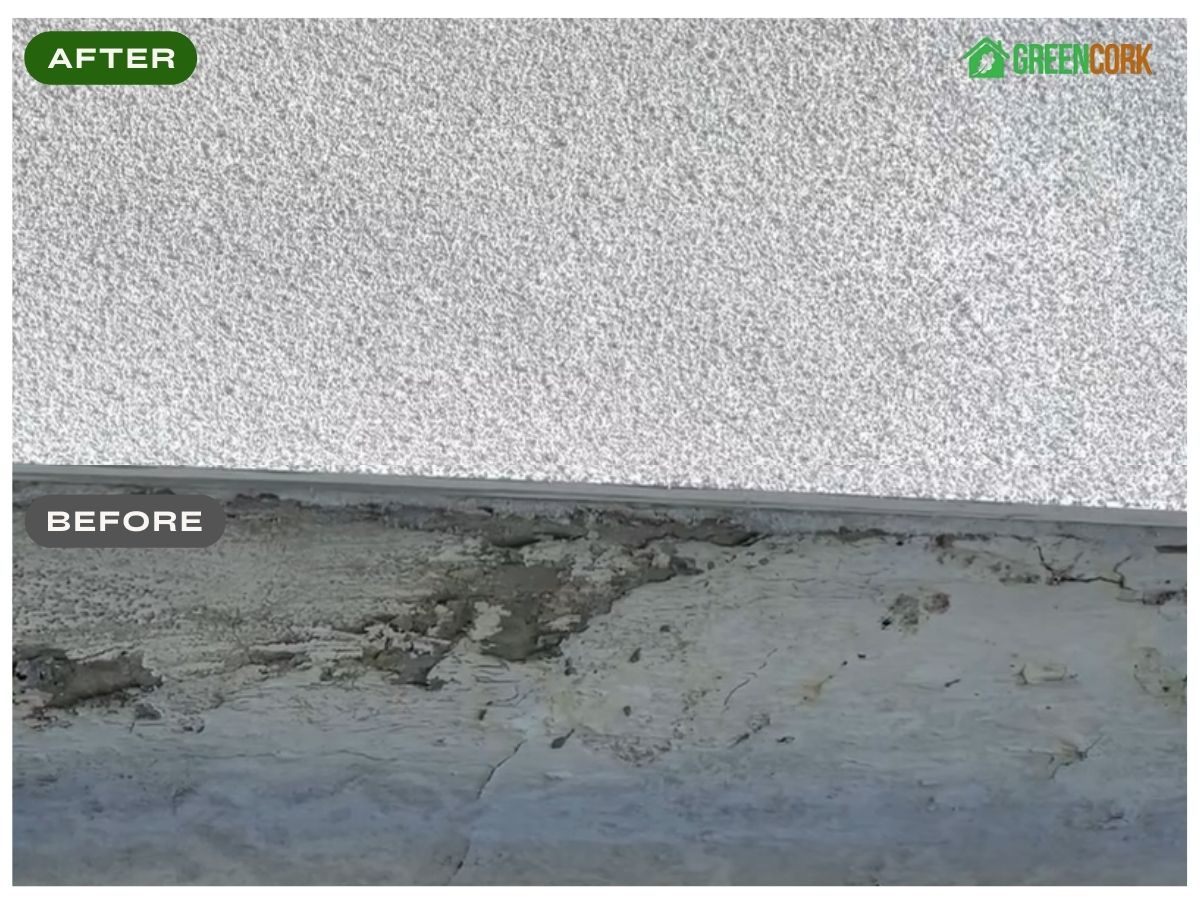
Why SprayCork Lasts Longer Than Rigid Coatings
| Spray Cork Feature | How It Helps Durability |
|---|---|
| Elastic coating | Adapts to temperature shifts and minor building movement without cracking |
| Breathable structure | Allows moisture vapour to escape rather than becoming trapped behind impermeable layers |
| UV-resistant binders | Slows oxidative ageing and binder breakdown that causes brittleness over decades |
| Seamless spray finish | Eliminates joints and panel edges where rigid systems typically crack first |
SprayCork works because it addresses multiple failure mechanisms at once rather than relying on a single property.
The combination of elasticity, breathability, and seamless application creates conditions where common coating problems struggle to develop.
For a deeper breakdown of lifespan expectations in real-world UK conditions, including climate exposure and maintenance considerations, see our guide on how long spray cork lasts.
Does SprayCork Crack or Peel in Real Conditions
SprayCork is designed not to crack or peel when installed correctly on suitable substrates. Failures usually stem from substrate issues or incorrect installation rather than from the coating material itself.
Rigid renders and paint systems commonly fail from building movement because they cannot flex enough to accommodate thermal expansion or minor structural shifts. SprayCork’s elastic properties let it move with the substrate rather than fighting against it.

Climate factors like heavy rainfall and freeze-thaw cycles increase stress on all external coatings.
UK climate rainfall projections and exposure risks show uplifts of around 30 percent for one hour rainfall extremes in many areas by mid century, meaning more intense downpours that test facade systems.
SprayCork’s breathable structure helps manage these moisture cycles because trapped water can escape as vapour rather than building up behind the coating where freeze-thaw damage accelerates deterioration.
What Affects SprayCork Durability Over Time
Durability is influenced less by the material itself and more by installation conditions and building factors.
The coating performs well when applied correctly, but several elements determine long-term performance and whether problems develop years down the line.
Surface Preparation and Substrate Condition
Clean surfaces are essential because dust, loose render, soluble salts, or oil films prevent proper adhesion.
Removal of failing paint or weak render layers must happen before application, otherwise the new coating simply sticks to material that is already coming away from the wall. Moisture testing matters because applying any coating over damp substrates traps water inside, leading to blistering, salt crystallisation, and eventual delamination.
Research on solid wall retrofit performance highlights how older masonry presents specific challenges around salts, existing treatments, and moisture movement that modern cavity walls do not face.
Application Thickness and Workmanship
Correct layer thickness ensures both elasticity and adhesion work as intended.
Too thin and the coating lacks the flexibility to bridge substrate movement. Too thick in single passes, and adhesion suffers while drying stresses increase. Incompatible surfaces increase peeling risk, which is why system compatibility checks matter before specifying SprayCork over existing finishes.
Industry guidance on qualified installation and workmanship stresses trained installers and manufacturer-backed application methods as the route to avoiding poor workmanship that causes early failures.
Environmental exposure also plays a role. UV intensity varies across the UK but still drives slow oxidative ageing of binders over decades. Rain and freeze-thaw cycles test adhesion and elasticity repeatedly, with failures developing where moisture penetrates and freezes.
Structural movement or cracks in the substrate cannot be bridged indefinitely by any coating, so addressing underlying building defects matters before applying finishes.
When Spray Cork Peeling Problems Can Happen
Problems do occur, but the causes are typically preventable with proper specification and installation.
Here are the realistic scenarios where SprayCork can fail and what leads to those outcomes.
- Poor surface preparation leaves dust or weak render, weakening adhesion as moisture and temperature changes stress the coating.
- Applying over damp or unstable substrates traps moisture, leading to freeze-thaw damage, salt crystallisation, blistering, and eventual detachment.
- Excessive structural movement or widening masonry cracks can exceed coating flexibility, causing splitting and loss of protection.
- Poor detailing at joints, windows, or ground level allows water ingress, undermining adhesion and enabling moisture to attack from behind.
- Long term neglect or impact damage, plant growth, or blocked gutters accelerates deterioration that routine maintenance could otherwise prevent.
These issues are preventable in the vast majority of installations through proper survey work, substrate preparation, competent application, and periodic inspection. SprayCork itself is not the weak point when failures occur.
Common SprayCork Applications and Expected Lifespan
Different applications and exposure conditions lead to varying lifespans, which is why warranty terms and maintenance expectations should match the specific installation context. Below are typical scenarios and what affects durability in each case.
| Application Type | Typical Exposure | Expected Lifespan | Key Durability Factors |
|---|---|---|---|
| South-facing external walls | High UV, moderate rain, thermal cycling | 15 to 25 years | UV-resistant binders and correct thickness critical |
| North-facing external walls | Lower UV, higher moisture, slower drying | 15 to 25 years | Breathability and moisture management essential |
| Sheltered elevations | Reduced rain, lower UV, minimal weathering | 20 to 30 years | Substrate preparation more critical than weather resistance |
| Exposed coastal properties | Salt spray, driving rain, high wind | 12 to 20 years | Regular inspection and early repair of minor damage is needed |
| Internal applications | No UV, no freeze-thaw, minimal stress | 25+ years | Mainly aesthetic maintenance rather than structural durability concerns |
Manufacturer warranties typically range from 10 to 25 years, depending on product grade and installation conditions.
Real-world performance often exceeds these figures when maintenance happens as recommended, but neglected installations can fail earlier than warranty periods suggest.
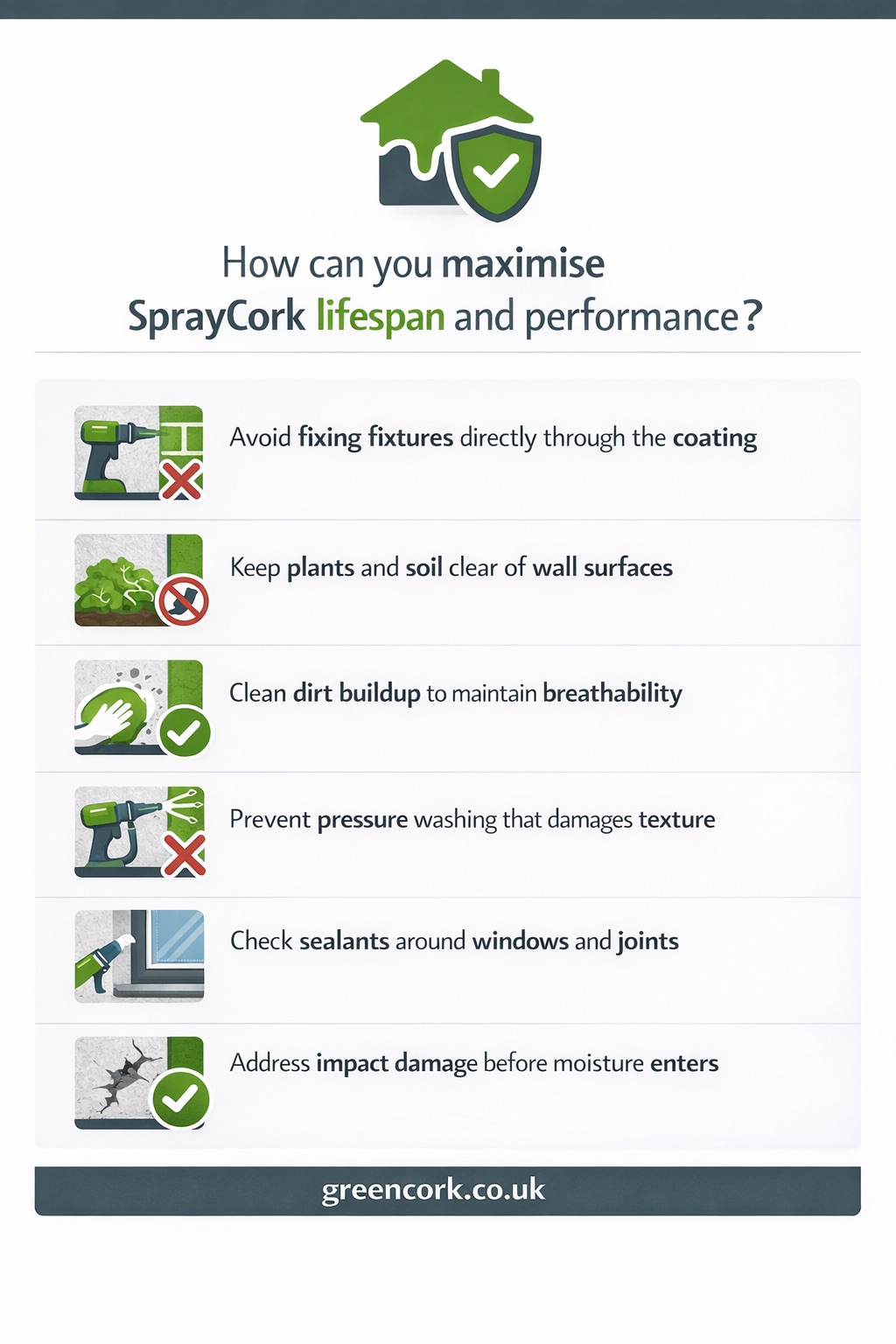
How to Maximise SprayCork Lifespan and Performance
Routine inspection every few years catches small problems before they become expensive repairs.
Repair minor cracks early because water ingress through tiny splits causes far worse damage once freeze-thaw cycles start. Keep drainage and roof details functioning properly because gutters overflowing onto walls or ground splash constantly wetting the base of coatings creates the conditions where any finish eventually fails.
Ensure correct installation from the start by using our professional sprayed cork coating service with trained applicators and manufacturer-backed warranties.
Conclusion
SprayCork is flexible, breathable, and durable when installed correctly on properly prepared substrates. Cracking or peeling issues come from preventable factors like poor preparation, damp substrates, or incorrect detailing rather than material weaknesses.
Professional assessment and competent installation deliver the performance and lifespan the material is designed to provide. Get a free SprayCork quote for your property to ensure your project benefits from proper specification and application.
FAQs
How long does SprayCork typically last on exterior walls?
Properly installed SprayCork typically lasts 15 to 25 years on external walls, with sheltered elevations often exceeding 25 years. Lifespan depends on exposure, substrate condition, and maintenance quality.
Can SprayCork be applied over painted or rendered surfaces?
Yes, but only after testing compatibility and preparing the surface properly. Loose paint, weak render, or incompatible finishes must be removed before application to ensure adequate adhesion.
Does SprayCork need maintenance after installation?
Routine inspection every three to five years is recommended. Early repair of minor cracks or damage prevents moisture ingress that causes larger problems. Keeping gutters and drainage working properly also extends lifespan.
Is SprayCork suitable for cold or wet climates?
Yes, SprayCork’s breathability and flexibility make it well suited to UK conditions including cold, wet weather and freeze thaw cycles, provided substrate preparation and detailing are correct.
What happens if SprayCork is applied incorrectly?
Poor application leads to adhesion failure, peeling, or cracking within months to a few years. Common mistakes include inadequate surface preparation, application over damp substrates, or incorrect layer thickness.