

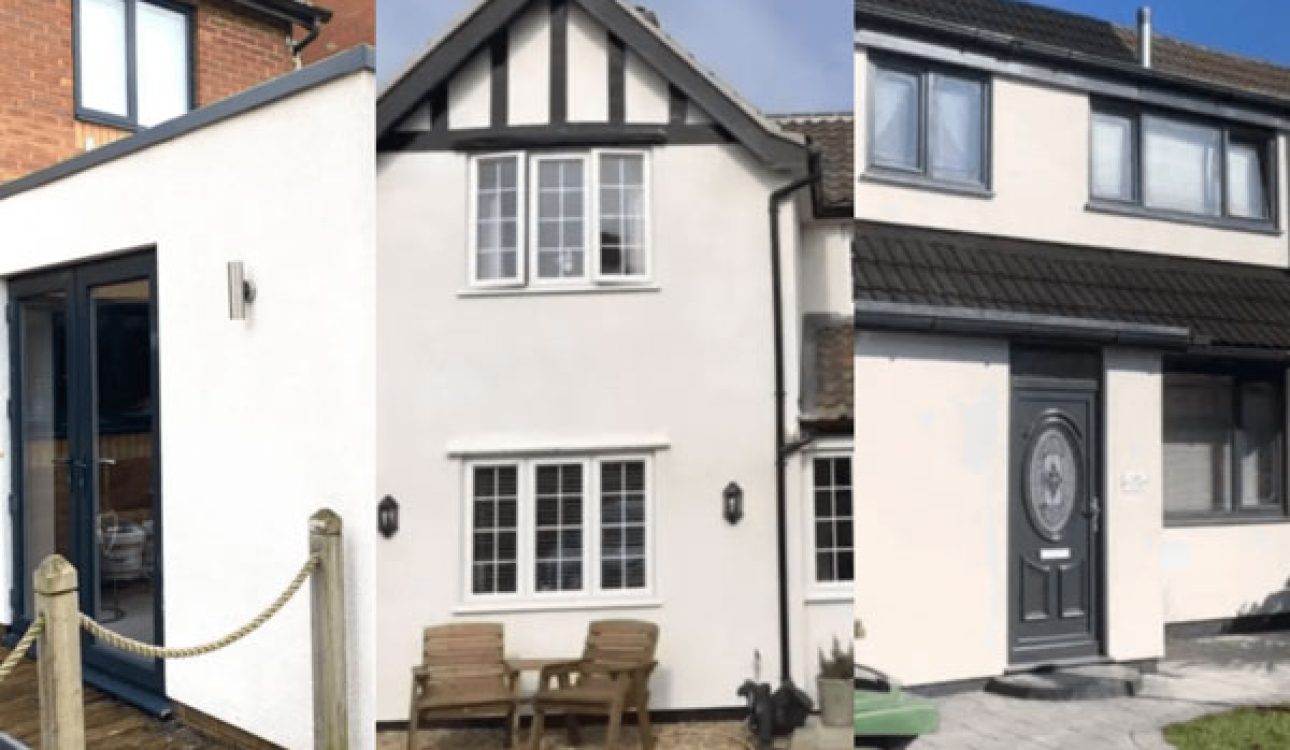
Quick Answer: The word “Monocouche” is a French word that means “one layer”. That is the defining feature of this type of render. Monocouche render stands out because installers apply it in one thick, continuous layer unlike traditional multi-layered rendering systems. It is a cement based render with a single colour pigment running the whole way through the material.
Monocouche render contains pre-mixed pigments, binders and additives that allow it to:
- Bond well to external masonry substrates
- Resist weather conditions
- Maintain consistent colour throughout the material
The main advantage is that the colour runs throughout the wall so if the render gets damaged or chipped the exposed area still matches the original surface. You don’t need to paint the monocouche render making it a low-maintenance option.
It’s suitable for a wide range of masonry surfaces including blocks, concrete and brick making it versatile enough for both residential and commercial properties.
How is Monocouche Render Made?
Monocouche render is typically supplied in 25kg bags as a dry powder mix ready to be combined with water on site.
| Material | Purpose |
|---|---|
| White Portland Cement | Strength and durability |
| Hydrated Lime | Flexibility and workability |
| Mineral Pigments | Through-colour finish |
| Graded Sand | Texture and structure |
| Water-Repellent Additives | Weather resistance |
| Polymers and Binders | Improved adhesion |
Because monocouche render is factory produced under controlled conditions, it tends to offer greater consistency in colour and performance compared to traditional site-mixed rendering materials.
There are many different monocouche render manufacturers in the UK, each offering a range of colours and textures suitable for different property styles.
Popular brands include:
- Weber monocouche render
- K Rend monocouche render
- Parex render systems
- PRB render systems
- EcoRend monocouche
How is Monocouche Render Applied?
Monocouche render should always be installed by experienced rendering professionals to achieve a consistent finish and long-lasting performance. Depending on the size and type of project, installers may apply the render using either:
- Spray machine application
- Traditional hand trowel methods
In most cases, monocouche render is applied at a thickness of around 15mm–20mm before the surface is scraped back to create the final textured appearance.
Although installation methods can vary slightly between manufacturers, the process typically involves:
- Thoroughly preparing and cleaning the wall surface
- Applying a suitable primer or bonding coat where necessary
- Installing reinforcement mesh to help reduce stress cracking around openings and weak points
- Applying the monocouche render evenly across the substrate
- Scraping or finishing the surface to achieve the desired texture
- Allowing adequate curing and drying time in suitable weather conditions
Proper preparation is one of the most important stages of the rendering process. Poor application techniques, unsuitable weather or inadequate substrate preparation can lead to issues such as cracking, uneven colour or reduced adhesion over time. For this reason, it is important to use a qualified installer familiar with monocouche rendering systems and manufacturer guidelines.
Benefits of Monocouche Render
Several factors contribute to making monocouche a premium product. Some of the key benefits include:
1. Through-Coloured Technology
Due to the pigments running through the material monocouche has several benefits such as:
- No need for repainting or regular maintenance
- The colour remains consistent even if the surface chips or weathers.
- Uniform finish from day one
This is especially useful in the UK where render is prone to damage from frost and rain.
2. One-Coat System
People also call monocouche ‘one-coat render’ because it achieves the desired thickness in just one layer. This leads to:
- Faster application times
- Lower labour costs
- Less scaffolding time
- Quicker projects
This can result in considerable savings for builders and developers.
3. Weather Resistance and Longevity
Monocouche is designed to withstand the wind and rain that are commonplace in the UK. It helps protect against:
- Water damage
- Cracking due to frost/thaw cycles
- UV degradation
- Staining and algae
This is why you can expect a Monocouche render to look fresh for 15–25 years or more with minimal maintenance.
4. Aesthetic Flexibility
Despite being a cement based product monocouche is still available in several finishes including:
- Scraped or textured
- Trowelled
- Roughcast or spray-finished
It is particularly popular for contemporary-style homes but with the right texture and colour it can suit traditional or rural settings just as well.
5. Fire Resistance
Monocouche render is non-combustible and classed as A1 or A2 fire-rated depending on the system used — meeting modern fire safety requirements for exterior wall finishes. This can provide homeowners with peace of mind.
Problems with Monocouche Render and How to Avoid Them
There are some potential issues with a monocouche render system if it has not been properly installed. These include:
- Cracking – Often caused by poor substrate prep, lack of mesh reinforcement or building movement. Use an experienced installer and add mesh around stress points.
- Algae growth – Common in shaded or north facing walls. Prevent with proper water run off detailing and occasional cleaning with a biocide.
- Uneven finish – Inexperienced installers may struggle with consistency. Always choose a certified installer with monocouche experience.
In order to avoid these problems it is highly recommended you do not render your property yourself and instead find a professional installation team. They will be able to protect you against these common issues and rectify any issues if they do appear further down the line.
Problems with Monocouche Render and How to Avoid Them
There are some potential issues with a monocouche render system if it has not been properly installed. These include:
- Cracking – Often caused by poor substrate prep, lack of mesh reinforcement or building movement. Use an experienced installer and add mesh around stress points.
- Algae growth – Common in shaded or north facing walls. Prevent with proper water run off detailing and occasional cleaning with a biocide.
- Uneven finish – Inexperienced installers may struggle with consistency. Always choose a certified installer with monocouche experience.
In order to avoid these problems it is highly recommended you do not render your property yourself and instead find a professional installation team. They will be able to protect you against these common issues and rectify any issues if they do appear further down the line.
What Substrates Are Suitable?
Monocouche render is suitable for:
- Dense concrete blocks
- Clay bricks
- Lightweight blocks
- Pre-cast concrete
Monocouche is not ideal for timber-framed properties or highly flexible walls without additional layers like render carrier boards or external insulation systems (EWI).
Cost of Monocouche Render
Monocouche render prices will vary depending on the installer you choose, how much preparation work is required and where you are based in the country. Some typical monocouche rendering costs are:
| Type of Property | Average Cost (Supply + Install) |
|---|---|
| Small bungalow | £3,000 – £5,000 |
| 3-bed semi-detached | £6,000 – £10,000 |
| Large detached home | £10,000 – £18,000+ |
Cost per m²: Expect to pay around £50–£80 per m², including labour and materials.
It is important to note that the prices will vary depending on various factors such as whether scaffolding is required, how many layers are needed and how much preparatory work is needed before the installation can take place.
Monocouche vs Other Renders
| Type of Render | Cost | Needs Painting? | Durability | Weather Resistance | Best For |
|---|---|---|---|---|---|
| Monocouche | £££ | No | 15–25 years | Excellent | Modern homes/fast projects |
| Sand & Cement | ££ | Yes | 10–15 years | Moderate | Traditional look/low upfront |
| Acrylic/Silicone | ££££ | No | 20–30 years | Outstanding | High-insulation/EWI systems |
| Lime Render (Heritage) | £££ | Often | 20+ years | Breathable | Listed buildings/old properties |
Monocouche render is a great option for a project where speed and aesthetics are a high priority. Further information on the various types of render can be found in our Rendering Cost Guide. For more information on silicone render please read our extensive What is Silicone Render guide here.
Is Monocouche Render Waterproof?
Monocouche render is highly water-resistant but remains breathable.
Modern monocouche systems are designed to:
- Repel rainwater
- Reduce water absorption
- Allow trapped moisture to escape naturally
This balance helps protect the building while reducing the risk of trapped moisture and damp issues.
Planning Permissions and Building Regulations
In most cases rendering your home does not require planning permission unless:
- You live in a conservation area
- The building is listed
- You are changing the appearance significantly
We highly recommend checking with your local planning authority before you begin any work.
Is Monocouche Render Right For You?
As we have discovered monocouche rendering is ideal if you are looking for a smart, durable and quick to install render for your property’s exterior.
Whether you’re working on a new build or rejuvenating the look of your property monocouche offers:
- A low-maintenance, long-lasting solution
- A clean, uniform appearance
- Great value over time
Just make sure you:
- Hire an experienced and certified installer
- Choose a reputable brand
- Consider the local planning context
When done right monocouche render can dramatically improve curb appeal and add value to your home while reducing the need for frequent painting and repairs.
Is Monocouche Render Right for Your Property?
As we have explored throughout this guide, monocouche render is an excellent option if you are looking for:
- A modern decorative finish
- Long-lasting weather protection
- Reduced maintenance
- Faster installation
- Improved kerb appeal
- A durable through-coloured render system
Whether you are renovating an older property or completing a new build project, monocouche render can provide a smart, durable and cost-effective exterior finish when installed correctly.
Frequently Asked Questions About Monocouche Render
Does monocouche render need painting?
No. Monocouche render is through-coloured, meaning the pigment runs throughout the material itself.
Is monocouche render better than sand and cement render?
Monocouche render is generally considered lower maintenance and more weather-resistant because it does not usually require repainting.
Does monocouche render crack?
Like any render system, cracking can occur if the substrate moves or preparation is poor. Professional installation greatly reduces this risk.
Is monocouche render breathable?
Yes. Many modern monocouche systems are vapour permeable, allowing moisture within the wall to escape naturally.
Can monocouche render be repaired?
Yes, although matching the existing texture and colour perfectly can sometimes be difficult.
Does monocouche render get dirty?
Like all external wall finishes, monocouche render can collect dirt and algae over time, particularly on shaded elevations.
Is monocouche render suitable for older properties?
It can be suitable depending on the condition of the walls and substrate. Some older buildings may require more breathable alternatives such as lime render.
Contact us Today
Monocouche rendering is becoming a popular option for properties across the UK due to the factors we have just explored. The easy application combined with the extra strength and durability make it an excellent option for residential and commercial clients.
GreenCork Ltd has a wealth of experience in installing monocouche rendering systems and all of our work comes with a full workmanship guarantee on top of any manufacturer’s warranties. This gives you peace of mind that you are in capable hands.
If you are based in Leeds or West Yorkshire and the surrounding areas please reach out today! We will happily conduct a site visit free of charge and will provide you with a detailed cost breakdown for your project. To find out how we can help transform the exterior of your property with monocouche rendering please contact us today!