

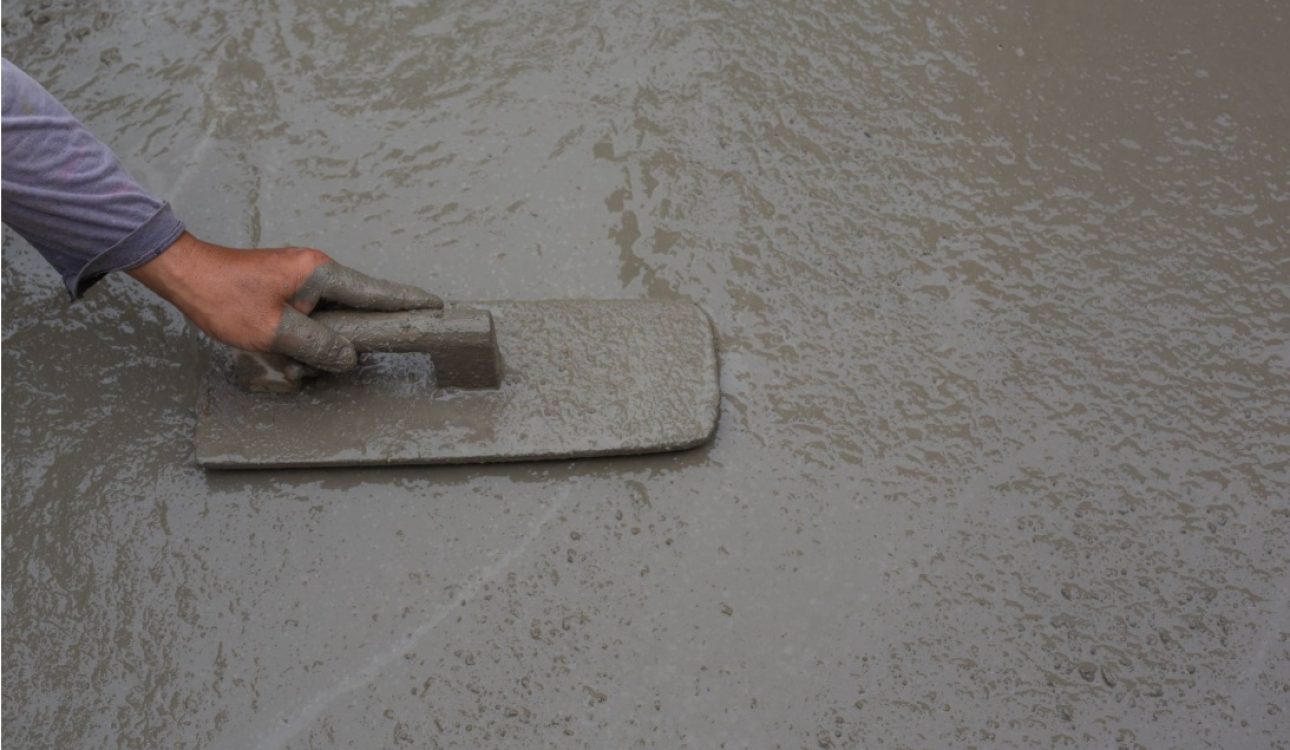

Quick Answer: Microcement is not inherently waterproof on its own. It becomes water resistant after compatible sealing, but the room still needs proper tanking, falls, sealed joints and a suitable waterproofing system beneath it.
Microcement has become popular in bathrooms and wet rooms because it creates a continuous finish without traditional tile joints. That often leads to a simple question: is microcement waterproof? The honest answer depends on the complete system, not just the visible coating. The sealer matters. So do the substrate, waterproofing membrane, joints and drainage.
Key Takeaways
- Microcement needs sealing to resist regular water exposure in bathrooms.
- Tanking sits beneath the finish to protect the underlying structure from water ingress.
- Falls and drainage matter because waterproof surfaces still need water directed towards the drain.
- Correct installation matters because the substrate, waterproofing and sealer all affect performance.
What Does “Waterproof” Actually Mean for a Bathroom Finish?
A bathroom finish can resist surface water without acting as the layer that protects the structure underneath. That distinction matters in areas exposed to regular or constant water, such as showers and wet rooms.
The visible finish stays on top of the waterproofing system. Beneath it, the substrate, tanking membrane, sealed joints and correctly formed falls all need to work together to control water movement.
This approach is also used for tiled wet areas. So, when a microcement surface is described as waterproof, the claim should refer to the complete installed system rather than the microcement layer by itself.
Is Microcement Waterproof on Its Own?
No. Microcement is a thin cement and polymer resin coating, usually around 2–4mm thick, and it does not provide complete waterproofing as a standalone material.
A compatible sealer is applied after the microcement to make the finished surface water resistant and easier to clean. That sealer protects the coating from regular water exposure, but it does not replace the waterproofing layer beneath it.
The substrate also matters. Moisture, movement, cracks or poor preparation below the surface can affect how the complete system performs.
For that reason, a claim that microcement is fully waterproof needs to be considered in terms of the products, preparation and installation used across the whole bathroom or wet room.
What Makes a Microcement Bathroom Actually Watertight?
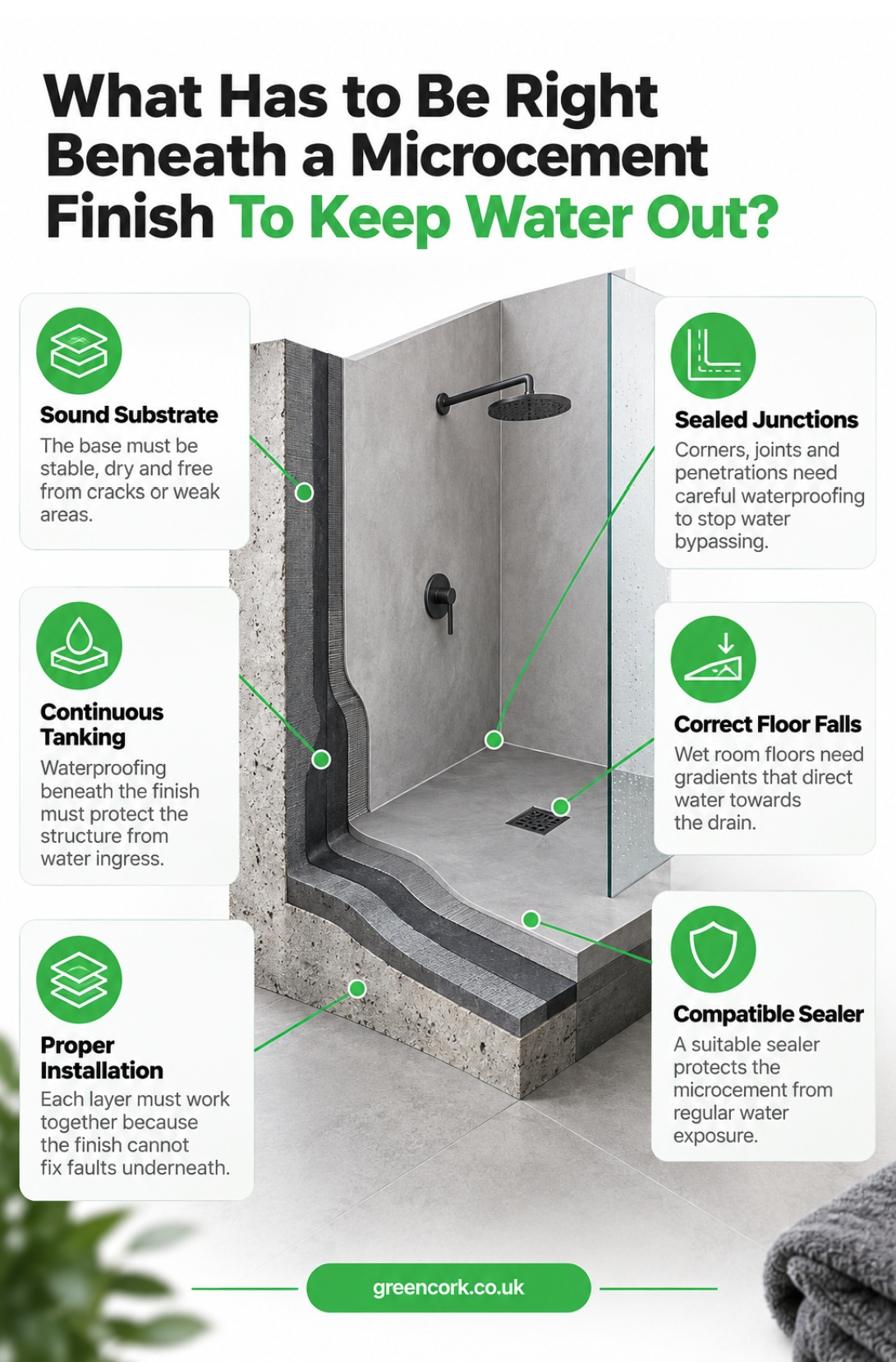
A reliable microcement bathroom depends on several parts working together. The surface finish is only one of them, so the installation needs to be considered from the substrate upwards.
Substrate Preparation
The substrate needs to be stable, dry, and properly prepared before waterproofing or microcement application begins. Cracks, movement, damp and weak areas can affect the layers installed above them.
Preparation can involve cleaning, repairing damaged areas, and checking moisture levels before the next stage begins.
Tanking and Waterproofing Membranes
Tanking is the layer that protects the underlying structure from water reaching areas where it should not. It is installed beneath the visible microcement finish, particularly around showers, baths and other wet zones.
The UK code of practice for wet area tiling and waterproofing sets out the use of suitable tanking systems in wet areas. It also makes clear that an impervious finish cannot be treated as a substitute for proper tanking.
Correct Falls and Drainage
Water needs somewhere to go. In a wet room, the floor should have correctly formed falls that direct water towards the drain instead of allowing it to collect across the surface.
Even a well sealed floor can suffer problems when drainage is poorly designed. Standing water also creates greater demands on the finish and the surrounding construction.
Sealing the Microcement Layer
After the microcement has been applied, a compatible sealer is used to protect the surface from everyday water exposure. Bi component polyurethane varnish can be used as part of a bathroom or wet room system where the specification calls for it.
The sealer creates the water resistant, wipeable surface that people usually associate with finished microcement. Our microcement wet rooms follow a process that includes substrate assessment, waterproofing, reinforcement and sealing.
What Happens When Bathroom Waterproofing Fails?
Poor waterproofing can allow moisture to move into areas behind the visible finish. Once water reaches the substrate or surrounding structure, the resulting problems can extend beyond the surface itself.
This matters across the wider UK housing stock. The English Housing Survey 2023–24 recorded damp problems in 1.3 million occupied homes in England, the highest level reported in five years. Damp affected 9% of private rented homes, 7% of social rented homes and 4% of owner occupied homes.
Bathroom waterproofing is only one potential source of damp, but it shows why moisture control cannot be treated as a finishing detail. Water that reaches the wrong part of a building can create much bigger problems than a damaged surface.
What UK Guidance Says About Bathroom and Wet Room Waterproofing
Building Regulations set the legal baseline for moisture protection in buildings. Approved Document C requires construction to resist harmful effects from moisture, including water associated with sanitary fittings and fixed appliances, but it does not prescribe microcement, tanking membranes or one particular waterproofing product.
For wet areas, the practical requirements go further into how surfaces and junctions should be protected. The substrate, corners, penetrations and connections around showers and baths all need careful treatment so water cannot bypass the waterproofing system.
Current NHBC technical guidance on wet room substrates was updated in 2024 after NHBC reported a rise in claims relating to walls around baths, shower enclosures and bathroom pods. It also sets requirements around suitable waterproofing systems and product certification for NHBC warranted homes.
A waterproof microcement finish therefore does not remove the need for proper waterproofing beneath it.
Does Microcement Perform Differently to Other Waterproofing Methods?
Microcement is different in appearance and application from conventional tiles, but the basic waterproofing principle remains the same. The visible surface should not be treated as the sole barrier protecting the structure underneath.
Tiles can be highly water resistant too, yet wet areas still require suitable waterproofing behind the finish. The same principle applies to microcement.
Recent UK academic research has also examined the performance of surface applied waterproofing treatments and the way their effectiveness depends on factors such as the treated material and application conditions.
The result is a useful rule for microcement bathrooms: the substrate and waterproofing system matter just as much as the finished coating.
Is Microcement Suitable for Showers?
Yes, microcement can be suitable for direct shower use when the complete system is specified for regular water exposure. The microcement needs an appropriate sealer, while the substrate and waterproofing beneath it must also be correctly prepared.
The shower area receives more direct water than many other parts of a bathroom, so the installation needs to account for constant exposure rather than occasional splashes.
Surface preparation, tanking, reinforcement and sealing all form part of that process. Our microcement bathrooms service covers bathroom applications across floors, walls and shower areas using systems specified for these conditions.
Is Microcement Suitable for a Wet Room Floor?
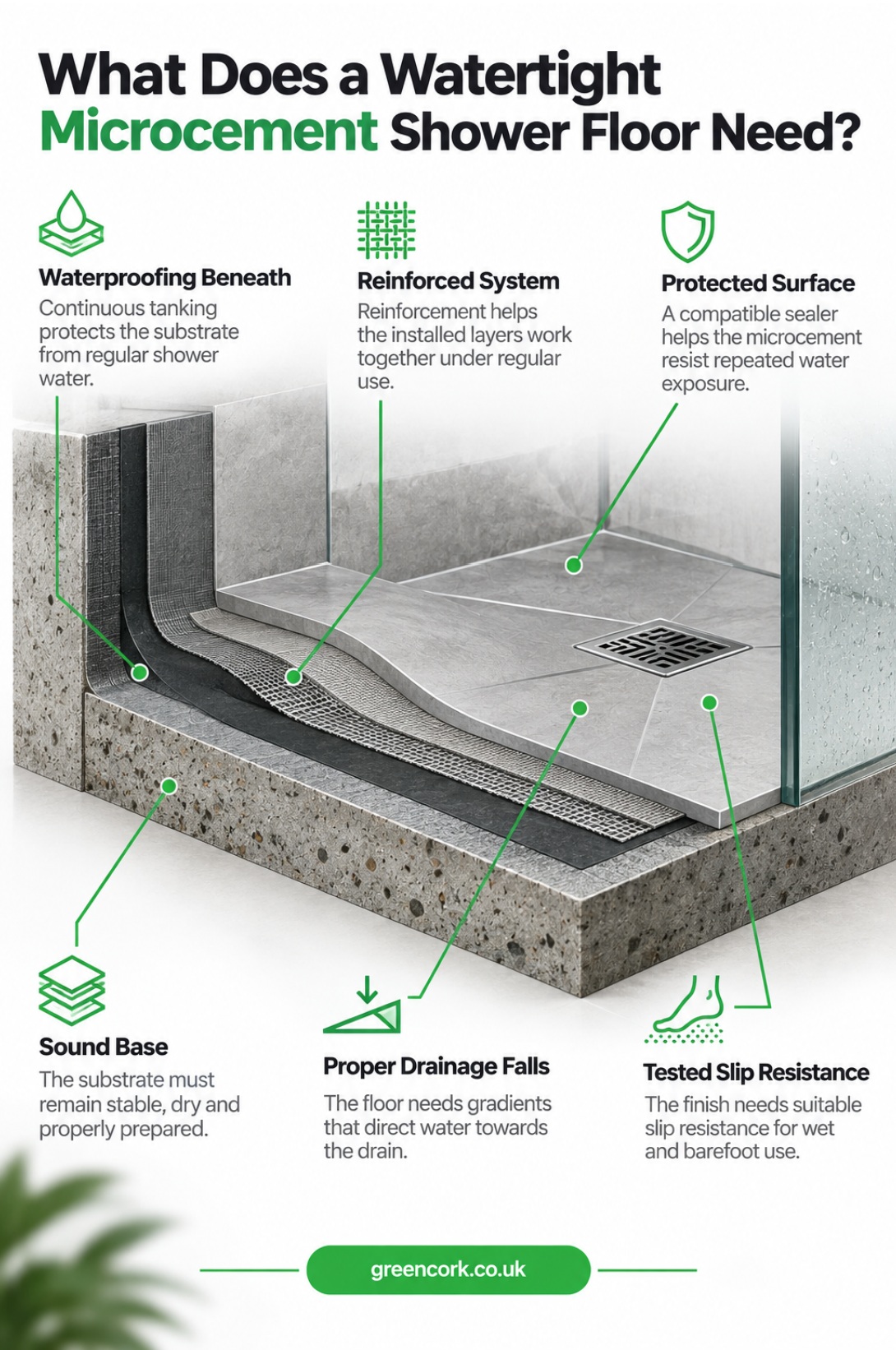
Yes, microcement can be used on a wet room floor, provided the underlying system has been designed for regular water exposure. The substrate needs to be sound, the floor needs correctly formed falls and the waterproofing beneath the finish needs to remain continuous.
Slip resistance is a separate issue from waterproofing. A floor can resist water successfully and still become slippery when wet. The HSE recommends the pendulum coefficient of friction test for assessing floor slipperiness. The test produces a measurable value that indicates how slippery a floor surface is under the conditions being assessed.
Wet room floors also need consideration for barefoot use. HSE guidance states that Slider 55 rubber should be used when assessing slip resistance in barefoot areas.
For a microcement wet room, this means the finish needs to provide suitable slip resistance as well as water resistance. Product specifications and test data should therefore be checked before choosing a finish for the floor.
Why Professional Installation Matters
Professional installation matters because a microcement finish cannot correct problems underneath it. If the substrate is unsuitable, water can reach the underlying structure. The same can happen if waterproofing is incomplete or the falls are poorly formed. This can cause damage even when the finished surface looks intact.
A microcement bathroom needs several stages to work together. The substrate must be properly prepared before waterproofing, reinforcement, falls, microcement and sealing are applied. Each stage affects the performance of the next.
This is why professional installation focuses on the complete system rather than the visible coating alone. A well applied sealer cannot compensate for failed tanking, movement in the substrate or incorrect drainage.
There are also recognised requirements for waterproofing systems used in warranted new build work. Professional installation helps ensure the finished bathroom is designed around these requirements rather than relying on the microcement coating alone.
FAQs
Is microcement completely waterproof?
Microcement itself is not inherently waterproof. A suitable sealer can make the surface water resistant, but the complete bathroom system still needs proper waterproofing beneath it.
Do I still need tanking under microcement?
Yes, tanking is still required where the area needs waterproof protection. The visible microcement finish should not replace the waterproofing system beneath it.
Is microcement suitable for a wet room floor?
Yes, when the substrate, tanking, drainage falls, sealing and slip resistance are all correctly specified for wet room use.
Can microcement be used inside a shower?
Yes. It can be used in direct shower areas when the complete system is suitable for regular water exposure and correctly installed.
What certification should my installer show me?
Ask which waterproofing system and products are being used and whether they meet the certification requirements relevant to your project. This is particularly important for warranted new build work.
Conclusion
Microcement is water resistant once correctly sealed, but the coating alone does not make a bathroom waterproof. Proper substrate preparation, tanking, drainage falls and sealing all matter. Professional installation brings these parts together to create a system suited to bathrooms, showers and wet rooms.
Considering microcement for your bathroom or wet room? Get in touch to discuss your project and request a quotation.