

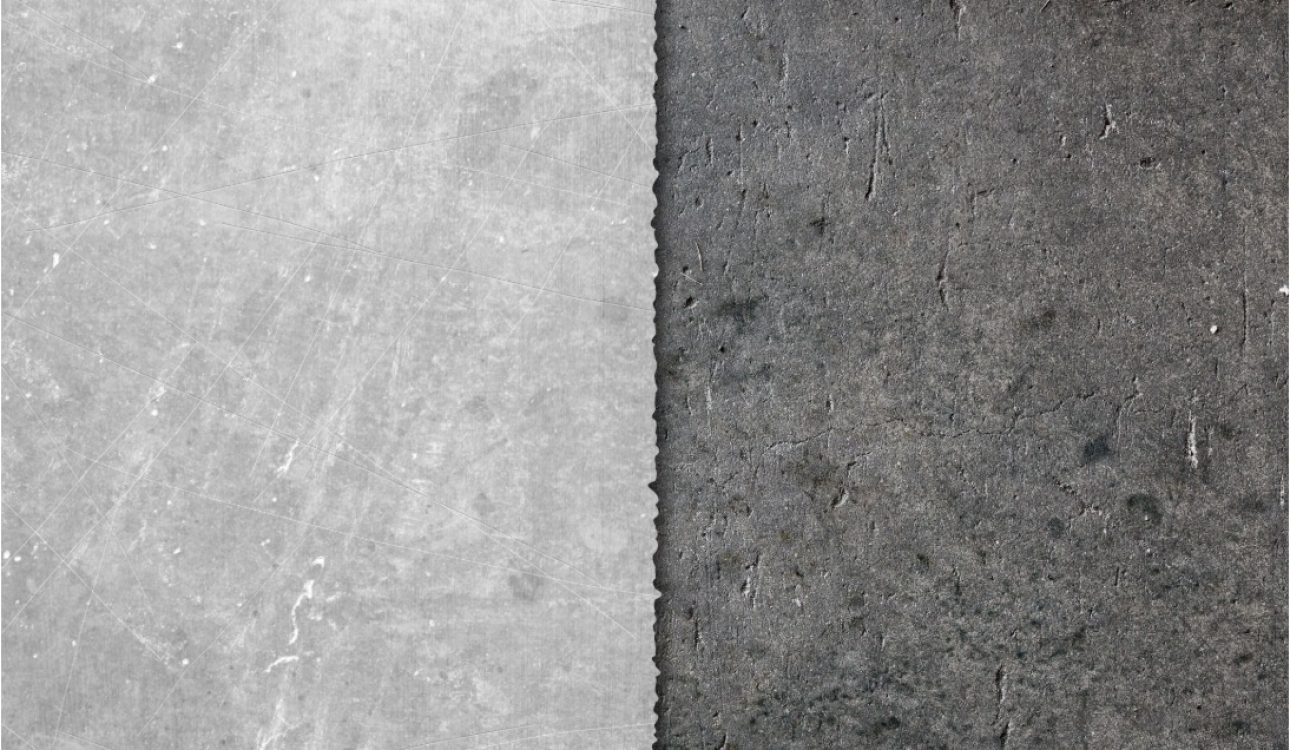

Quick Answer: Microcement is a thin 2–3mm coating that can be applied over suitable existing floors, while polished concrete relies on a substantial concrete slab and suits new builds or major structural renovations.
Microcement and polished concrete can both create a smooth, contemporary floor, but they are built in very different ways. Microcement is applied in thin layers over a prepared existing surface. Polished concrete relies on a substantial concrete slab that is mechanically ground and polished. That difference affects installation, disruption, finish, sustainability and where each option works best.
Key Takeaways
- Microcement adds only around 2–3mm to a suitable existing surface.
- Polished concrete depends on a substantial concrete slab beneath the finished surface.
- Microcement suits renovations where removing the existing floor would create unnecessary disruption.
- Polished concrete suits slab based projects where the concrete is already suitable for polishing.
What Is Microcement?
Microcement is a thin decorative coating made from cement-based and polymer-modified materials that is applied in multiple layers. The finished system is only around 2–3mm thick, which means it can often:
- Go over an existing floor
- Avoid full surface removal
- Reduce preparation work
- Keep floor levels relatively low
This works where the existing floor is stable, sound and suitable for the system. The substrate still needs to be stable, sound and properly prepared. Cracks, movement, damp or other defects need to be addressed before application because the finished coating follows the condition of what sits underneath it.
Once applied and sealed, microcement creates a continuous surface without the grout lines associated with tiled floors. It can also be used across different areas of an interior, including floors, walls and worktops.
What Is Polished Concrete?
Polished concrete is created by mechanically grinding and polishing a concrete slab until the surface reaches the required level of smoothness and sheen. The final appearance comes from the concrete itself rather than from a thin decorative coating applied over another floor.
The finished look can vary according to the original concrete mix, aggregate exposure, grinding depth and level of polishing. A light grind may expose little aggregate, while deeper grinding can reveal more of the stone within the slab.
Because the concrete itself forms the floor, the process works particularly well where a suitable slab already exists or where a new slab is being installed as part of a larger construction project.
Microcement vs Polished Concrete: Key Differences
The two systems can produce a similar contemporary feel, but the underlying construction is very different. The table below summarises the key differences between microcement and polished concrete:
| Factor | Microcement | Polished Concrete |
|---|---|---|
| Thickness | 2–3mm coating | Full slab depth |
| Substrate requirement | Can be applied over suitable existing floors | Requires a substantial concrete slab |
| Best suited to | Renovations and upgrades over existing surfaces | New builds and major slab based projects |
| Installation disruption | Generally lower | Generally higher in existing buildings |
| Finish | Wide range of colours and textures | Concrete based appearance with some colour variation |
| Typical application | Floors, walls and worktops | Primarily floors |
The practical difference becomes particularly important in existing homes. A thin coating can work with the floor you already have, whereas polished concrete may require the floor itself to become part of the structural or construction work.
How Do Microcement and Polished Concrete Look?
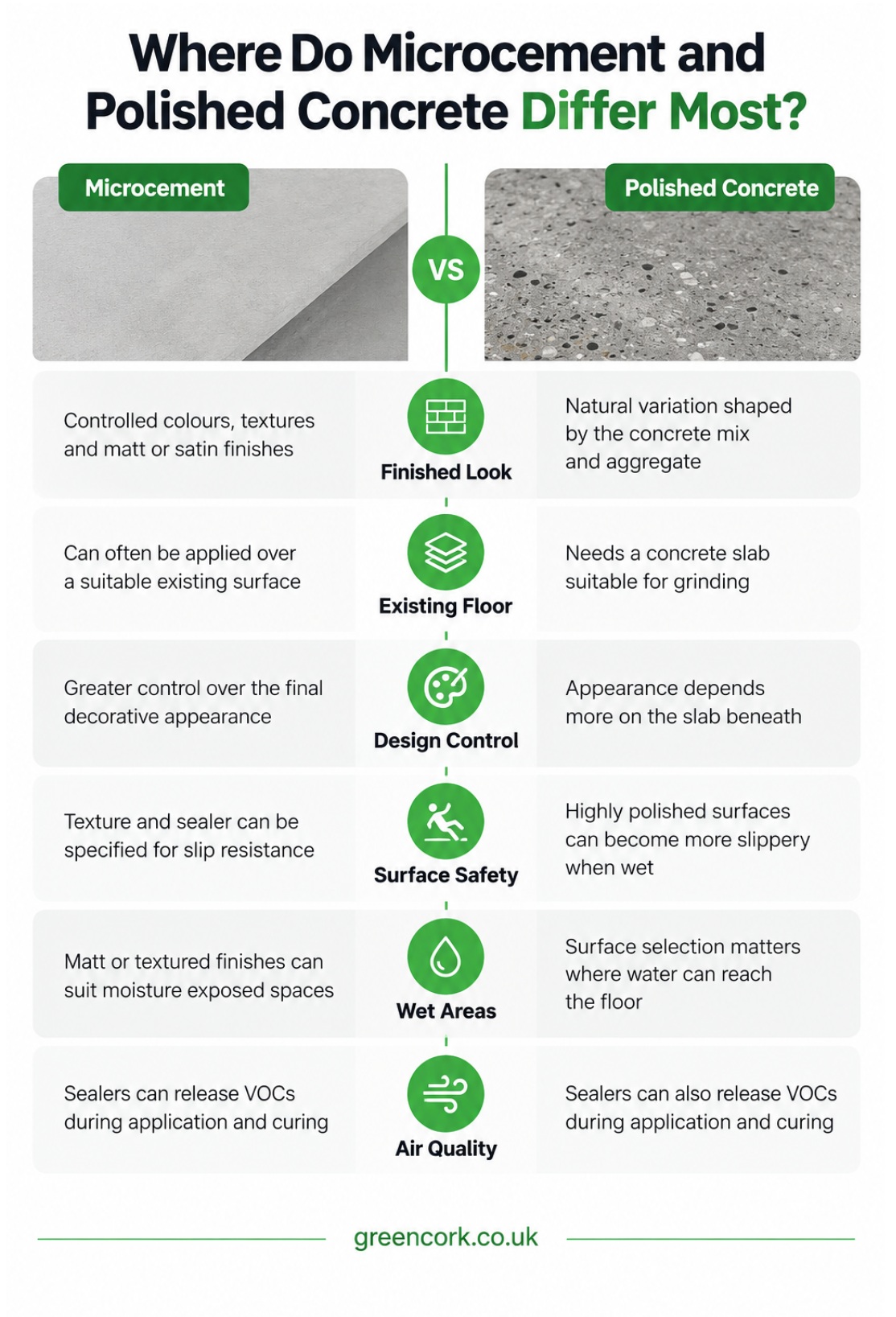
Microcement gives homeowners plenty of control over the final look. It comes in different colours, textures and finishes, from matt to satin. This makes it easier to create a consistent look across floors, walls and other surfaces.
Polished concrete is more closely tied to what lies within the slab. The final appearance depends on:
- Concrete mix
- Aggregate type
- Grinding depth
- Polishing level
These factors determine which parts of the concrete become visible and how the finished floor looks. Staining or decorative aggregates can introduce additional colour and variation, but the finished floor still retains the character of the concrete beneath it.
For bathrooms, kitchens and contemporary interiors, microcement can provide a more controlled decorative finish. Polished concrete can work particularly well across large open plan floors where the exposed slab is already part of the architectural design.
How Do Installation Requirements Compare?
The biggest installation difference is what happens to the existing floor. Microcement is normally applied in thin layers over a sound, prepared substrate, so existing tiles, concrete or other suitable surfaces may be able to remain in place.
That does not mean the preparation is simple. The surface needs to be checked for movement, damage, damp and other problems before the coating is applied. Repairs and preparation are important because the finish depends on the condition of the substrate underneath it.
Polished concrete requires a suitable concrete slab that can be ground and polished. Where no suitable slab exists, installing one can involve removing the existing floor, excavation, additional floor build up or structural considerations.
Our microcement flooring service is designed for applications where a continuous finish is required over a suitable existing floor.
How Safe Are Microcement and Polished Concrete?
Both microcement and polished concrete are commonly finished as smooth, low porosity surfaces. That makes slip resistance worth considering carefully, particularly in bathrooms, wet rooms, kitchens and other areas where moisture or contamination may be present.
Microcement and Slip Resistance
Microcement can be finished with a matt or textured surface rather than a highly smooth finish. The final slip performance depends on the complete flooring system, including its texture and sealer, so it should be assessed as a specified system rather than judged by appearance alone.
For wet rooms and other areas where water is regularly present, the selected finish needs to be appropriate for the conditions in which the floor will be used.
Polished Concrete and Slip Resistance
Highly polished concrete can become more slippery when wet than a suitably textured surface. This is particularly relevant in entrances, kitchens, bathrooms and other areas where water or contaminants can reach the floor.
The issue is not limited to decorative concrete. According to the UK workplace slip resistance guidance, floors need to remain suitable and safe to walk on, with recognised slip resistance testing used where necessary. In 2023/24, slips, trips and falls on the same level accounted for 31% of the 604,000 non fatal workplace injuries reported through the Labour Force Survey.
Indoor Air Quality Considerations
Both flooring systems commonly rely on sealers or resin based coatings to protect the finished surface. Depending on the products used, these materials can release volatile organic compounds (VOCs) during and shortly after application.
That makes product selection, ventilation and curing conditions relevant to indoor air quality, particularly in enclosed rooms. According to UK indoor air quality guidance on VOCs, Public Health England established health based guideline values for individual VOCs found in indoor environments in 2019.
The specific emissions depend on the products and application system used, so the flooring material alone does not determine indoor air quality.
How Are Microcement and Polished Concrete Specified?
Microcement and resin based flooring systems are selected according to the performance required for the space rather than simply the visual finish. System selection takes account of:
- Traffic levels
- Moisture exposure
- Substrate condition
- Sealer requirements
The chosen system needs to match the conditions it will face.
In the UK, resin flooring systems are commonly classified using the UK resin flooring classification standard published by FeRFA. The classifications cover different levels of duty and application methods, helping specifiers select a system suited to the conditions it will face.
Polished concrete is specified differently because the concrete slab itself forms the finished surface. Its performance and appearance depend on the concrete mix, slab design, aggregate and polishing process.
How Sustainable Are Microcement and Polished Concrete?
The sustainability comparison is more complicated than simply labelling one material as greener. The amount of new material introduced, the condition of the existing substrate and whether a new concrete slab is required can all change the environmental impact of the project.
The Embodied Carbon of Concrete
Concrete can carry a substantial embodied carbon footprint because cementitious materials account for a significant share of emissions associated with construction. UK research found that roughly one third of upfront embodied carbon in UK buildings comes from cementitious materials. Ready mix and precast concrete account for almost all of this share.
That matters when comparing polished concrete projects that require a new or substantially reconstructed slab. The environmental impact can extend well beyond the finishing stage.
Why Reusing an Existing Substrate Matters
Microcement can sometimes be applied over an existing suitable floor, which can avoid removing the substrate and introducing a new concrete slab. This can reduce the amount of new material required for the project.
UK academic research also shows that floor systems and slab choices can make a meaningful contribution to a building’s embodied carbon.
That gives microcement a potential sustainability advantage in renovation work where the existing substrate can be retained. The actual outcome still depends on the condition of the floor, the products specified and what would otherwise have been removed or installed.
Which Rooms Suit Microcement or Polished Concrete Best?
The better option depends heavily on the room and the type of project. A bathroom being refurbished in an existing house has very different requirements from a large open plan floor being designed around a new concrete slab.
Bathrooms and Wet Rooms
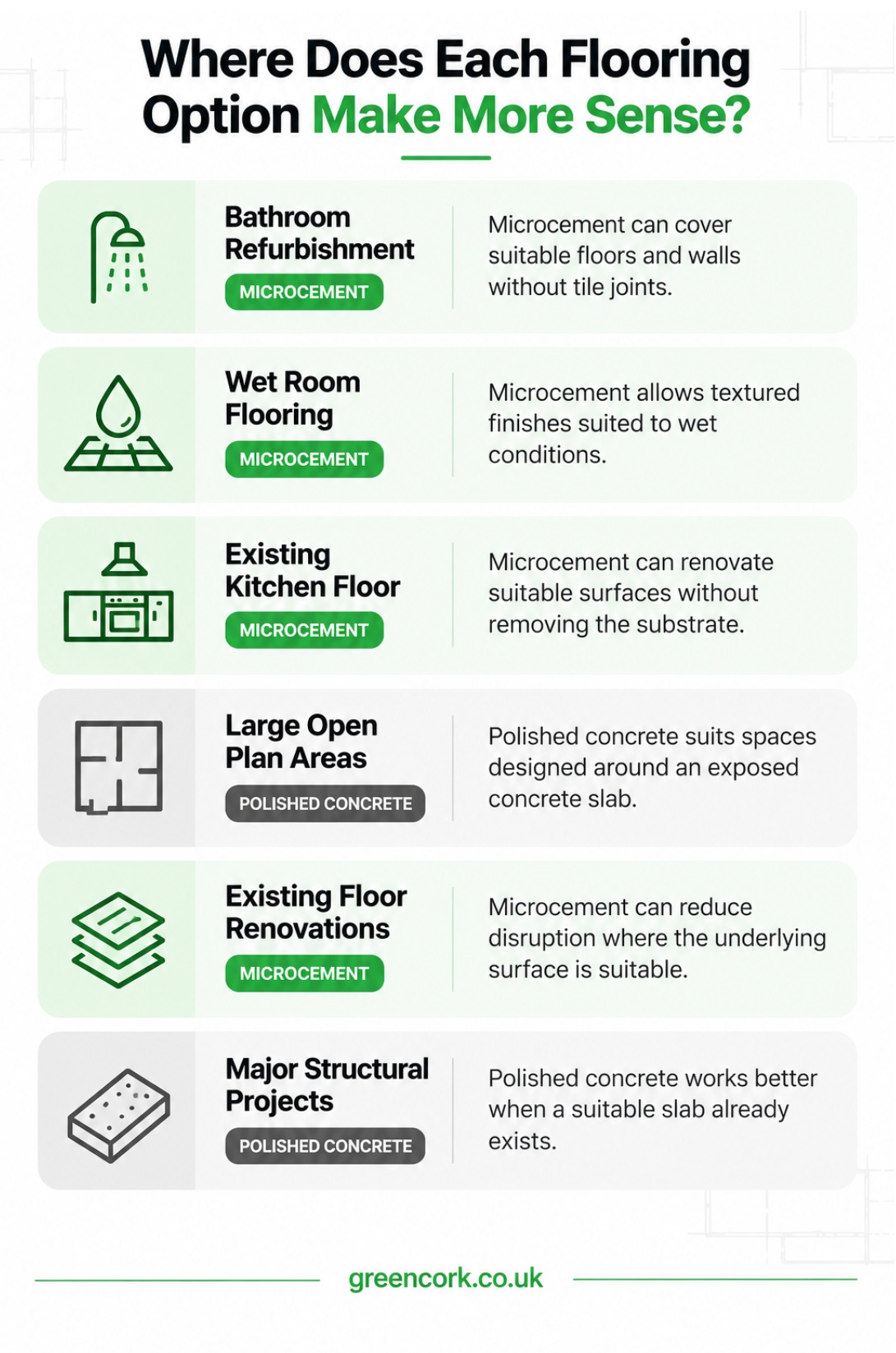
Microcement works well in bathrooms and wet rooms because it can be applied to both floors and walls. This creates a consistent finish without conventional tile joints. You can also choose different textures and sheen levels to suit the space.
The substrate and waterproofing system still need to be suitable for the room. The finished surface should also provide appropriate slip resistance for wet conditions.
Kitchens and Living Spaces
Both flooring options can suit kitchens and living spaces. Microcement is particularly practical where an existing floor is being renovated and the homeowner wants to avoid removing the substrate.
Polished concrete can be a strong fit for a new build or major refurbishment where an exposed concrete slab has already been designed into the project. Large open plan spaces can make better use of the continuous visual character of polished concrete.
Renovation Projects
For many renovation projects, professionally installed microcement is the stronger option because it can work with an existing suitable substrate. That can avoid the disruption associated with removing floors and introducing a substantial new concrete slab.
Polished concrete becomes more practical when the slab is already suitable for grinding and polishing or when major structural work is already planned.
What Drives the Cost of Microcement and Polished Concrete?
The cost depends heavily on the scope of the project. A microcement renovation may mainly involve substrate preparation, application and sealing. Polished concrete can cost more if a new slab is needed before polishing begins.
Existing floor condition also matters. Repairs, preparation, removal work, access and the amount of finishing required can all change the final price.
Material and construction costs have also experienced significant volatility in recent years, so broad online figures can quickly become unreliable. For a wider look at how microcement can be used across floors, walls and worktops, see our microcement service.
The most useful comparison is therefore based on the same scope of work, including substrate preparation, installation, finishing and any removal or structural work required.
FAQs
Is microcement cheaper than polished concrete?
Often, yes, particularly for renovations. It can be applied over suitable existing floors.
Can microcement be applied over an existing concrete floor?
Yes, if the concrete is stable and suitable. Cracks, movement and damp must be addressed first.
Is polished concrete or microcement more slip-resistant?
Neither is automatically more slip-resistant. The texture, sealer and conditions all affect performance.
Which is better for a bathroom, microcement or polished concrete?
Microcement is often better suited to bathroom renovations. It can cover suitable existing floors and walls.
Does microcement crack like polished concrete can?
Microcement can crack if the substrate moves. Good preparation helps reduce this risk.
Which option is more sustainable?
Microcement can suit renovations where the existing substrate stays in place. Polished concrete may use more material if a new slab is needed.
Conclusion
Microcement and polished concrete both create a contemporary finish, but suit different projects. Microcement is often better for renovations because of its thin application. Polished concrete suits new builds or major projects where a suitable concrete slab is already in place.
Considering microcement for your renovation? Get your free quote for a free, no obligation quote tailored to your project.